

Join Our Newsletter To Be Informed When New Videos Are Posted
Hebrew Text
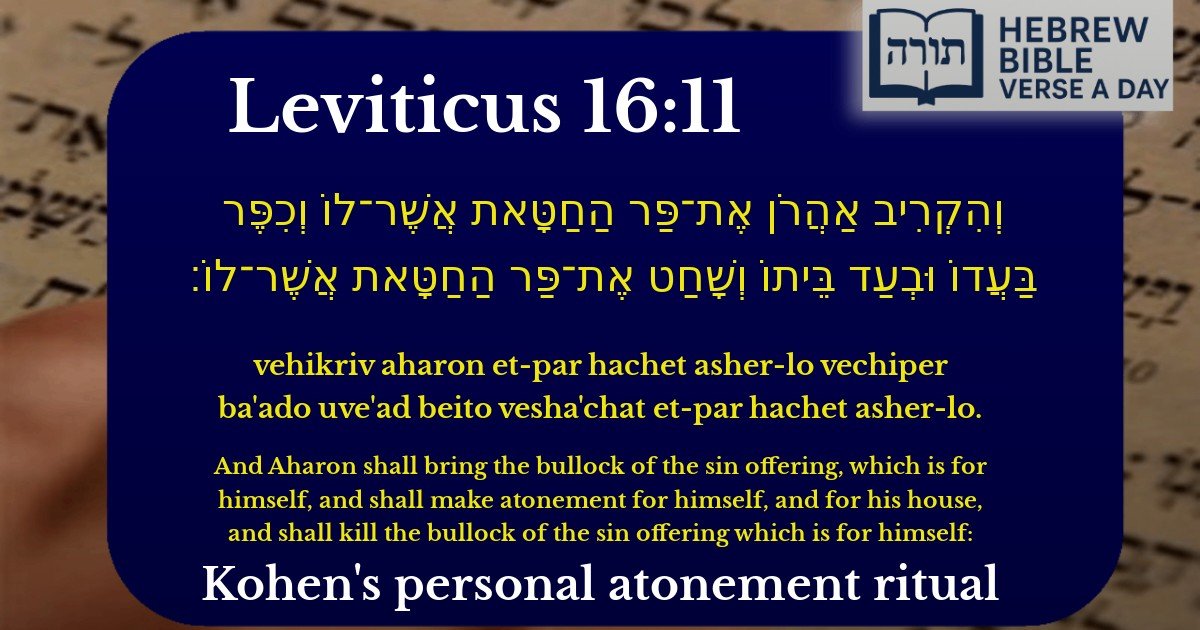
וְהִקְרִיב אַהֲרֹן אֶת־פַּר הַחַטָּאת אֲשֶׁר־לוֹ וְכִפֶּר בַּעֲדוֹ וּבְעַד בֵּיתוֹ וְשָׁחַט אֶת־פַּר הַחַטָּאת אֲשֶׁר־לוֹ׃
English Translation
And Aharon shall bring the bullock of the sin offering, which is for himself, and shall make atonement for himself, and for his house, and shall kill the bullock of the sin offering which is for himself:
Transliteration
Vehikriv aharon et-par hachet asher-lo vechiper ba'ado uve'ad beito vesha'chat et-par hachet asher-lo.
Hebrew Leining Text
וְהִקְרִ֨יב אַהֲרֹ֜ן אֶת־פַּ֤ר הַֽחַטָּאת֙ אֲשֶׁר־ל֔וֹ וְכִפֶּ֥ר בַּֽעֲד֖וֹ וּבְעַ֣ד בֵּית֑וֹ וְשָׁחַ֛ט אֶת־פַּ֥ר הַֽחַטָּ֖את אֲשֶׁר־לֽוֹ׃
🎵 Listen to leining
Parasha Commentary
📚 Talmud Citations
This verse is quoted in the Talmud.
📖 Yoma 36a
The verse is discussed in the context of the High Priest's atonement rituals on Yom Kippur, particularly regarding the bullock he offers for himself and his household.
📖 Horayot 11b
The verse is referenced in a discussion about the atonement process and the responsibilities of the High Priest in offering sacrifices for himself and the community.
Introduction to the Verse
The verse (Vayikra 16:6) describes the procedure of the Kohen Gadol (High Priest) on Yom Kippur, specifically detailing Aharon's obligation to bring a bull as a sin offering for himself and his household. This act of atonement is central to the Yom Kippur service in the Beit HaMikdash (Holy Temple).
Rashi's Explanation
Rashi (Vayikra 16:6) emphasizes that the phrase "אֲשֶׁר־לוֹ" ("which is for himself") teaches that the bull must be purchased from Aharon's own funds, not from communal offerings. This underscores the personal responsibility of the Kohen Gadol to atone for himself before seeking atonement for others.
Rambam's Perspective
In Hilchot Avodat Yom HaKippurim (1:7), the Rambam explains that the Kohen Gadol's personal sin offering precedes all other Yom Kippur sacrifices, symbolizing that spiritual leaders must first rectify their own shortcomings before guiding the community in repentance.
Talmudic Insights
The Talmud (Yoma 2b) discusses why Aharon's bull is called a "חַטָּאת" (sin offering), even though the Kohen Gadol was not known to have sinned. It explains that this offering atones for potential unintentional sins related to the sanctity of the Mishkan or Beit HaMikdash.
Midrashic Interpretation
The Midrash (Torat Kohanim 16:6) connects this verse to the episode of the Golden Calf, suggesting that the bull offering serves as a continual atonement for Aharon's role in that incident. This teaches that even great leaders must constantly seek forgiveness for past mistakes.
Chassidic Perspective
The Sefat Emet (Vayikra 16:6) explains that the personal sacrifice of the Kohen Gadol represents the need for hitkashrut (connection) between the leader and the people. By first atoning for himself and his household, the Kohen Gadol demonstrates that true leadership begins with self-improvement.