

Join Our Newsletter To Be Informed When New Videos Are Posted
Hebrew Text
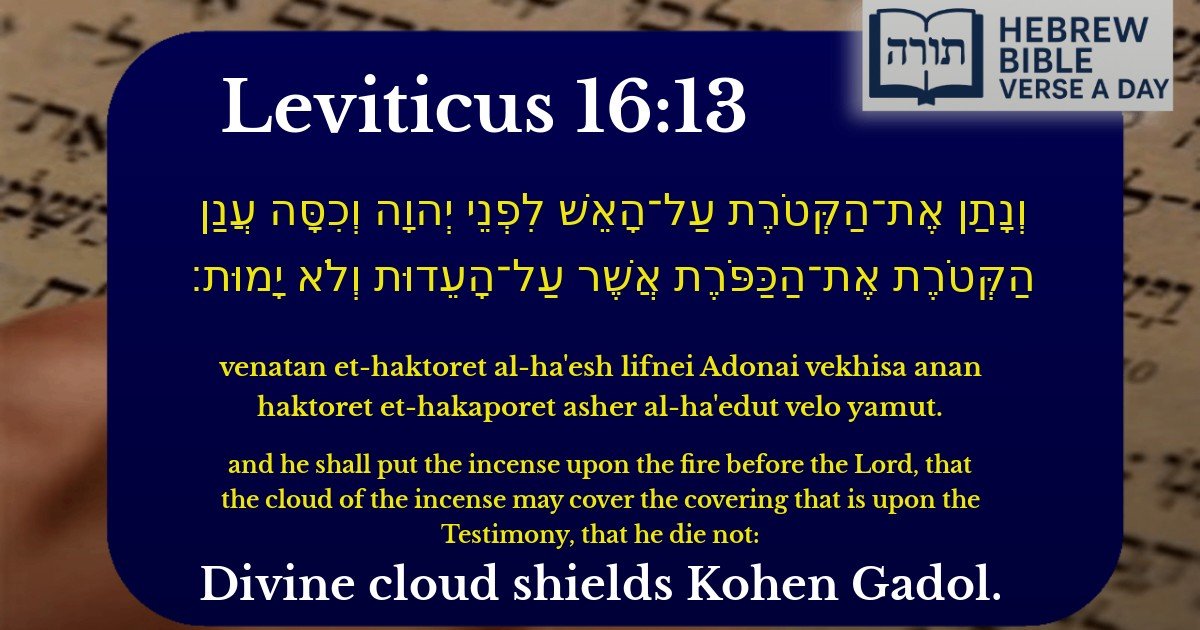
וְנָתַן אֶת־הַקְּטֹרֶת עַל־הָאֵשׁ לִפְנֵי יְהוָה וְכִסָּה עֲנַן הַקְּטֹרֶת אֶת־הַכַּפֹּרֶת אֲשֶׁר עַל־הָעֵדוּת וְלֹא יָמוּת׃
English Translation
and he shall put the incense upon the fire before the Lord, that the cloud of the incense may cover the covering that is upon the Testimony, that he die not:
Transliteration
Venatan et-haktoret al-ha'esh lifnei Adonai vekhisa anan haktoret et-hakaporet asher al-ha'edut velo yamut.
Hebrew Leining Text
וְנָתַ֧ן אֶֽת־הַקְּטֹ֛רֶת עַל־הָאֵ֖שׁ לִפְנֵ֣י יְהֹוָ֑ה וְכִסָּ֣ה ׀ עֲנַ֣ן הַקְּטֹ֗רֶת אֶת־הַכַּפֹּ֛רֶת אֲשֶׁ֥ר עַל־הָעֵד֖וּת וְלֹ֥א יָמֽוּת׃
🎵 Listen to leining
Parasha Commentary
📚 Talmud Citations
This verse is quoted in the Talmud.
📖 Yoma 53a
The verse is discussed in the context of the High Priest's service on Yom Kippur, particularly regarding the placement of the incense in the Holy of Holies to create a cloud that covers the Ark's cover.
📖 Zevachim 88b
The verse is referenced in a discussion about the proper procedures for offering incense and its significance in the Temple service.
Verse Context: The Incense Offering on Yom Kippur
This verse (Vayikra 16:13) describes the Kohen Gadol's service in the Kodesh HaKodashim (Holy of Holies) on Yom Kippur, specifically the burning of the ketoret (incense) before the Aron HaKodesh (Holy Ark). The incense creates a cloud that covers the kaporet (ark covering) to protect the Kohen Gadol from gazing at the Divine Presence.
Rashi's Explanation
Rashi (Vayikra 16:13) explains that the incense serves two purposes:
Rambam's Insight on the Ketoret
In Hilchot Avodat Yom HaKippurim (5:21), Rambam emphasizes the precision required in preparing the incense. The Kohen Gadol must ensure the exact mixture of spices as prescribed in Shemot 30:34-38, as any deviation would render the service invalid and endanger his life.
Midrashic Interpretation
The Midrash (Vayikra Rabbah 21:8) connects the incense to atonement, teaching that the ketoret symbolizes the binding power of unity among Bnei Yisrael. Just as the spices blend into one fragrance, Klal Yisrael must unite in repentance on Yom Kippur.
The Kaporet and the Testimony
The kaporet (ark covering) is described as being "upon the Testimony" (i.e., the Luchot HaBrit). The Talmud (Yoma 53a) teaches that the cloud of incense atones for lashon hara (evil speech), paralleling the silent "cloud" of smoke with the harm caused by spoken words.
Warning Against Negligence
The phrase "v'lo yamut" (that he die not) underscores the severity of this service. The Kohanim were warned (Vayikra 10:1-2) of the consequences of improper service, as seen with Nadav and Avihu. The incense must be offered with utmost reverence and exactitude.