Frequently Asked Questions
Q: What is the meaning of sprinkling blood on the covering (kaporet) in Leviticus 16:14?
A: In Leviticus 16:14, the Kohen Gadol (High Priest) sprinkles the blood of the bullock on the kaporet (the golden cover of the Ark in the Holy of Holies) as part of the Yom Kippur service. According to Rashi, this act symbolizes atonement for the Jewish people. The eastward direction represents facing toward the Divine Presence, and the seven sprinklings correspond to completeness in achieving purification, as the number seven often signifies spiritual perfection in Jewish tradition.
Q: Why does the Kohen Gadol sprinkle the blood seven times in Leviticus 16:14?
A: The sevenfold sprinkling of blood in Leviticus 16:14 represents completeness and spiritual purification. The Talmud (Yoma 53b) explains that the number seven is significant in Judaism, symbolizing wholeness—such as the seven days of creation. Here, it emphasizes the thoroughness of the atonement process on Yom Kippur, ensuring that the Jewish people are fully cleansed from sin before Hashem.
Q: What is the significance of using a finger to sprinkle the blood in Leviticus 16:14?
A: The Torah specifies that the Kohen Gadol uses his finger to sprinkle the blood (Leviticus 16:14) to emphasize precision and intentionality in the sacred service. The Rambam (Hilchot Avodat Yom HaKippurim 4:3) explains that this method ensures that the blood is applied in the exact manner required for the atonement ritual. The finger also represents a personal, direct involvement in the service, as opposed to using an instrument, which would create distance.
Q: How does Leviticus 16:14 relate to Yom Kippur today?
A: Although the Temple service described in Leviticus 16:14 is not practiced today, its lessons remain central to Yom Kippur. The Mishnah (Yoma 5:7) teaches that the sprinkling of blood achieved atonement, but today, we focus on teshuva (repentance), tefillah (prayer), and tzedakah (charity) as substitutes for the Temple service. The verse reminds us of the seriousness of atonement and the need for sincere spiritual cleansing.
Q: What does the 'kaporet' (covering) symbolize in Leviticus 16:14?
A: The kaporet (the golden cover of the Ark) in Leviticus 16:14 symbolizes the Divine Presence and the seat of mercy. The Midrash (Tanchuma, Acharei Mot 6) explains that the kaporet represents the reconciliation between Hashem and the Jewish people, as the word 'kaporet' is related to 'kaparah' (atonement). By sprinkling blood there, the Kohen Gadol activates this mercy, allowing forgiveness to descend upon the nation.


Context of the Verse
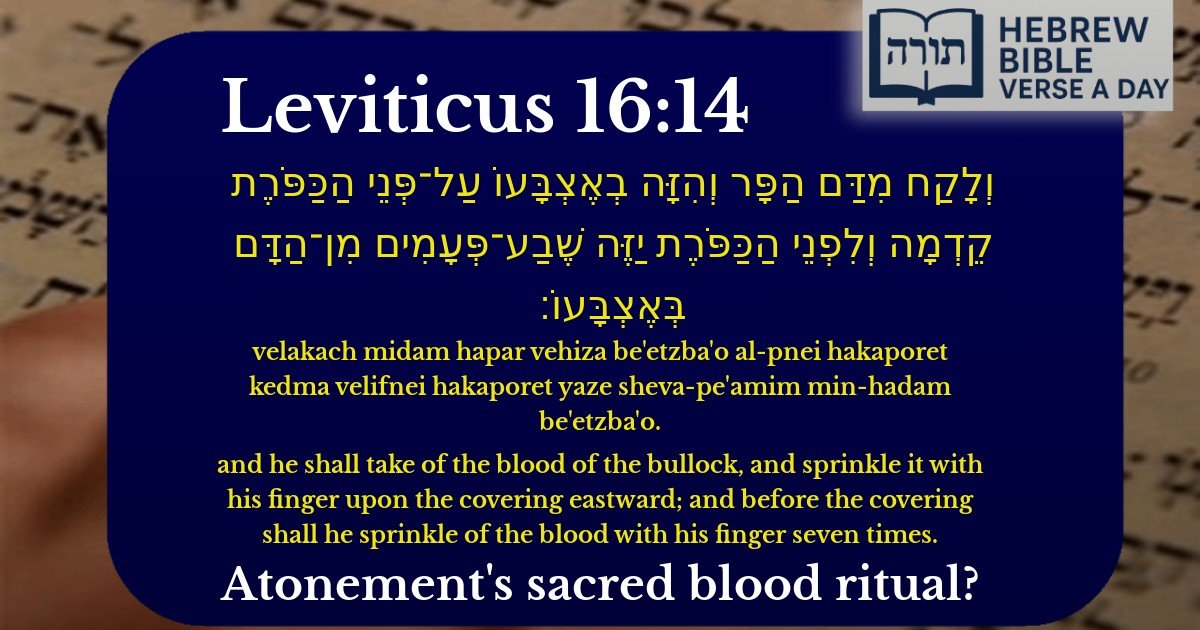
This verse (Vayikra 16:14) describes part of the Yom Kippur service performed by the Kohen Gadol (High Priest) in the Kodesh HaKodashim (Holy of Holies). The blood of the bullock (Par HaChatat) is sprinkled toward the eastern side of the Kapores (Ark cover) and then seven times before the Kapores itself.
Rashi's Explanation
Rashi explains that the Kohen Gadol sprinkles the blood "with his finger" to emphasize precision in this sacred act. The direction "eastward" refers to the side of the Kapores facing the entrance of the Mishkan (Tabernacle). The seven sprinklings before the Kapores correspond to the seven heavens, symbolizing complete atonement reaching all spiritual realms.
Rambam's Perspective
In Hilchot Avodat Yom HaKippurim (1:11), Rambam details that this service must be performed specifically with the right hand's index finger, as derived from the word "b'etzba'o" (with his finger) in the singular. The seven sprinklings represent completeness in Divine service, as seven is a number signifying wholeness in Jewish tradition.
Symbolism of the Blood
Kabbalistic Insight (Based on Arizal)
The seven sprinklings correspond to the seven lower Sefirot (Divine emanations), through which Divine influence flows to the world. The Kohen Gadol's service thus repairs spiritual channels affected by human wrongdoing.
Practical Halachic Implications
The Mishnah (Yoma 5:3-4) discusses how the Kohen Gadol would count each sprinkling aloud to ensure accuracy. This teaches the importance of meticulousness when performing Divine service. The blood had to be sprinkled in a upward motion (haza'ah), not merely dropped, demonstrating active engagement in the atonement process.