Frequently Asked Questions
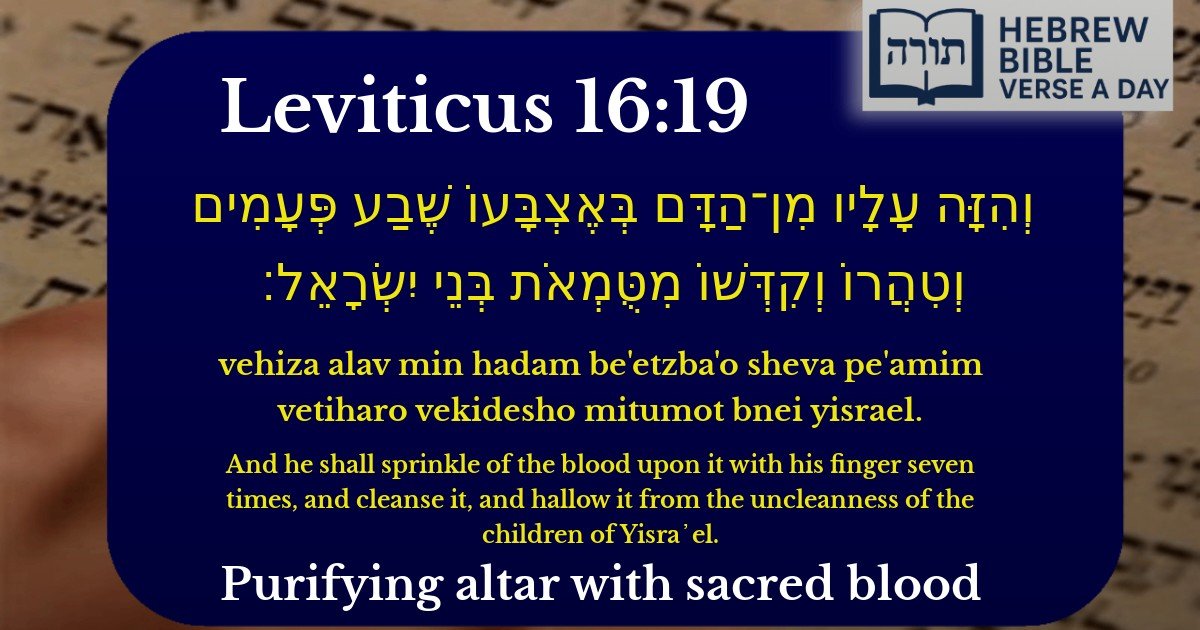
Q: What does the sprinkling of blood seven times symbolize in Leviticus 16:19?
A: According to Rashi and other traditional Jewish commentaries, the sprinkling of blood seven times symbolizes completeness and spiritual purification. The number seven represents wholeness in Jewish tradition (like the seven days of creation). This act purified the altar from any impurities and sanctified it for divine service.
Q: Why was the High Priest commanded to use his finger to sprinkle the blood in Leviticus 16:19?
A: The Talmud (Yoma 53a) explains that using the finger emphasizes the personal involvement and care of the Kohen Gadol (High Priest) in the purification process. It also connects to earlier instances in the Torah (like Exodus 8:15) where the finger represents direct divine action, showing that this was a sacred act performed with precision.
Q: What is the significance of purifying the altar from the 'uncleanness of the children of Israel' in this verse?
A: The Midrash (Torat Kohanim) teaches that the altar, though an inanimate object, needed purification because it absorbed the spiritual impurities of the people's sins brought through sacrifices. This highlights Judaism's understanding that actions affect the physical and spiritual world, and even holy items require cleansing due to human failings.
Q: How does Leviticus 16:19 relate to Yom Kippur?
A: This verse is part of the Yom Kippur service described in Leviticus 16. Rambam (Hilchot Avodat Yom HaKippurim 4:3) explains that this sprinkling was a critical step in the annual atonement process, removing impurities accumulated from the sins of Bnei Yisrael and restoring the sanctity of the Mishkan (Tabernacle) and later the Temple.
Q: Can we derive any practical lessons from Leviticus 16:19 today?
A: Yes. Though we no longer have the Temple service, the verse teaches enduring principles: 1) Repentance requires active effort (symbolized by the seven sprinklings), 2) Spiritual impurity affects our surroundings (hence the altar's purification), and 3) Holiness must be continually renewed—a lesson especially emphasized during the Yom Kippur season when this portion is read.


Context in the Torah
This verse (Vayikra 16:19) appears in the context of the Yom Kippur service, specifically during the purification of the Mizbe'ach (Altar) in the Mishkan (Tabernacle) or later in the Beit HaMikdash (Temple). The Kohen Gadol (High Priest) performs a series of rituals to atone for the sins of Bnei Yisrael (the Children of Israel), including sprinkling blood to purify and sanctify the altar.
Symbolism of the Seven Sprinklings
Rashi (Vayikra 16:19) explains that the seven sprinklings correspond to the seven heavens or the seven days of creation, symbolizing completeness and Divine perfection. The number seven in Torah often represents wholeness—such as Shabbat (the seventh day) and the seven branches of the Menorah. The Ramban (Nachmanides) adds that this act mirrors the spiritual cleansing required for Bnei Yisrael to reconnect with Hashem after sin.
The Role of the Finger
The use of the finger (אֶצְבָּעוֹ) for sprinkling is significant. The Talmud (Yoma 58a) notes that the Kohen Gadol uses his right hand, as the right side symbolizes strength and favor in service to Hashem. The Midrash (Vayikra Rabbah 21:11) further connects this to the idea that human action—represented by the finger—must actively participate in the process of purification.
Purification and Sanctification
The verse mentions two distinct actions: טִהֲרוֹ (cleansing) and קִדְּשׁוֹ (sanctifying). The Rambam (Hilchot Avodat Yom HaKippurim 5:6) explains that cleansing removes the spiritual impurity caused by sin, while sanctification elevates the altar back to its holy status. The Sforno emphasizes that this process is not merely symbolic but effects a tangible change in the spiritual state of the Mizbe'ach and, by extension, the people.
Connection to Bnei Yisrael
The phrase מִטֻּמְאֹת בְּנֵי יִשְׂרָאֵל ("from the uncleanness of the children of Israel") underscores that the altar absorbs the spiritual consequences of the nation’s sins. The Kli Yakar (Vayikra 16:19) teaches that the sprinkling of blood serves as a kaparah (atonement), transferring impurity away from the people and onto the altar, which is then purified through this ritual.
Practical Halachic Implications