

Join Our Newsletter To Be Informed When New Videos Are Posted
Hebrew Text
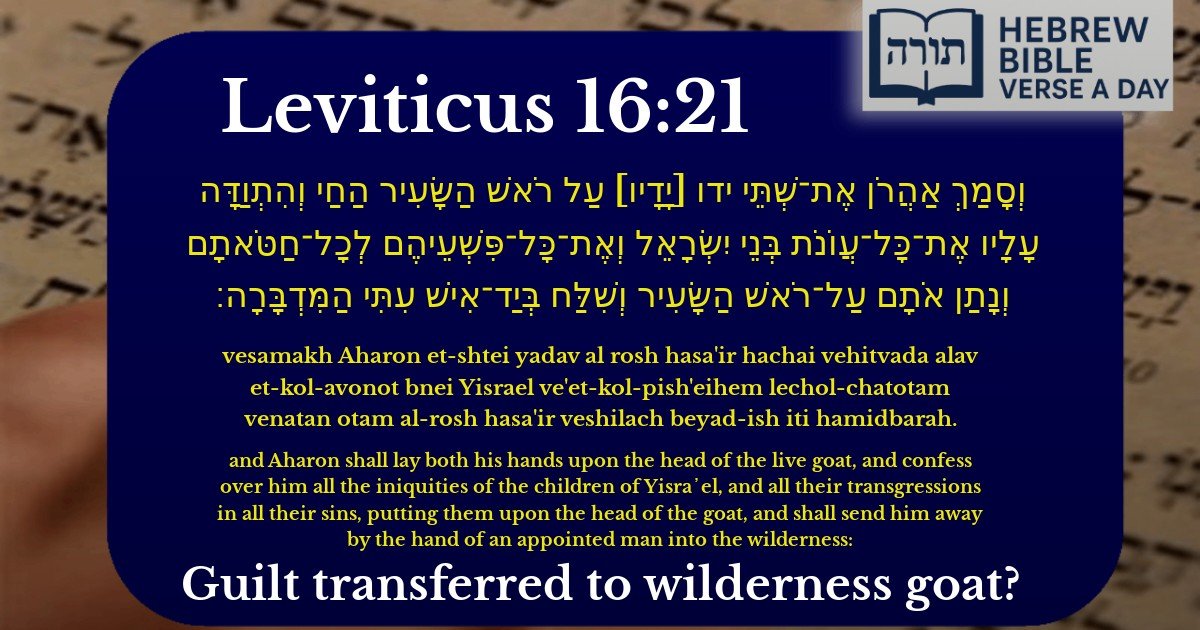
וְסָמַךְ אַהֲרֹן אֶת־שְׁתֵּי ידו [יָדָיו] עַל רֹאשׁ הַשָּׂעִיר הַחַי וְהִתְוַדָּה עָלָיו אֶת־כָּל־עֲוֺנֹת בְּנֵי יִשְׂרָאֵל וְאֶת־כָּל־פִּשְׁעֵיהֶם לְכָל־חַטֹּאתָם וְנָתַן אֹתָם עַל־רֹאשׁ הַשָּׂעִיר וְשִׁלַּח בְּיַד־אִישׁ עִתִּי הַמִּדְבָּרָה׃
English Translation
and Aharon shall lay both his hands upon the head of the live goat, and confess over him all the iniquities of the children of Yisra᾽el, and all their transgressions in all their sins, putting them upon the head of the goat, and shall send him away by the hand of an appointed man into the wilderness:
Transliteration
Vesamakh Aharon et-shtei yadav al rosh hasa'ir hachai vehitvada alav et-kol-avonot bnei Yisrael ve'et-kol-pish'eihem lechol-chatotam venatan otam al-rosh hasa'ir veshilach beyad-ish iti hamidbarah.
Hebrew Leining Text
וְסָמַ֨ךְ אַהֲרֹ֜ן אֶת־שְׁתֵּ֣י יָדָ֗ו עַ֣ל רֹ֣אשׁ הַשָּׂעִיר֮ הַחַי֒ וְהִתְוַדָּ֣ה עָלָ֗יו אֶת־כׇּל־עֲוֺנֹת֙ בְּנֵ֣י יִשְׂרָאֵ֔ל וְאֶת־כׇּל־פִּשְׁעֵיהֶ֖ם לְכׇל־חַטֹּאתָ֑ם וְנָתַ֤ן אֹתָם֙ עַל־רֹ֣אשׁ הַשָּׂעִ֔יר וְשִׁלַּ֛ח בְּיַד־אִ֥ישׁ עִתִּ֖י הַמִּדְבָּֽרָה׃
🎵 Listen to leining
Parasha Commentary
📚 Talmud Citations
This verse is quoted in the Talmud.
📖 Yoma 39b
The verse is discussed in the context of the Yom Kippur service, particularly regarding the confession of sins over the scapegoat.
📖 Shevuot 13a
Referenced in a discussion about the atonement process and the role of the high priest in transferring sins to the scapegoat.
The Yom Kippur Scapegoat Ritual
The verse describes the central Yom Kippur ritual of the sa'ir la'Azazel (scapegoat), where the Kohen Gadol (High Priest) transfers the sins of Israel onto a goat that is then sent into the wilderness. This profound atonement process contains several layers of meaning according to Orthodox Jewish tradition.
Rashi's Explanation of the Semicha (Laying of Hands)
Rashi (Vayikra 16:21) explains that Aharon's act of placing both hands on the goat's head represents a complete transference of sins. The double-handed pressure symbolizes the weight and totality of Israel's transgressions being placed upon the animal. The Rambam (Hilchot Teshuva 1:2) adds that this physical act helps create a psychological impact, making the people recognize the seriousness of their sins.
The Vidui (Confession) Process
The Talmud (Yoma 36b) details that the Kohen Gadol would make a specific verbal confession three times during this ritual:
The Sforno notes that the three categories of sins mentioned (avonot - iniquities, p'sha'im - rebellions, chatot - unintentional sins) encompass all possible transgressions.
The Symbolism of the Wilderness
The Midrash (Vayikra Rabbah 21:10) explains that sending the goat to the wilderness represents:
The Designated Man (Ish Iti)
The Talmud (Yoma 66a) discusses that this man was pre-selected before Yom Kippur. The term iti implies: