

Join Our Newsletter To Be Informed When New Videos Are Posted
Hebrew Text
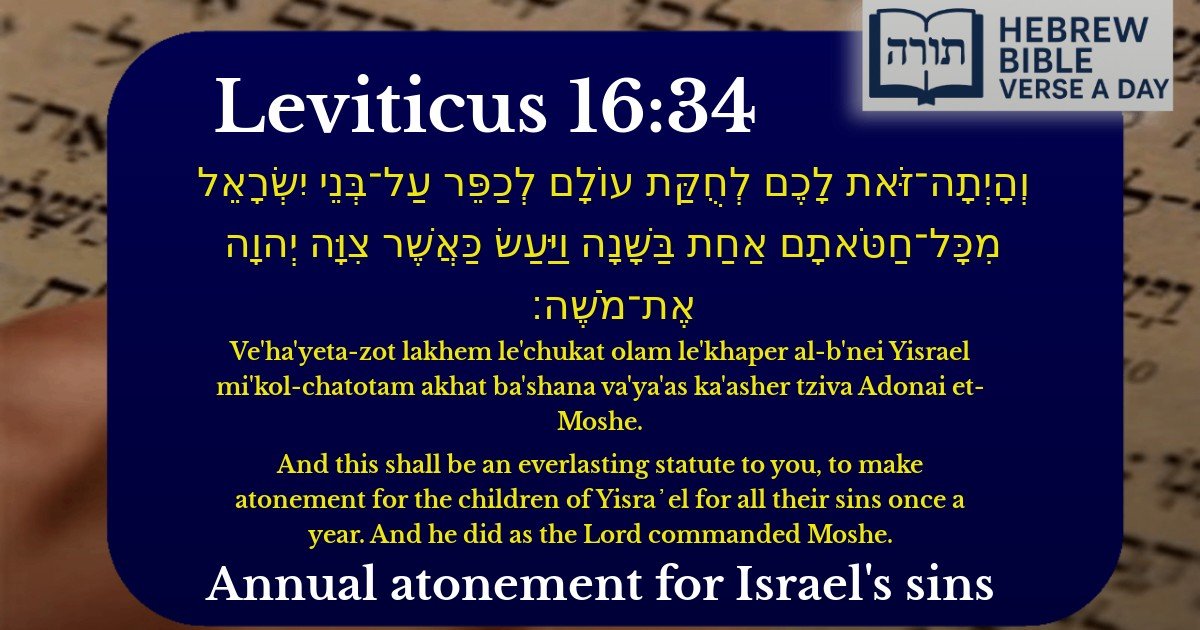
וְהָיְתָה־זֹּאת לָכֶם לְחֻקַּת עוֹלָם לְכַפֵּר עַל־בְּנֵי יִשְׂרָאֵל מִכָּל־חַטֹּאתָם אַחַת בַּשָּׁנָה וַיַּעַשׂ כַּאֲשֶׁר צִוָּה יְהוָה אֶת־מֹשֶׁה׃
English Translation
And this shall be an everlasting statute to you, to make atonement for the children of Yisra᾽el for all their sins once a year. And he did as the Lord commanded Moshe.
Transliteration
Ve'ha'yeta-zot lakhem le'chukat olam le'khaper al-b'nei Yisrael mi'kol-chatotam akhat ba'shana va'ya'as ka'asher tziva Adonai et-Moshe.
Hebrew Leining Text
וְהָֽיְתָה־זֹּ֨את לָכֶ֜ם לְחֻקַּ֣ת עוֹלָ֗ם לְכַפֵּ֞ר עַל־בְּנֵ֤י יִשְׂרָאֵל֙ מִכׇּל־חַטֹּאתָ֔ם אַחַ֖ת בַּשָּׁנָ֑ה וַיַּ֕עַשׂ כַּאֲשֶׁ֛ר צִוָּ֥ה יְהֹוָ֖ה אֶת־מֹשֶֽׁה׃ {פ}
🎵 Listen to leining
Parasha Commentary
📚 Talmud Citations
This verse is quoted in the Talmud.
📖 Yoma 2a
The verse is discussed in the context of the laws of Yom Kippur and the atonement process.
📖 Megillah 31a
The verse is referenced in relation to the reading of the Torah portion for Yom Kippur.
Context of the Verse
This verse (Vayikra 16:34) concludes the description of the Yom Kippur service performed by the Kohen Gadol (High Priest) in the Mishkan (Tabernacle) and later in the Beit HaMikdash (Holy Temple). It establishes the eternal mitzvah of Yom Kippur as the day of national atonement for Bnei Yisrael.
Rashi's Explanation
Rashi explains that "זֹּאת לָכֶם לְחֻקַּת עוֹלָם" ("this shall be an everlasting statute to you") refers specifically to the Yom Kippur service described in the preceding verses, including the special avodah (service) of the Kohen Gadol with the two goats (the goat for Hashem and the scapegoat). Rashi emphasizes that this mitzvah applies "once a year," highlighting its unique annual nature among the Temple services.
Rambam's Perspective
In Hilchot Teshuva (1:3), Rambam teaches that while Yom Kippur provides atonement for sins between man and Hashem, sins between man and his fellow require first seeking forgiveness from the wronged party. This verse's phrase "לְכַפֵּר עַל־בְּנֵי יִשְׂרָאֵל מִכָּל־חַטֹּאתָם" ("to make atonement for the children of Israel for all their sins") must be understood in this context - it refers specifically to sins between man and G-d when proper teshuva (repentance) has been done.
Talmudic Insights
Midrashic Interpretation
The Midrash (Vayikra Rabbah 21:4) connects this verse to the concept that Yom Kippur is compared to a mikveh - just as a mikveh purifies the impure, so does Yom Kippur purify Israel from their sins. The phrase "אַחַת בַּשָּׁנָה" (once a year) emphasizes the annual opportunity for this spiritual purification.
Halachic Implications
The concluding phrase "וַיַּעַשׂ כַּאֲשֶׁר צִוָּה יְהוָה אֶת־מֹשֶׁה" ("And he did as the Lord commanded Moshe") establishes the importance of precisely following the divine commandments regarding the Yom Kippur service, as codified in later halacha regarding the detailed observances of the day.