

Join Our Newsletter To Be Informed When New Videos Are Posted
Hebrew Text
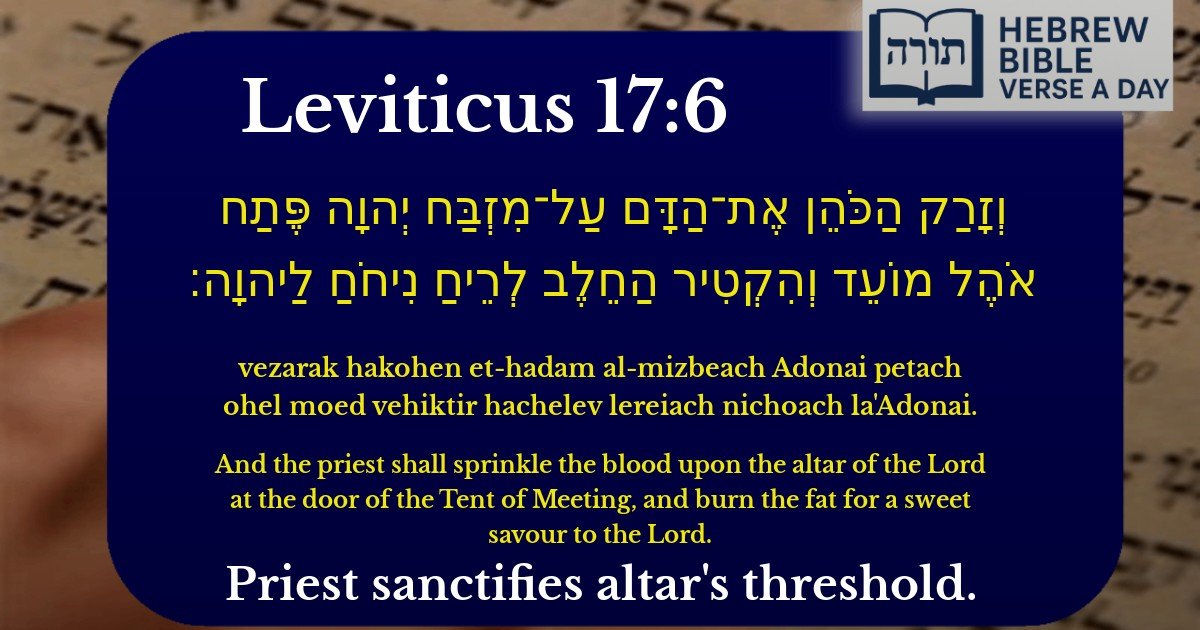
וְזָרַק הַכֹּהֵן אֶת־הַדָּם עַל־מִזְבַּח יְהוָה פֶּתַח אֹהֶל מוֹעֵד וְהִקְטִיר הַחֵלֶב לְרֵיחַ נִיחֹחַ לַיהוָה׃
English Translation
And the priest shall sprinkle the blood upon the altar of the Lord at the door of the Tent of Meeting, and burn the fat for a sweet savour to the Lord.
Transliteration
Vezarak hakohen et-hadam al-mizbeach Adonai petach ohel moed vehiktir hachelev lereiach nichoach la'Adonai.
Hebrew Leining Text
וְזָרַ֨ק הַכֹּהֵ֤ן אֶת־הַדָּם֙ עַל־מִזְבַּ֣ח יְהֹוָ֔ה פֶּ֖תַח אֹ֣הֶל מוֹעֵ֑ד וְהִקְטִ֣יר הַחֵ֔לֶב לְרֵ֥יחַ נִיחֹ֖חַ לַיהֹוָֽה׃
🎵 Listen to leining
Parasha Commentary
📚 Talmud Citations
This verse is quoted in the Talmud.
📖 Zevachim 37b
The verse is discussed in the context of the laws regarding the sprinkling of blood on the altar and the proper procedures for sacrifices.
📖 Menachot 110a
Referenced in a discussion about the significance of the fat being burned as a sweet savour to the Lord, relating to the acceptance of sacrifices.
Verse Context and Overview
This verse (Vayikra 3:2) describes part of the sacrificial service for the zevach shelamim (peace offering), detailing the priestly actions of sprinkling the blood and burning the fat on the altar. The service takes place at the entrance of the Ohel Moed (Tent of Meeting), emphasizing the sanctity of the Mishkan as the dwelling place of the Divine Presence.
Rashi's Commentary on the Blood Sprinkling
Rashi explains that the sprinkling of the blood (zerikat hadam) is performed specifically on the outer altar (mizbeach hachitzon), not the inner one. He notes that the phrase "al mizbach Hashem" (upon the altar of the Lord) refers to the copper altar in the courtyard, as opposed to the golden altar inside the Mishkan. The blood is sprinkled "petach Ohel Moed" (at the entrance of the Tent of Meeting) to signify that the offering is brought before Hashem's presence.
Symbolism of the Fat Burning
The burning of the fat (helev) is described as "rei'ach nichoach laHashem" (a sweet savor to the Lord). The Rambam (Moreh Nevuchim 3:46) explains that this phrase denotes Divine acceptance of the offering when performed with proper intent. The fat, representing the choicest part of the animal, symbolizes the donor's complete devotion to Hashem.
Talmudic and Halachic Insights
Midrashic Interpretation
The Sifra (Torat Kohanim) connects this verse to the broader theme of drawing near to Hashem through korbanot (offerings). The term "korban" (from the root karov, meaning "near") reflects how these rituals facilitate spiritual closeness. The blood represents life (Devarim 12:23), and its sprinkling symbolizes the donor's renewed commitment to Divine service.