

Join Our Newsletter To Be Informed When New Videos Are Posted
Hebrew Text
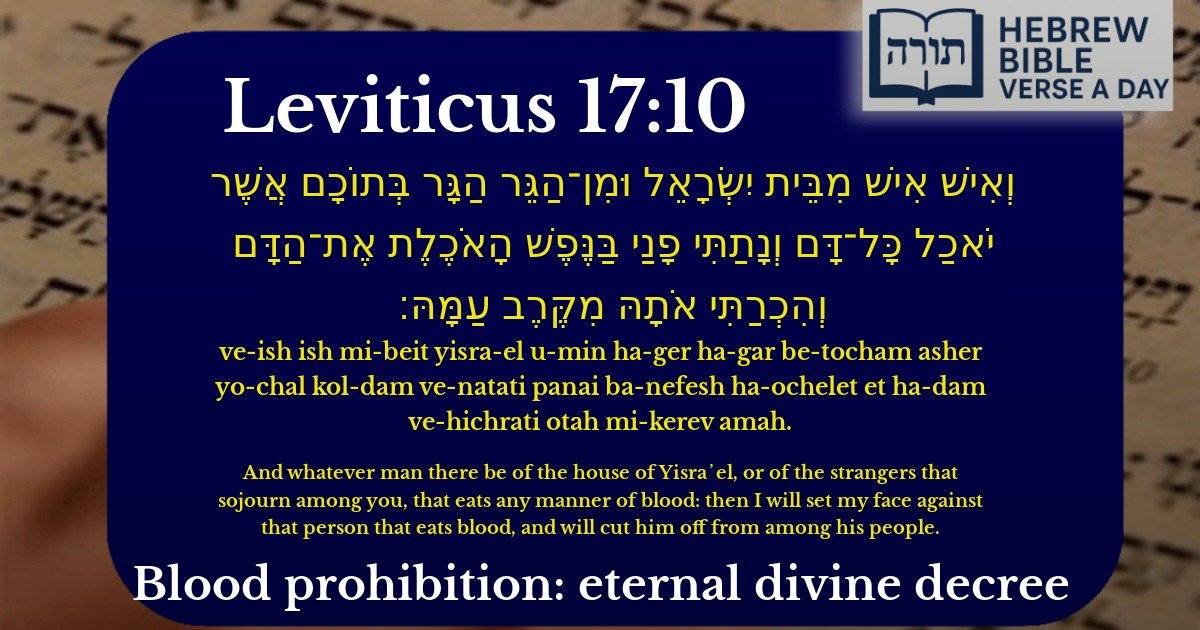
וְאִישׁ אִישׁ מִבֵּית יִשְׂרָאֵל וּמִן־הַגֵּר הַגָּר בְּתוֹכָם אֲשֶׁר יֹאכַל כָּל־דָּם וְנָתַתִּי פָנַי בַּנֶּפֶשׁ הָאֹכֶלֶת אֶת־הַדָּם וְהִכְרַתִּי אֹתָהּ מִקֶּרֶב עַמָּהּ׃
English Translation
And whatever man there be of the house of Yisra᾽el, or of the strangers that sojourn among you, that eats any manner of blood: then I will set my face against that person that eats blood, and will cut him off from among his people.
Transliteration
Ve-ish ish mi-beit yisra-el u-min ha-ger ha-gar be-tocham asher yo-chal kol-dam ve-natati panai ba-nefesh ha-ochelet et ha-dam ve-hichrati otah mi-kerev amah.
Hebrew Leining Text
וְאִ֨ישׁ אִ֜ישׁ מִבֵּ֣ית יִשְׂרָאֵ֗ל וּמִן־הַגֵּר֙ הַגָּ֣ר בְּתוֹכָ֔ם אֲשֶׁ֥ר יֹאכַ֖ל כׇּל־דָּ֑ם וְנָתַתִּ֣י פָנַ֗י בַּנֶּ֙פֶשׁ֙ הָאֹכֶ֣לֶת אֶת־הַדָּ֔ם וְהִכְרַתִּ֥י אֹתָ֖הּ מִקֶּ֥רֶב עַמָּֽהּ׃
🎵 Listen to leining
Parasha Commentary
📚 Talmud Citations
This verse is quoted in the Talmud.
📖 Keritot 20b
The verse is discussed in the context of the prohibition against consuming blood and the severe consequences for violating this commandment.
📖 Yoma 5a
Referenced in a discussion about the atonement process and the seriousness of consuming blood.
📖 Sanhedrin 56b
Cited in the context of the Noahide laws, which also prohibit the consumption of blood.
Prohibition of Consuming Blood
The verse from Vayikra (Leviticus) 17:10 establishes a strict prohibition against consuming blood, applying to both native Israelites and gerim (strangers dwelling among them). The Torah emphasizes the severity of this transgression by stating that Hashem will "set His face against" the offender and "cut him off from among his people." This reflects the gravity of violating this commandment, as blood represents the essence of life (nefesh), as stated in Devarim (Deuteronomy) 12:23: "For the blood is the life (ki hadam hu hanefesh)."
Rashi's Explanation
Rashi (on Vayikra 17:10) explains that the phrase "I will set My face against that person" indicates divine retribution, meaning that Hashem will personally exact punishment rather than leaving it to natural consequences. The term "cut off" (vehichrati) refers to karet, a spiritual excision from one's people, which can imply premature death or being severed from one's spiritual heritage in the World to Come.
Rambam's Perspective
Rambam (Hilchot Ma'achalot Asurot 6:1) categorizes the prohibition of consuming blood as one of the 613 mitzvot and elaborates that this applies to all blood, whether from kosher or non-kosher animals. He further notes (6:2) that even a minute quantity of blood is forbidden, emphasizing the Torah's strict stance on this matter.
Midrashic Insights
The Midrash Tanchuma (Acharei Mot 7) connects this prohibition to the sanctity of life, teaching that blood, as the carrier of the soul, must be treated with reverence. By refraining from consuming blood, we acknowledge that life belongs solely to Hashem, reinforcing the principle of kedushat hachayim (sanctity of life).
Halachic Implications