

Join Our Newsletter To Be Informed When New Videos Are Posted
Hebrew Text
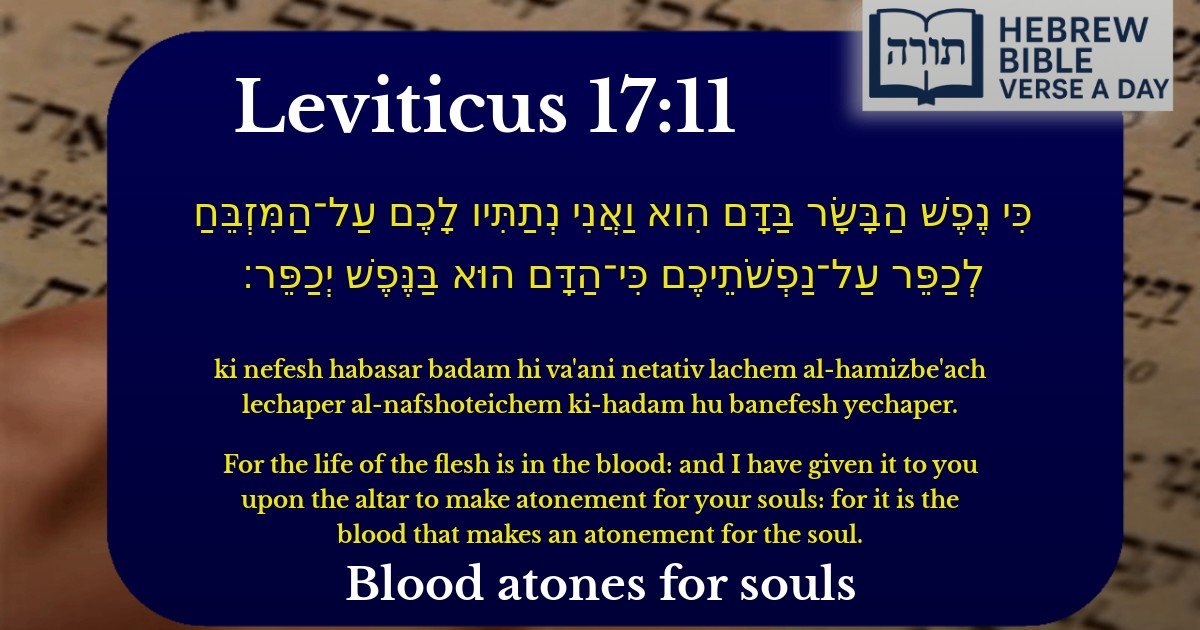
כִּי נֶפֶשׁ הַבָּשָׂר בַּדָּם הִוא וַאֲנִי נְתַתִּיו לָכֶם עַל־הַמִּזְבֵּחַ לְכַפֵּר עַל־נַפְשֹׁתֵיכֶם כִּי־הַדָּם הוּא בַּנֶּפֶשׁ יְכַפֵּר׃
English Translation
For the life of the flesh is in the blood: and I have given it to you upon the altar to make atonement for your souls: for it is the blood that makes an atonement for the soul.
Transliteration
Ki nefesh habasar badam hi va'ani netativ lachem al-hamizbe'ach lechaper al-nafshoteichem ki-hadam hu banefesh yechaper.
Hebrew Leining Text
כִּ֣י נֶ֣פֶשׁ הַבָּשָׂר֮ בַּדָּ֣ם הִוא֒ וַאֲנִ֞י נְתַתִּ֤יו לָכֶם֙ עַל־הַמִּזְבֵּ֔חַ לְכַפֵּ֖ר עַל־נַפְשֹׁתֵיכֶ֑ם כִּֽי־הַדָּ֥ם ה֖וּא בַּנֶּ֥פֶשׁ יְכַפֵּֽר׃
🎵 Listen to leining
Parasha Commentary
📚 Talmud Citations
This verse is quoted in the Talmud.
📖 Yoma 5a
The verse is discussed in the context of the sacrificial service and the atonement provided by the blood of the offerings.
📖 Zevachim 6a
The verse is referenced in discussions about the laws of sacrifices and the significance of blood in the sacrificial process.
📖 Keritot 22b
The verse is cited in relation to the atonement achieved through the blood of sacrifices and its role in the forgiveness of sins.
The Significance of Blood in Atonement
The verse (Vayikra 17:11) establishes a profound connection between blood, life, and atonement. Rashi explains that the phrase "כִּי נֶפֶשׁ הַבָּשָׂר בַּדָּם הִוא" ("For the life of the flesh is in the blood") teaches that the soul of a living creature is sustained by its blood. This principle underlies the Torah's prohibition against consuming blood (Vayikra 17:10), as doing so would be akin to consuming the life-force itself.
The Role of Blood in the Korbanot (Sacrifices)
Rambam (Moreh Nevuchim 3:46) discusses how the sacrificial service directs human focus toward Hashem by utilizing the most vital element—blood—as the medium for atonement. The verse states "וַאֲנִי נְתַתִּיו לָכֶם עַל־הַמִּזְבֵּחַ לְכַפֵּר עַל־נַפְשֹׁתֵיכֶם" ("I have given it to you upon the altar to make atonement for your souls"), emphasizing that blood's sanctity in the Temple service is by Divine decree, not human invention.
Mechanism of Kaparah (Atonement)
The Talmud (Yoma 5a) derives from "כִּי־הַדָּם הוּא בַּנֶּפֶשׁ יְכַפֵּר" ("for it is the blood that makes atonement for the soul") that atonement is achieved specifically through the blood of the korban, not its flesh. The Kli Yakar adds that blood represents the essence of repentance—just as blood sustains physical life, sincere repentance revitalizes the spiritual soul. The altar service thus serves as a tangible expression of returning one's life-force to Hashem.
Key Teachings from Orthodox Commentators