

Join Our Newsletter To Be Informed When New Videos Are Posted
Hebrew Text
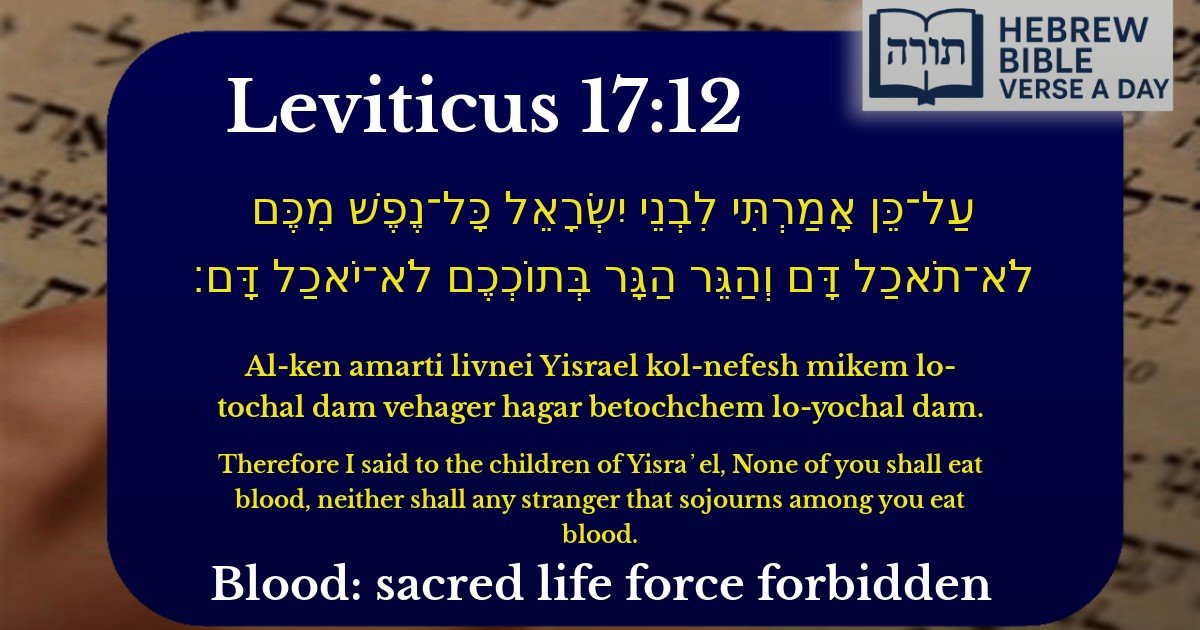
עַל־כֵּן אָמַרְתִּי לִבְנֵי יִשְׂרָאֵל כָּל־נֶפֶשׁ מִכֶּם לֹא־תֹאכַל דָּם וְהַגֵּר הַגָּר בְּתוֹכְכֶם לֹא־יֹאכַל דָּם׃
English Translation
Therefore I said to the children of Yisra᾽el, None of you shall eat blood, neither shall any stranger that sojourns among you eat blood.
Transliteration
Al-ken amarti livnei Yisrael kol-nefesh mikem lo-tochal dam vehager hagar betochchem lo-yochal dam.
Hebrew Leining Text
עַל־כֵּ֤ן אָמַ֙רְתִּי֙ לִבְנֵ֣י יִשְׂרָאֵ֔ל כׇּל־נֶ֥פֶשׁ מִכֶּ֖ם לֹא־תֹ֣אכַל דָּ֑ם וְהַגֵּ֛ר הַגָּ֥ר בְּתוֹכְכֶ֖ם לֹא־יֹ֥אכַל דָּֽם׃
🎵 Listen to leining
Parasha Commentary
📚 Talmud Citations
This verse is quoted in the Talmud.
📖 Keritot 20b
The verse is cited in a discussion about the prohibition of eating blood and its implications for both Israelites and strangers residing among them.
📖 Yoma 5a
Referenced in the context of discussing the laws of atonement and the sanctity of blood in sacrificial rites.
Prohibition of Eating Blood
The verse (Vayikra 17:12) reiterates the Torah's strict prohibition against consuming blood, applying equally to both native Israelites and gerim (sojourners) living among them. This builds upon earlier prohibitions (e.g., Vayikra 7:26-27) and carries severe consequences, as the Torah states (Vayikra 17:14) that one who consumes blood will be "cut off" (karet).
Rashi's Explanation
Rashi (on Vayikra 17:12) explains that the phrase "עַל־כֵּן" ("therefore") connects this prohibition to the preceding verses discussing sacrificial laws. Since blood represents the life-force (nefesh) and is designated for atonement on the altar, it is forbidden for consumption. Rashi emphasizes that this applies universally—even to non-Jews residing among Israel—demonstrating the sanctity of lifeblood.
Rambam's Legal Perspective
In Mishneh Torah (Hilchot Ma'achalot Asurot 6:1), Rambam codifies this prohibition as one of the 613 mitzvot. He notes that the blood of permitted animals, birds, and wild game is equally forbidden. The Rambam further states (Hilchot Melachim 9:10) that this prohibition is among the seven Noahide laws binding on all humanity, reinforcing its universal moral significance.
Philosophical and Ethical Dimensions
Practical Halachic Implications
The Shulchan Aruch (Yoreh De'ah 66-67) details the extensive laws of kashering meat to remove blood, including salting, roasting, or broiling permitted meats. These practices ensure compliance with the biblical prohibition while allowing consumption of meat in a sanctified manner.