

Join Our Newsletter To Be Informed When New Videos Are Posted
Hebrew Text
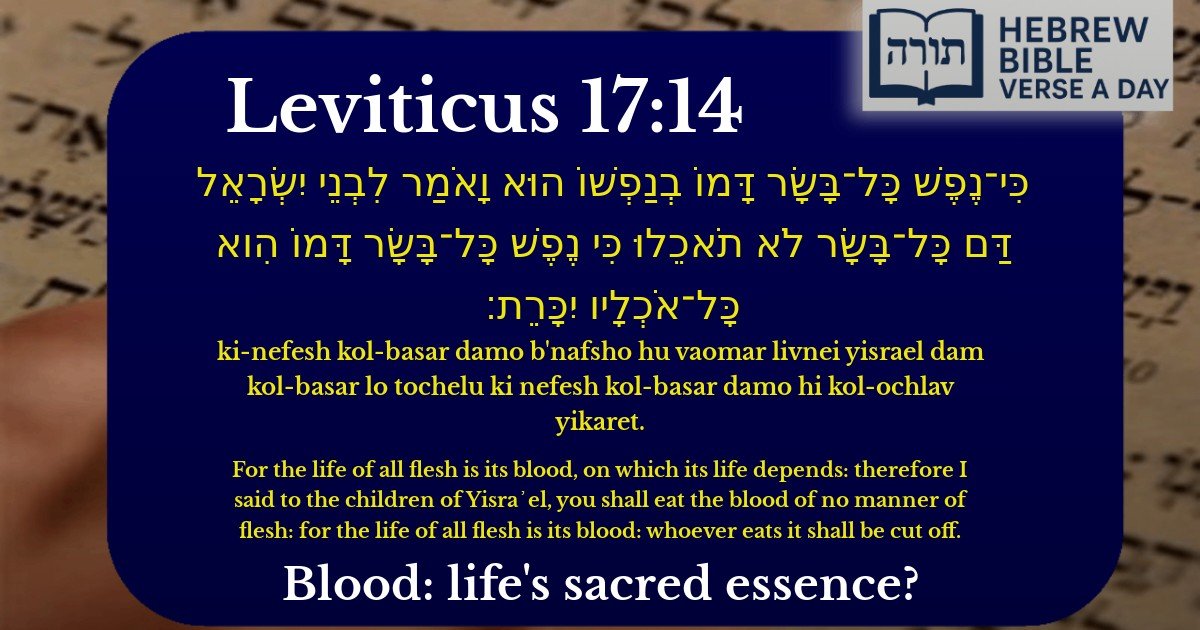
כִּי־נֶפֶשׁ כָּל־בָּשָׂר דָּמוֹ בְנַפְשׁוֹ הוּא וָאֹמַר לִבְנֵי יִשְׂרָאֵל דַּם כָּל־בָּשָׂר לֹא תֹאכֵלוּ כִּי נֶפֶשׁ כָּל־בָּשָׂר דָּמוֹ הִוא כָּל־אֹכְלָיו יִכָּרֵת׃
English Translation
For the life of all flesh is its blood, on which its life depends: therefore I said to the children of Yisra᾽el, you shall eat the blood of no manner of flesh: for the life of all flesh is its blood: whoever eats it shall be cut off.
Transliteration
Ki-nefesh kol-basar damo b'nafsho hu vaomar livnei yisrael dam kol-basar lo tochelu ki nefesh kol-basar damo hi kol-ochlav yikaret.
Hebrew Leining Text
כִּֽי־נֶ֣פֶשׁ כׇּל־בָּשָׂ֗ר דָּמ֣וֹ בְנַפְשׁוֹ֮ הוּא֒ וָֽאֹמַר֙ לִבְנֵ֣י יִשְׂרָאֵ֔ל דַּ֥ם כׇּל־בָּשָׂ֖ר לֹ֣א תֹאכֵ֑לוּ כִּ֣י נֶ֤פֶשׁ כׇּל־בָּשָׂר֙ דָּמ֣וֹ הִ֔וא כׇּל־אֹכְלָ֖יו יִכָּרֵֽת׃
🎵 Listen to leining
Parasha Commentary
📚 Talmud Citations
This verse is quoted in the Talmud.
📖 Chullin 33a
The verse is cited in a discussion about the prohibition of consuming blood and the severity of this transgression.
📖 Keritot 20b
The verse is referenced in the context of discussing the penalties for various sins, including the consumption of blood.
Understanding the Prohibition of Blood Consumption
The verse (Vayikra 17:14) emphasizes the sanctity of blood as the life-force (nefesh) of all flesh. Rashi explains that the repetition of "ki nefesh kol basar damo hu" ("for the life of all flesh is its blood") underscores the severity of this prohibition. Blood is intrinsically tied to the soul, and consuming it is akin to consuming life itself, which is reserved for Hashem alone.
The Spiritual Significance of Blood
Rambam (Hilchot Ma'achalot Asurot 6:1) elaborates that blood represents the potential for atonement when offered on the Mizbe'ach (altar). By abstaining from consuming blood, Bnei Yisrael acknowledge that life belongs to Hashem and that blood's sacred role is in divine service, not human consumption. The Sforno adds that this prohibition elevates humanity by distancing them from animalistic behavior.
The Punishment of Karet
The verse concludes with "kol ochlav yikaret" ("whoever eats it shall be cut off"). The Talmud (Sanhedrin 83a) discusses karet as a severe spiritual consequence, often interpreted as premature death or being severed from one's spiritual roots. The Ramban notes that this punishment reflects the gravity of violating a prohibition tied to the essence of life.
Practical Halachic Implications
Midrashic Insight
The Midrash (Vayikra Rabbah 22:6) compares blood consumption to stealing from the Mizbe'ach, as blood rightfully belongs to Hashem. This metaphor reinforces the idea that life-force is divine property, and its misuse disrupts the spiritual order.