

Join Our Newsletter To Be Informed When New Videos Are Posted
Hebrew Text
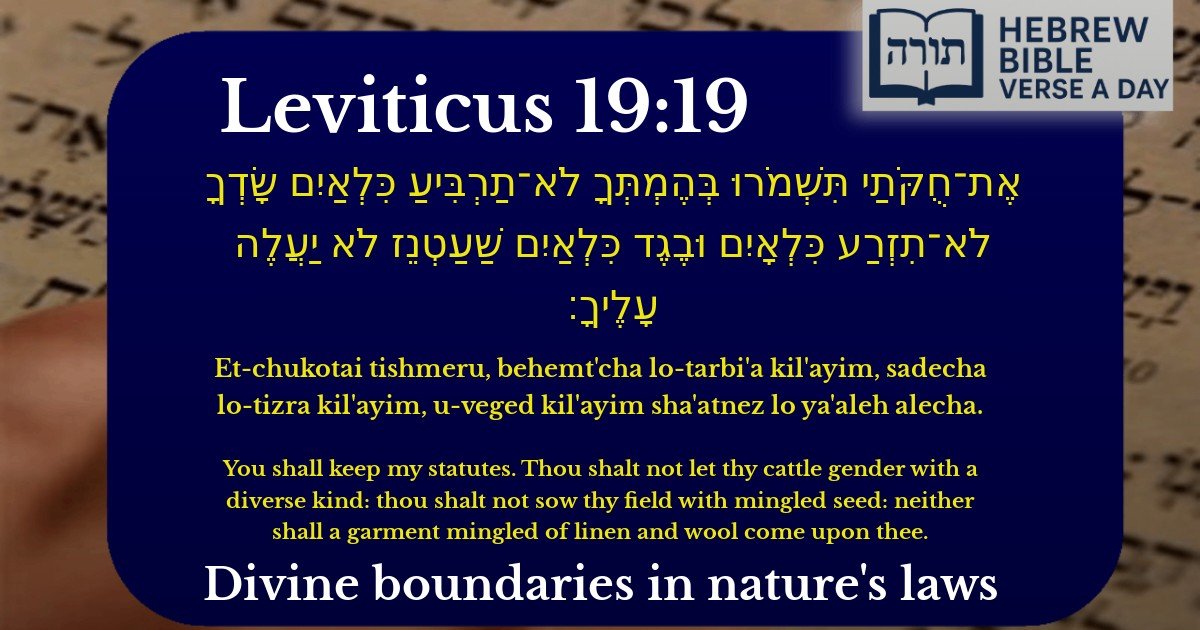
אֶת־חֻקֹּתַי תִּשְׁמֹרוּ בְּהֶמְתְּךָ לֹא־תַרְבִּיעַ כִּלְאַיִם שָׂדְךָ לֹא־תִזְרַע כִּלְאָיִם וּבֶגֶד כִּלְאַיִם שַׁעַטְנֵז לֹא יַעֲלֶה עָלֶיךָ׃
English Translation
You shall keep my statutes. Thou shalt not let thy cattle gender with a diverse kind: thou shalt not sow thy field with mingled seed: neither shall a garment mingled of linen and wool come upon thee.
Transliteration
Et-chukotai tishmeru, behemt'cha lo-tarbi'a kil'ayim, sadecha lo-tizra kil'ayim, u-veged kil'ayim sha'atnez lo ya'aleh alecha.
Hebrew Leining Text
אֶֽת־חֻקֹּתַי֮ תִּשְׁמֹ֒רוּ֒ בְּהֶמְתְּךָ֙ לֹא־תַרְבִּ֣יעַ כִּלְאַ֔יִם שָׂדְךָ֖ לֹא־תִזְרַ֣ע כִּלְאָ֑יִם וּבֶ֤גֶד כִּלְאַ֙יִם֙ שַֽׁעַטְנֵ֔ז לֹ֥א יַעֲלֶ֖ה עָלֶֽיךָ׃
🎵 Listen to leining
Parasha Commentary
📚 Talmud Citations
This verse is quoted in the Talmud.
📖 Kiddushin 39a
The verse is referenced in a discussion about the prohibition of mixing different kinds of seeds, animals, and fabrics, emphasizing the importance of adhering to divine statutes.
📖 Niddah 61b
The verse is cited in the context of discussing the laws of forbidden mixtures, particularly the prohibition of wearing garments made of wool and linen (sha'atnez).
📖 Yevamot 4a
The verse is mentioned in a broader discussion about the categories of biblical prohibitions and their implications for Jewish law.
Overview of the Verse
The verse from Vayikra (Leviticus) 19:19 contains three prohibitions related to the concept of kilayim (forbidden mixtures):
Rashi's Explanation
Rashi explains that these laws are chukim—divine statutes whose reasons are not explicitly revealed, yet we observe them as decrees of the King. He notes that the Torah emphasizes "My statutes" to indicate that these are commandments from Hashem, even if their rationale is not fully understood.
Rambam's Perspective (Hilchot Kilayim)
In Mishneh Torah, Rambam categorizes these prohibitions under the laws of kilayim. He explains that these restrictions serve to maintain the natural order established by Hashem. Crossbreeding animals or mixing seeds disrupts the boundaries set during Creation (Bereishit 1:11-12, 24-25).
Midrashic Insights
The Midrash Tanchuma (Kedoshim 7) connects these laws to the idea of holiness (kedushah), teaching that just as Hashem separated the Jewish people to be holy, we must avoid mixing what He has designated as separate.
Sha'atnez in Halacha
The prohibition of sha'atnez (wool and linen) receives special attention in the Talmud (Niddah 61b, Yevamot 4a-5b). The Gemara discusses:
Philosophical Significance
The Sefer HaChinuch (Mitzvah 244-246) suggests these laws train us to recognize and respect the divine wisdom in Creation. By refraining from altering species or mixing materials, we acknowledge that Hashem created each element with a specific purpose.