

Join Our Newsletter To Be Informed When New Videos Are Posted
Hebrew Text
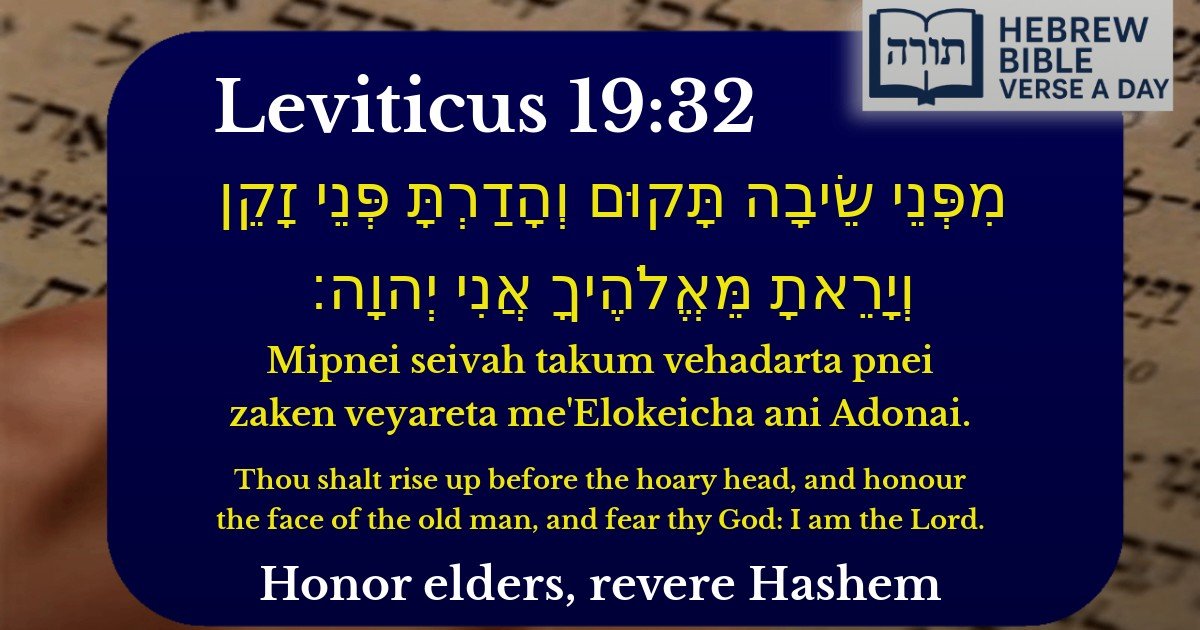
מִפְּנֵי שֵׂיבָה תָּקוּם וְהָדַרְתָּ פְּנֵי זָקֵן וְיָרֵאתָ מֵּאֱלֹהֶיךָ אֲנִי יְהוָה׃
English Translation
Thou shalt rise up before the hoary head, and honour the face of the old man, and fear thy God: I am the Lord.
Transliteration
Mipnei seivah takum vehadarta pnei zaken veyareta me'Elokeicha ani Adonai.
Hebrew Leining Text
מִפְּנֵ֤י שֵׂיבָה֙ תָּק֔וּם וְהָדַרְתָּ֖ פְּנֵ֣י זָקֵ֑ן וְיָרֵ֥אתָ מֵּאֱלֹהֶ֖יךָ אֲנִ֥י יְהֹוָֽה׃ {ס}
🎵 Listen to leining
Parasha Commentary
📚 Talmud Citations
This verse is quoted in the Talmud.
📖 Kiddushin 32b
The verse is cited in a discussion about the obligation to stand before an elderly person and the honor due to them, emphasizing the connection between honoring the elderly and fearing God.
📖 Yevamot 6a
Referenced in the context of discussing the importance of honoring elders and the broader implications of reverence for God in interpersonal commandments.
Understanding the Verse
The verse (Vayikra 19:32) commands us to show respect to the elderly by rising in their presence and honoring them, while also reminding us of our duty to fear Hashem. This mitzvah is rooted in recognizing the wisdom and life experience of elders, as well as the divine presence reflected in their years.
Rashi's Commentary
Rashi explains that "hoary head" (שֵׂיבָה) refers to one who has acquired wisdom through age. He emphasizes that the mitzvah applies not only to Torah scholars but to any elderly person, as their life experiences grant them a degree of reverence. The phrase "and fear thy God" serves as a warning against showing disrespect when no one else is watching, since Hashem knows our true intentions.
Rambam's Perspective
In Hilchot Talmud Torah (6:9), the Rambam expands on this mitzvah, stating that one must stand for a zaken (elder), even if they are not a Torah scholar, as long as they have lived a life of righteousness. He also notes that this honor extends to helping the elderly with their physical needs, such as offering a seat or assisting them in walking.
Talmudic Insights
Midrashic Interpretation
The Midrash (Vayikra Rabbah 19:3) connects this mitzvah to the reverence shown to Moshe Rabbeinu, whose face shone with wisdom in his later years. It teaches that honoring the elderly is a way of acknowledging the divine wisdom that accumulates over a lifetime of mitzvot and experiences.
Practical Halachic Application
Spiritual Significance
The concluding words, "I am Hashem," remind us that this mitzvah is not merely social etiquette but a divine commandment. By honoring the elderly, we acknowledge Hashem's presence in the wisdom of those who have lived long lives, reinforcing the connection between reverence for elders and reverence for the Almighty.