
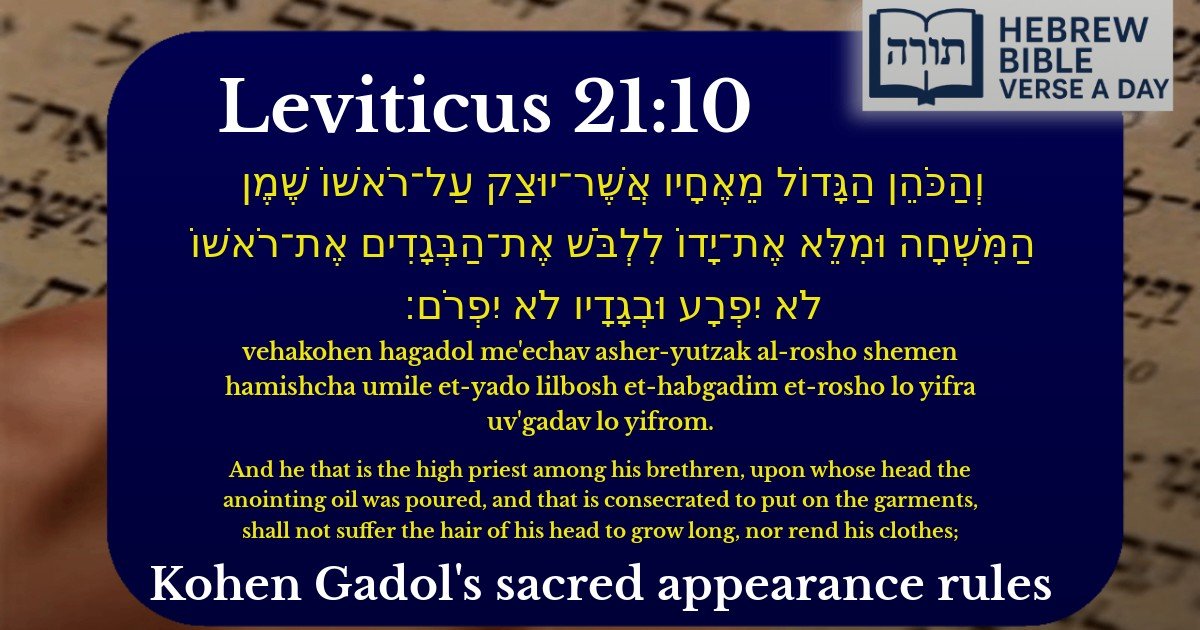

Leviticus 21:10 - Kohen Gadol's sacred appearance rules

Leviticus 21:10 - ויקרא 21:10

Hebrew Text

וְהַכֹּהֵן הַגָּדוֹל מֵאֶחָיו אֲשֶׁר־יוּצַק עַל־רֹאשׁוֹ שֶׁמֶן הַמִּשְׁחָה וּמִלֵּא אֶת־יָדוֹ לִלְבֹּשׁ אֶת־הַבְּגָדִים אֶת־רֹאשׁוֹ לֹא יִפְרָע וּבְגָדָיו לֹא יִפְרֹם׃

English Translation

And he that is the high priest among his brethren, upon whose head the anointing oil was poured, and that is consecrated to put on the garments, shall not suffer the hair of his head to grow long, nor rend his clothes;

Transliteration

Vehakohen hagadol me'echav asher-yutzak al-rosho shemen hamishcha umile et-yado lilbosh et-habgadim et-rosho lo yifra uv'gadav lo yifrom.

Hebrew Leining Text

וְהַכֹּהֵן֩ הַגָּד֨וֹל מֵאֶחָ֜יו אֲֽשֶׁר־יוּצַ֥ק עַל־רֹאשׁ֣וֹ ׀ שֶׁ֤מֶן הַמִּשְׁחָה֙ וּמִלֵּ֣א אֶת־יָד֔וֹ לִלְבֹּ֖שׁ אֶת־הַבְּגָדִ֑ים אֶת־רֹאשׁוֹ֙ לֹ֣א יִפְרָ֔ע וּבְגָדָ֖יו לֹ֥א יִפְרֹֽם׃

🎵 Listen to leining

Parasha Commentary

The Sanctity of the Kohen Gadol

The verse (Vayikra 21:10) describes the unique sanctity and restrictions placed upon the Kohen Gadol (High Priest). Unlike regular Kohanim, the Kohen Gadol is subject to additional prohibitions due to his elevated status. Rashi explains that the phrase "מֵאֶחָיו" (among his brethren) emphasizes that the Kohen Gadol must still maintain humility despite his lofty position—he is chosen from his brothers, not above them in arrogance.

The Anointing Oil and Consecration

The verse mentions two key elements of the Kohen Gadol's inauguration:

  • שֶׁמֶן הַמִּשְׁחָה (the anointing oil): Rambam (Hilchot Klei HaMikdash 4:12) teaches that the anointing oil symbolizes divine selection and spiritual elevation. The oil was poured on the Kohen Gadol's head, representing wisdom and divine favor.
  • וּמִלֵּא אֶת־יָדוֹ (consecrated to put on the garments): The Sifra explains that the act of wearing the special priestly garments completes his consecration, as the garments themselves are holy and essential to his service.

Prohibitions of Mourning

The verse prohibits the Kohen Gadol from two mourning practices:

  • לֹא יִפְרָע (shall not let his hair grow long): The Talmud (Moed Katan 14b) states that this refers to the prohibition of neglecting one's hair in grief, as was customary for mourners. The Kohen Gadol must maintain dignity at all times.
  • וּבְגָדָיו לֹא יִפְרֹם (nor rend his clothes): The Midrash (Torat Kohanim) explains that tearing garments is a public expression of grief, but the Kohen Gadol must remain composed, as his role requires constant sanctity, even in personal sorrow.

Spiritual Implications

The Ramban (Nachmanides) teaches that these restrictions highlight the Kohen Gadol's role as a perpetual servant of Hashem. Unlike others, he must not allow personal grief to interfere with his sacred duties, as he represents the entire nation before G-d. The Kli Yakar adds that the Kohen Gadol’s unbroken garments symbolize the unbroken covenant between Hashem and Israel.

📚 Talmud Citations

This verse is quoted in the Talmud.

📖 Sanhedrin 18a
The verse is referenced in a discussion about the laws pertaining to the High Priest, specifically regarding the prohibitions against letting his hair grow long and rending his clothes.
📖 Horayot 12a
The verse is cited in the context of discussing the unique status and obligations of the High Priest compared to other priests.

Frequently Asked Questions

Q: What does it mean that the Kohen Gadol (High Priest) cannot let his hair grow long or tear his clothes?
A: The Torah commands the Kohen Gadol to maintain a dignified appearance by not letting his hair grow wild (לא יפרע) and not tearing his clothes (לא יפרם), even in mourning. Rashi explains that this teaches us that the Kohen Gadol must always uphold holiness and composure, even in difficult situations, as he represents the entire Jewish people before Hashem.
Q: Why is the Kohen Gadol anointed with special oil?
A: The anointing oil (שמן המשחה) symbolizes the sanctification and divine appointment of the Kohen Gadol for his sacred role. Rambam (Hilchot Klei HaMikdash 4:12) explains that this oil, prepared with unique spices, was used only for anointing kings, Kohanim Gedolim, and the Mishkan's vessels, showing their elevated status in serving Hashem.
Q: What can we learn from the Kohen Gadol's restrictions on mourning practices?
A: The Talmud (Moed Katan 14b) teaches that while ordinary Kohanim may mourn close relatives by letting their hair grow and tearing garments, the Kohen Gadol must prioritize his public role over personal grief. This teaches us that leadership sometimes requires setting aside personal emotions for the greater good of the community.
Q: How does the concept of the Kohen Gadol's special garments apply today?
A: Though we no longer have the Beit HaMikdash (Temple), the Midrash (Tanchuma Tetzaveh 8) explains that the Kohen Gadol's garments atoned for various sins. Today, we learn from this the importance of dressing modestly and appropriately when engaging in holy activities, such as prayer or Torah study, as clothing affects our mindset and respect for mitzvot.
Q: Why is the Kohen Gadol described as being 'among his brethren'?
A: Rashi (on this verse) notes that the phrase 'among his brethren' emphasizes that the Kohen Gadol must remain humble—despite his high position, he is still one of the Jewish people. The Sifra adds that this teaches leaders to stay connected to their community and avoid arrogance.