Frequently Asked Questions
Q: What does it mean when the Torah says 'And the Lord spoke to Moshe, saying'?
A: This phrase appears frequently in the Torah to indicate that Hashem is giving a direct commandment or instruction to Moshe. According to Rashi, this wording emphasizes that Moshe transmitted Hashem's words exactly as he received them, without adding or omitting anything.
Q: Why does the Torah repeat 'saying' after 'And the Lord spoke to Moshe'?
A: The Talmud (Yoma 4b) explains that the word 'saying' (לֵּאמֹר) teaches that Moshe was commanded to repeat these words to the Jewish people. It implies an instruction to transmit the message further, showing Moshe's role as the faithful messenger of Hashem's commandments.
Q: How is this opening phrase significant in the book of Leviticus?
A: This phrase introduces many commandments in Leviticus, highlighting that the laws come directly from Hashem. Rambam explains in Moreh Nevuchim that this emphasizes the divine origin of the Torah's laws, particularly the detailed ritual and priestly laws that follow in this section.
Q: What can we learn from the way Hashem communicates with Moshe?
A: The Midrash (Sifra) notes that this demonstrates Hashem's closeness to Moshe and the Jewish people. The clear, direct communication shows the special relationship between Hashem and His nation, and teaches us the importance of receiving Torah teachings from authentic, divinely-inspired teachers.
Q: Does this phrase have any significance for us today?
A: Yes. The Talmud (Berachos 5a) derives from such verses that just as Hashem spoke to Moshe face-to-face, we should approach Torah study with that same sense of direct connection. This phrase reminds us that the Torah we study today is the same divine word given at Sinai.

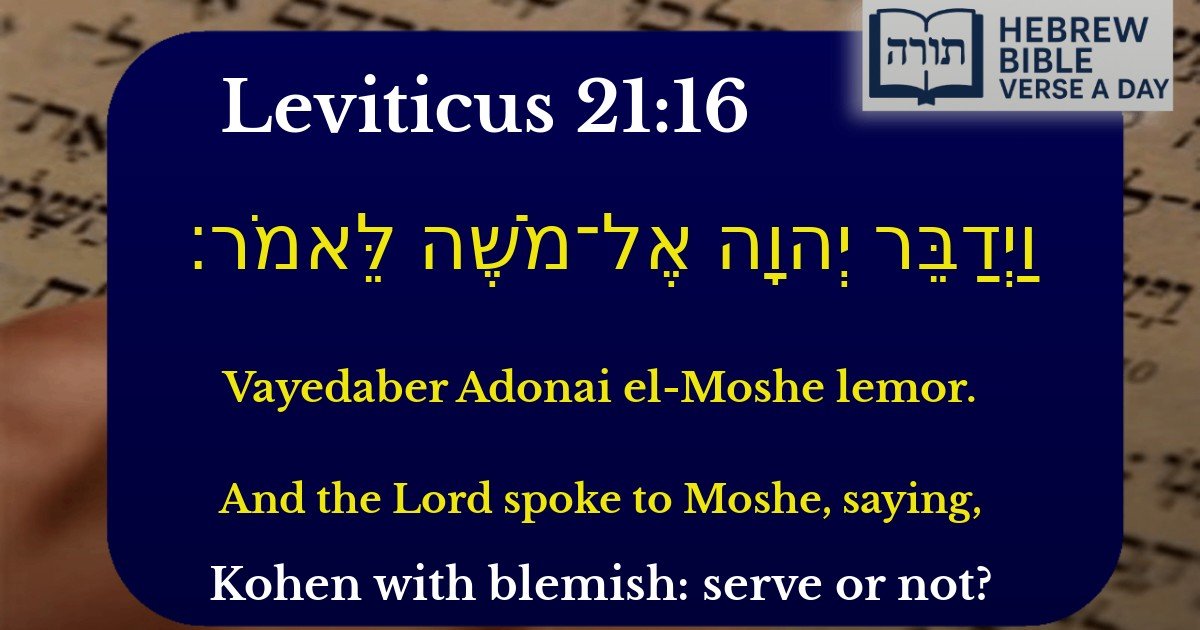

The Divine Communication to Moshe
The verse "וַיְדַבֵּר יְהוָה אֶל־מֹשֶׁה לֵּאמֹר" ("And the Lord spoke to Moshe, saying") introduces many instances of divine revelation throughout the Torah. This phrase serves as a foundational template for how Hashem conveys His will to Moshe Rabbeinu and, by extension, to Bnei Yisrael.
Rashi's Explanation
Rashi (Shemot 6:2) notes that this expression emphasizes the clarity and directness of Hashem's communication with Moshe. Unlike other forms of prophecy, which might come through dreams or visions (see Bamidbar 12:6-8), Moshe received the word of Hashem "פה אל פה" ("mouth to mouth")—a distinction highlighting his unique prophetic stature.
Rambam's Perspective
In Moreh Nevuchim (2:45), the Rambam explains that the term "וַיְדַבֵּר" ("spoke") indicates a higher level of prophecy than terms like "וַיֹּאמֶר" ("said"). This reflects the authoritative and deliberate nature of the transmission, underscoring that Moshe's prophecy was unparalleled in its precision and divine origin.
Midrashic Insights
Halachic Implications
The Talmud (Sanhedrin 56a) derives from this phrase that Moshe was commanded to relay not just the general principles of the mitzvot but also their precise details. This establishes the basis for the Oral Torah, ensuring the transmission of both written and oral traditions.