

Join Our Newsletter To Be Informed When New Videos Are Posted
Hebrew Text
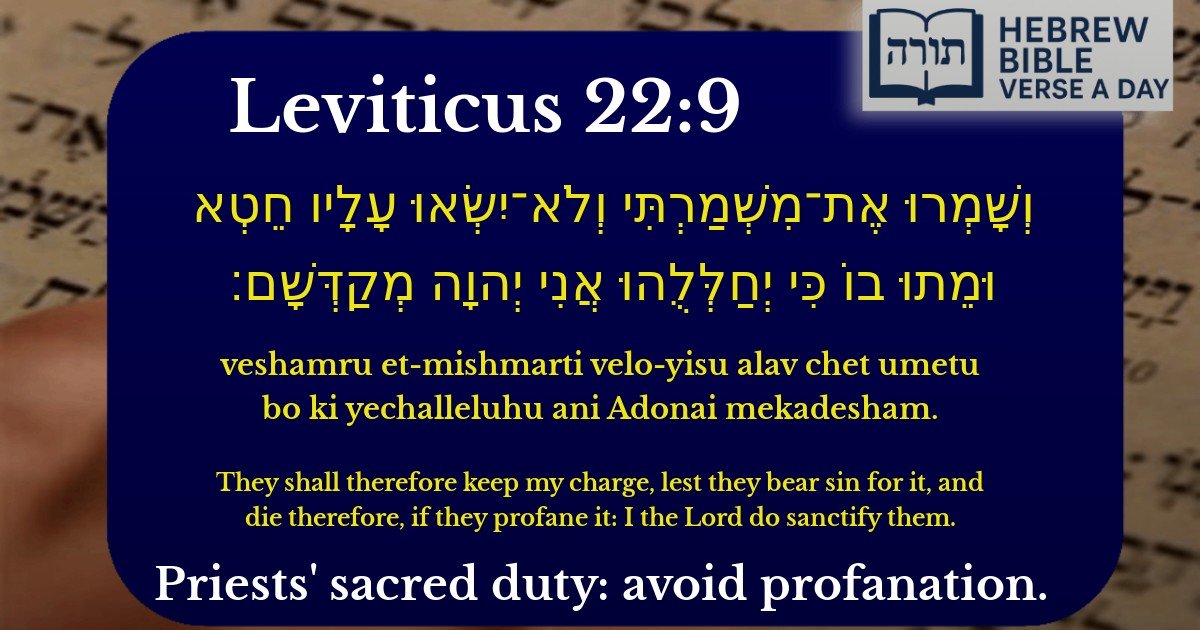
וְשָׁמְרוּ אֶת־מִשְׁמַרְתִּי וְלֹא־יִשְׂאוּ עָלָיו חֵטְא וּמֵתוּ בוֹ כִּי יְחַלְּלֻהוּ אֲנִי יְהוָה מְקַדְּשָׁם׃
English Translation
They shall therefore keep my charge, lest they bear sin for it, and die therefore, if they profane it: I the Lord do sanctify them.
Transliteration
Veshamru et-mishmarti velo-yisu alav chet umetu bo ki yechalleluhu ani Adonai mekadesham.
Hebrew Leining Text
וְשָׁמְר֣וּ אֶת־מִשְׁמַרְתִּ֗י וְלֹֽא־יִשְׂא֤וּ עָלָיו֙ חֵ֔טְא וּמֵ֥תוּ ב֖וֹ כִּ֣י יְחַלְּלֻ֑הוּ אֲנִ֥י יְהֹוָ֖ה מְקַדְּשָֽׁם׃
🎵 Listen to leining
Parasha Commentary
📚 Talmud Citations
This verse is not quoted in the Talmud.
Context and Source
The verse (Vayikra 22:9) appears in the context of the laws pertaining to the kohanim (priests) and their obligations to maintain the sanctity of the offerings and the Mishkan (Tabernacle). It is part of a broader discussion about the responsibilities of the kohanim in their service to Hashem.
Explanation of the Verse
The phrase "וְשָׁמְרוּ אֶת־מִשְׁמַרְתִּי" ("They shall therefore keep my charge") refers to the kohanim's duty to safeguard the sanctity of the Temple service and the holy items entrusted to them. Rashi explains that this includes both positive commandments (what they must do) and negative commandments (what they must avoid). The kohanim must be vigilant in their duties to prevent any desecration of the sacred.
The warning "וְלֹא־יִשְׂאוּ עָלָיו חֵטְא" ("lest they bear sin for it") emphasizes the severe consequences of negligence. Rambam (Hilchot Bi'at HaMikdash 9:7) elaborates that any improper handling of sanctified items or deviation from the prescribed service constitutes a sin, which could lead to severe punishment.
The phrase "וּמֵתוּ בוֹ כִּי יְחַלְּלֻהוּ" ("and die therefore, if they profane it") underscores the gravity of profaning sacred matters. The Talmud (Sanhedrin 83a) discusses that intentional misuse of sanctified objects can incur the penalty of karet (spiritual excision) or even death at the hands of Heaven.
The concluding words "אֲנִי יְהוָה מְקַדְּשָׁם" ("I the Lord do sanctify them") affirm that the sanctity of the kohanim is derived from Hashem Himself. The Sforno explains that their holiness is not inherent but is granted by divine decree, reinforcing their obligation to uphold their sacred role with utmost care.
Key Lessons