

Join Our Newsletter To Be Informed When New Videos Are Posted
Hebrew Text
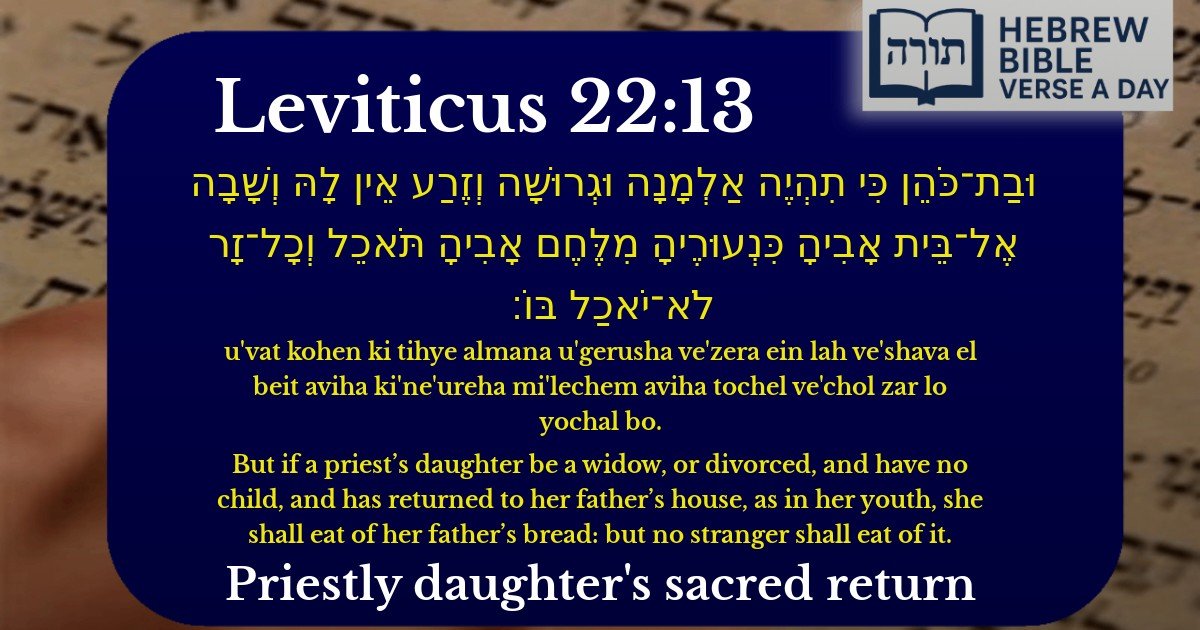
וּבַת־כֹּהֵן כִּי תִהְיֶה אַלְמָנָה וּגְרוּשָׁה וְזֶרַע אֵין לָהּ וְשָׁבָה אֶל־בֵּית אָבִיהָ כִּנְעוּרֶיהָ מִלֶּחֶם אָבִיהָ תֹּאכֵל וְכָל־זָר לֹא־יֹאכַל בּוֹ׃
English Translation
But if a priest’s daughter be a widow, or divorced, and have no child, and has returned to her father’s house, as in her youth, she shall eat of her father’s bread: but no stranger shall eat of it.
Transliteration
U'vat kohen ki tihye almana u'gerusha ve'zera ein lah ve'shava el beit aviha ki'ne'ureha mi'lechem aviha tochel ve'chol zar lo yochal bo.
Hebrew Leining Text
וּבַת־כֹּהֵן֩ כִּ֨י תִהְיֶ֜ה אַלְמָנָ֣ה וּגְרוּשָׁ֗ה וְזֶ֘רַע֮ אֵ֣ין לָהּ֒ וְשָׁבָ֞ה אֶל־בֵּ֤ית אָבִ֙יהָ֙ כִּנְעוּרֶ֔יהָ מִלֶּ֥חֶם אָבִ֖יהָ תֹּאכֵ֑ל וְכׇל־זָ֖ר לֹא־יֹ֥אכַל בּֽוֹ׃
🎵 Listen to leining
Parasha Commentary
📚 Talmud Citations
This verse is quoted in the Talmud.
📖 Yevamot 86b
The verse is cited in a discussion about the rights of a priest's daughter who returns to her father's house, particularly regarding her entitlement to eat from the priestly offerings.
📖 Ketubot 60a
The verse is referenced in the context of discussing the dietary rights of a priest's daughter who is widowed or divorced and returns to her father's household.
Context of the Verse
The verse (Leviticus 22:13) discusses the laws pertaining to a bat kohen (priest's daughter) who becomes widowed or divorced and returns to her father's household. It specifies that she may partake of terumah (the sacred food reserved for kohanim), provided she has no children from her previous marriage.
Rashi's Explanation
Rashi (Rabbi Shlomo Yitzchaki) explains that the phrase "as in her youth" indicates that the daughter reverts to her original status before marriage, allowing her to eat terumah just as she did while unmarried in her father's home. However, if she has children from her marriage, they retain a connection to her late or former husband's lineage, disqualifying her from partaking in terumah.
Rambam's Halachic Perspective
In Mishneh Torah (Hilchot Terumot 6:8), the Rambam (Maimonides) rules that a priest’s daughter who is widowed or divorced without children may return to her father’s household and eat terumah, as she is once again considered part of the priestly family. However, if she has a child—even if that child is no longer alive—she may no longer eat terumah, as the child’s existence permanently alters her status.
Midrashic Insight
The Sifra (a halachic Midrash on Leviticus) elaborates that the phrase "and no stranger shall eat of it" reinforces the sanctity of terumah, which is strictly reserved for kohanim and their eligible dependents. A "stranger" (zar) refers to anyone outside the priestly household, including a daughter who has married into another family or has children from a non-kohen.
Practical Implications
Symbolic Meaning
The Kli Yakar (Rabbi Shlomo Ephraim Luntschitz) suggests that this law reflects the spiritual purity of the priestly family. A childless widow or divorcee, having no lasting ties to another household, is symbolically "reborn" into her father’s sanctity, whereas children create an enduring bond to another lineage.