
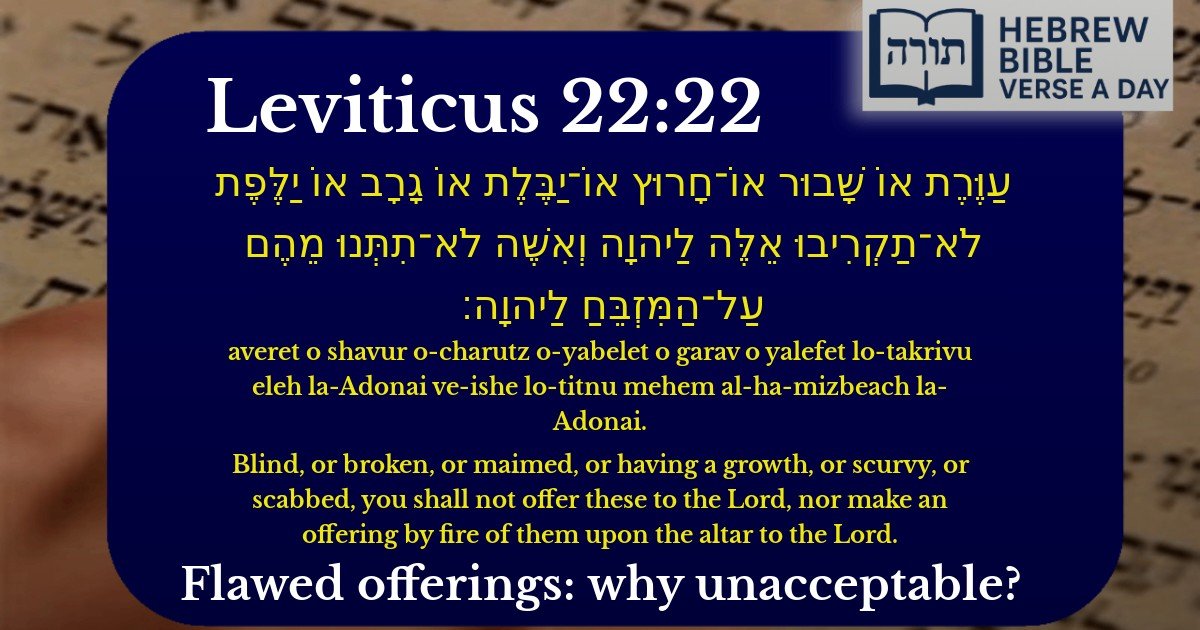

Leviticus 22:22 - Flawed offerings: why unacceptable?

Leviticus 22:22 - ויקרא 22:22

Hebrew Text

עַוֶּרֶת אוֹ שָׁבוּר אוֹ־חָרוּץ אוֹ־יַבֶּלֶת אוֹ גָרָב אוֹ יַלֶּפֶת לֹא־תַקְרִיבוּ אֵלֶּה לַיהוָה וְאִשֶּׁה לֹא־תִתְּנוּ מֵהֶם עַל־הַמִּזְבֵּחַ לַיהוָה׃

English Translation

Blind, or broken, or maimed, or having a growth, or scurvy, or scabbed, you shall not offer these to the Lord, nor make an offering by fire of them upon the altar to the Lord.

Transliteration

Averet o shavur o-charutz o-yabelet o garav o yalefet lo-takrivu eleh la-Adonai ve-ishe lo-titnu mehem al-ha-mizbeach la-Adonai.

Hebrew Leining Text

עַוֶּ֩רֶת֩ א֨וֹ שָׁב֜וּר אוֹ־חָר֣וּץ אֽוֹ־יַבֶּ֗לֶת א֤וֹ גָרָב֙ א֣וֹ יַלֶּ֔פֶת לֹא־תַקְרִ֥יבוּ אֵ֖לֶּה לַיהֹוָ֑ה וְאִשֶּׁ֗ה לֹא־תִתְּנ֥וּ מֵהֶ֛ם עַל־הַמִּזְבֵּ֖חַ לַיהֹוָֽה׃

🎵 Listen to leining

Parasha Commentary

Prohibition of Blemished Offerings

The verse (Vayikra 22:22) enumerates six physical defects that disqualify an animal from being brought as a korban (sacrifice) to Hashem. Rashi explains that these blemishes render the animal unfit for the altar, as only unblemished offerings are acceptable to Hashem. The Rambam (Hilchos Issurei Mizbe'ach 2:1-2) elaborates that this prohibition applies to all sacrifices, whether obligatory or voluntary, and emphasizes that bringing a blemished animal violates a negative commandment.

Types of Blemishes

  • Blind (עַוֶּרֶת): The Sifra teaches that this refers to total blindness in one or both eyes, as partial blindness does not disqualify the animal.
  • Broken (שָׁבוּר): Rashi explains this refers to a broken limb or bone that will not heal properly, symbolizing incompleteness.
  • Maimed (חָרוּץ): The Talmud (Chullin 43a) interprets this as a cut or tear in the ear or other body part that affects its appearance.
  • Having a growth (יַבֶּלֶת): Rambam defines this as an abnormal swelling or wart-like protrusion.
  • Scurvy (גָרָב): The Midrash (Toras Kohanim) identifies this as a skin disease causing itching and scabs.
  • Scabbed (יַלֶּפֶת): Rashi explains this refers to a moist, oozing skin lesion, distinct from dry scabs.

Spiritual Significance

The Sefer HaChinuch (Mitzvah 284) explains that unblemished offerings reflect the perfection we must strive for in our service to Hashem. Just as physical defects disqualify an animal, spiritual blemishes—such as improper intentions or flawed character traits—can invalidate our divine service. The Kli Yakar adds that this teaches us to offer our best to Hashem, not our leftovers or inferior possessions.

Practical Halachic Implications

The Shulchan Aruch (Yoreh De'ah 305) rules that these laws apply even today regarding redeeming a firstborn animal with a blemish. The Mishnah (Bechoros 6:12) discusses how a kohen must carefully examine animals for these disqualifying defects before accepting them as offerings.

📚 Talmud Citations

This verse is quoted in the Talmud.

📖 Chullin 13b
The verse is cited in a discussion about the disqualifications of animals for sacrifice, emphasizing the prohibition against offering blemished animals.
📖 Temurah 7b
The verse is referenced in the context of discussing the laws of substitution (temurah) and the invalidity of offering blemished animals.

Frequently Asked Questions

Q: What does Leviticus 22:22 mean?
A: Leviticus 22:22 teaches that when bringing an animal as an offering to Hashem, it must be physically perfect without any defects such as blindness, broken limbs, growths, or skin diseases. This emphasizes the importance of giving our best to Hashem, as Rashi explains that only unblemished animals are fitting for the altar.
Q: Why is it important to bring unblemished offerings?
A: Bringing an unblemished offering shows respect and honor to Hashem, as we are commanded to give the best of what we have. The Rambam (Hilchos Issurei Mizbe'ach 1:1) explains that this teaches us the principle of 'hidur mitzvah'—enhancing a mitzvah by using the finest available items for sacred purposes.
Q: What can we learn from Leviticus 22:22 today?
A: Although we no longer bring animal offerings, the principle still applies in our service to Hashem. The Talmud (Berachos 5b) teaches that we should strive to perform mitzvos with the same care and excellence as the unblemished offerings—whether in prayer, charity, or other commandments. This verse reminds us to always give our best effort in serving Hashem.
Q: Does this verse apply to other mitzvos besides offerings?
A: Yes, the concept of giving the best applies broadly. The Midrash (Vayikra Rabbah 27:5) teaches that just as we must offer unblemished animals, we should also ensure that our deeds, words, and intentions are 'unblemished' in serving Hashem. This includes acts of kindness, Torah study, and ethical behavior.
Q: What is the significance of listing specific defects in the verse?
A: The Torah specifies these defects (blindness, broken limbs, etc.) to clarify that any significant imperfection disqualifies an offering. Rashi notes that this teaches us that even if an animal has a temporary defect that may heal, it is still invalid, emphasizing the need for perfection in our service to Hashem.