Frequently Asked Questions
Q: What does Leviticus 22:23 mean when it talks about an animal with 'anything superfluous or too short'?
A: This verse refers to an animal with physical blemishes, such as extra limbs (superfluous) or missing limbs (too short). According to Rashi and the Talmud (Temurah 6b), such animals cannot be brought as vow offerings (nedarim) but may be brought as freewill offerings (nedavah). The Torah teaches that offerings to Hashem must meet certain standards of perfection.
Q: Why can't an animal with blemishes be used for a vow offering (neder) in Leviticus 22:23?
A: The Rambam (Hilchos Issurei Mizbe'ach 1:1) explains that vow offerings require higher standards because they are obligatory once pledged. Freewill offerings (nedavah) are voluntary acts of devotion, so minor blemishes are permitted. This teaches us that when we make commitments to Hashem, we should strive for the highest level of sincerity and perfection in fulfilling them.
Q: What practical lesson can we learn from Leviticus 22:23 today?
A: The Midrash (Vayikra Rabbah 27:5) connects this verse to our personal service of Hashem. Just as physical offerings must be without blemish, our prayers and mitzvot should be performed with complete devotion and without 'blemishes' like distraction or insincerity. The verse reminds us that while Hashem accepts our sincere efforts (symbolized by freewill offerings), we should always aim for higher standards in our spiritual commitments.
Q: How do Jewish commentators explain the difference between 'freewill offering' (nedavah) and 'vow' (neder) in this verse?
A: Rashi (based on Temurah 7a) explains that a freewill offering is a spontaneous gift to the Temple, while a vow is a binding promise to bring an offering. The Talmud (Chullin 13b) teaches that vows require stricter standards because they involve an oath. This distinction shows the Torah's wisdom in recognizing different levels of commitment in our relationship with Hashem.
Q: Does Leviticus 22:23 apply to modern Jewish practice?
A: While we don't currently bring animal offerings, the principle remains relevant. The Mishnah (Menachos 13:11) derives from this verse that we should give tzedakah (charity) from unblemished funds - money earned honestly. The Rambam (Hilchos Matnos Aniyim 8:8) applies this idea to all mitzvot, teaching that we should perform them in the most beautiful way possible, just as we would bring the best offerings to Hashem.

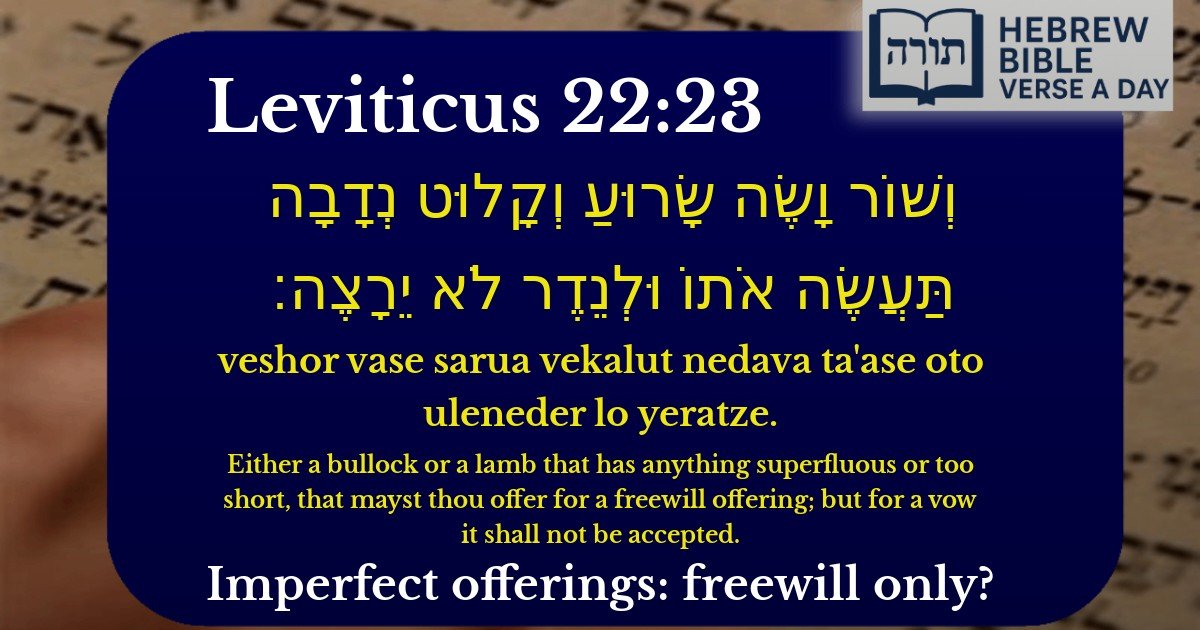

Verse Context in Vayikra (Leviticus 22:23)
The verse discusses the laws of animal offerings, specifically addressing physical imperfections in animals brought as sacrifices. It distinguishes between nedavah (freewill offerings) and neder (vow offerings), permitting certain blemishes for the former but not the latter.
Rashi's Explanation
Rashi (Vayikra 22:23) clarifies the terms:
Rashi emphasizes that such blemishes disqualify an animal for a neder (vow), as vow offerings require unblemished animals (based on Vayikra 22:21). However, for a nedavah, these imperfections are permitted, as the Torah is more lenient with voluntary offerings.
Rambam's Halachic Perspective
In Mishneh Torah (Hilchos Issurei Mizbe'ach 2:6), Rambam codifies this law, stating that animals with sarua or kalut are unfit for vow offerings but may be brought as freewill offerings. He further explains that this leniency applies only to these specific blemishes, whereas other deformities (e.g., blindness or lameness) disqualify an animal entirely.
Midrashic Insight
The Sifra (a halachic Midrash on Vayikra) connects this verse to the broader theme of hiddur mitzvah (beautifying commandments). A vow represents a solemn obligation, requiring the highest standard (mehudar), whereas a freewill offering reflects voluntary generosity, allowing for minor imperfections without diminishing its acceptability.
Practical Implications