

Join Our Newsletter To Be Informed When New Videos Are Posted
Hebrew Text
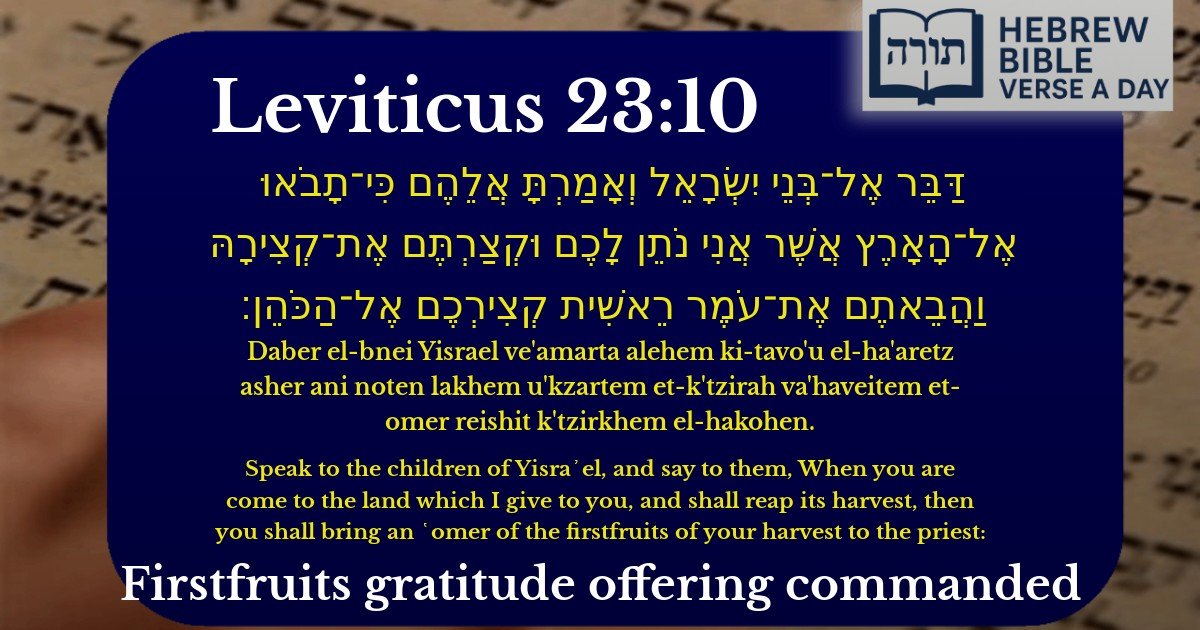
דַּבֵּר אֶל־בְּנֵי יִשְׂרָאֵל וְאָמַרְתָּ אֲלֵהֶם כִּי־תָבֹאוּ אֶל־הָאָרֶץ אֲשֶׁר אֲנִי נֹתֵן לָכֶם וּקְצַרְתֶּם אֶת־קְצִירָהּ וַהֲבֵאתֶם אֶת־עֹמֶר רֵאשִׁית קְצִירְכֶם אֶל־הַכֹּהֵן׃
English Translation
Speak to the children of Yisra᾽el, and say to them, When you are come to the land which I give to you, and shall reap its harvest, then you shall bring an ῾omer of the firstfruits of your harvest to the priest:
Transliteration
Daber el-bnei Yisrael ve'amarta alehem ki-tavo'u el-ha'aretz asher ani noten lakhem u'kzartem et-k'tzirah va'haveitem et-omer reishit k'tzirkhem el-hakohen.
Hebrew Leining Text
דַּבֵּ֞ר אֶל־בְּנֵ֤י יִשְׂרָאֵל֙ וְאָמַרְתָּ֣ אֲלֵהֶ֔ם כִּֽי־תָבֹ֣אוּ אֶל־הָאָ֗רֶץ אֲשֶׁ֤ר אֲנִי֙ נֹתֵ֣ן לָכֶ֔ם וּקְצַרְתֶּ֖ם אֶת־קְצִירָ֑הּ וַהֲבֵאתֶ֥ם אֶת־עֹ֛מֶר רֵאשִׁ֥ית קְצִירְכֶ֖ם אֶל־הַכֹּהֵֽן׃
🎵 Listen to leining
Parasha Commentary
📚 Talmud Citations
This verse is quoted in the Talmud.
📖 Menachot 65b
The verse is discussed in the context of the laws regarding the Omer offering, specifically the timing and manner of bringing the first sheaf of the harvest to the priest.
📖 Chullin 137b
Referenced in a discussion about the agricultural laws and the obligations of the Israelites upon entering the land, particularly in relation to firstfruits and offerings.
The Commandment of the Omer Offering
The verse (Vayikra 23:10) introduces the mitzvah of bringing the Omer offering from the first barley harvest in Eretz Yisrael. Rashi explains that this offering marks the beginning of the harvest season and serves as a declaration that all produce is ultimately from Hashem. The Omer must be brought before any new grain may be eaten (Chullin 137b), teaching us the principle of hiddur mitzvah—giving our first and best to Hashem.
Connection to Eretz Yisrael
Rambam (Hilchot Temidin u'Musafin 7:2) emphasizes that this mitzvah applies only when the majority of the Jewish people dwell in Eretz Yisrael. The Sforno notes that the phrase "the land which I give to you" highlights that our right to the land and its produce comes solely from Divine gift, not human conquest.
Spiritual Significance
Agricultural Laws
The Mishnah (Menachot 10:3-4) details the precise harvesting procedure: reaping specifically for the mitzvah, gathering in a particular manner, and bringing it to the Beit HaMikdash. The Rambam (Hilchot Temidin u'Musafin 7:6-7) explains these requirements teach that even agricultural work must be done with kedusha when performed for mitzvah purposes.