

Join Our Newsletter To Be Informed When New Videos Are Posted
Hebrew Text
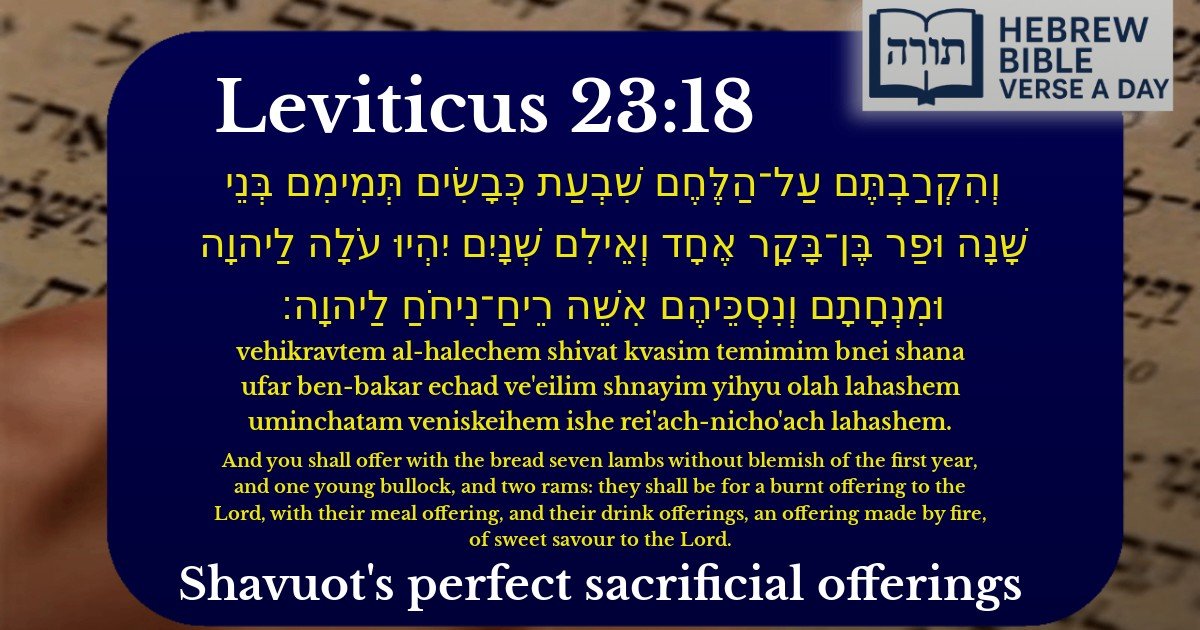
וְהִקְרַבְתֶּם עַל־הַלֶּחֶם שִׁבְעַת כְּבָשִׂים תְּמִימִם בְּנֵי שָׁנָה וּפַר בֶּן־בָּקָר אֶחָד וְאֵילִם שְׁנָיִם יִהְיוּ עֹלָה לַיהוָה וּמִנְחָתָם וְנִסְכֵּיהֶם אִשֵּׁה רֵיחַ־נִיחֹחַ לַיהוָה׃
English Translation
And you shall offer with the bread seven lambs without blemish of the first year, and one young bullock, and two rams: they shall be for a burnt offering to the Lord, with their meal offering, and their drink offerings, an offering made by fire, of sweet savour to the Lord.
Transliteration
Vehikravtem al-halechem shivat kvasim temimim bnei shana ufar ben-bakar echad ve'eilim shnayim yihyu olah lahashem uminchatam veniskeihem ishe rei'ach-nicho'ach lahashem.
Hebrew Leining Text
וְהִקְרַבְתֶּ֣ם עַל־הַלֶּ֗חֶם שִׁבְעַ֨ת כְּבָשִׂ֤ים תְּמִימִם֙ בְּנֵ֣י שָׁנָ֔ה וּפַ֧ר בֶּן־בָּקָ֛ר אֶחָ֖ד וְאֵילִ֣ם שְׁנָ֑יִם יִהְי֤וּ עֹלָה֙ לַֽיהֹוָ֔ה וּמִנְחָתָם֙ וְנִסְכֵּיהֶ֔ם אִשֵּׁ֥ה רֵֽיחַ־נִיחֹ֖חַ לַיהֹוָֽה׃
🎵 Listen to leining
Parasha Commentary
📚 Talmud Citations
This verse is quoted in the Talmud.
📖 Menachot 45b
The verse is discussed in the context of the meal offerings and the requirements for the sacrifices that accompany the bread.
Context of the Verse
This verse (Vayikra 23:18) appears in the context of the mitzvah of the Korban Ha'Omer (the Omer offering) and the subsequent festival of Shavuot. The Torah details the additional offerings brought alongside the two loaves of bread (Shtei HaLechem) on Shavuot. These offerings include seven lambs, one bull, and two rams, accompanied by meal and drink offerings, all as a burnt offering (Olah) to Hashem.
Explanation of the Offerings
Rashi (Vayikra 23:18) explains that the seven lambs correspond to the seven nations of Canaan, symbolizing the Jewish people's conquest and inheritance of the Land of Israel. The single bull represents Avraham Avinu, as the bull is associated with his hospitality (see Bereishit 18:7). The two rams correspond to Yitzchak and Yaakov, who were central figures in the establishment of the Jewish nation.
The Significance of the Meal and Drink Offerings
The meal offering (Mincha) and drink offering (Nesachim) accompanying the animals symbolize gratitude to Hashem for sustenance. The Talmud (Menachot 104b) explains that these offerings demonstrate that physical nourishment should be elevated for spiritual purposes, aligning with the theme of Shavuot as a time of dedicating one's material blessings to divine service.
"A Sweet Savor to the Lord"
The phrase rei'ach nicho'ach la'Hashem ("a sweet savor to the Lord") is interpreted by the Sforno (Vayikra 23:18) as an expression of divine pleasure when the Jewish people fulfill mitzvot with pure intent. On Shavuot, this reflects the joy of receiving the Torah and recommitting to its observance.