
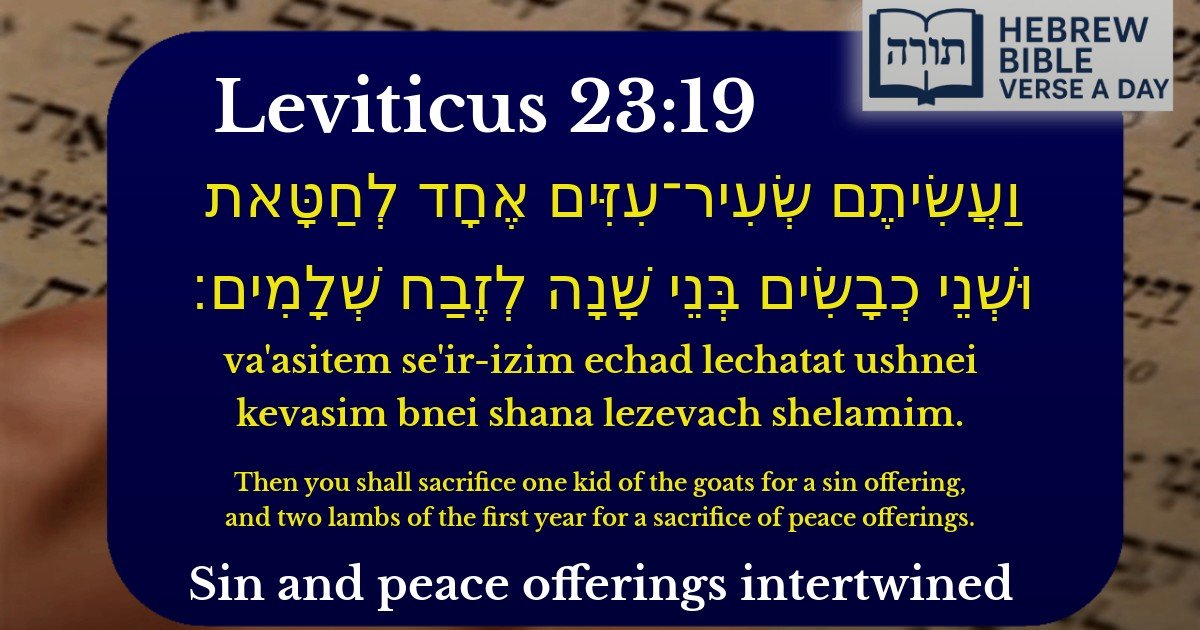

Leviticus 23:19 - Sin and peace offerings intertwined

Leviticus 23:19 - ויקרא 23:19

Hebrew Text

וַעֲשִׂיתֶם שְׂעִיר־עִזִּים אֶחָד לְחַטָּאת וּשְׁנֵי כְבָשִׂים בְּנֵי שָׁנָה לְזֶבַח שְׁלָמִים׃

English Translation

Then you shall sacrifice one kid of the goats for a sin offering, and two lambs of the first year for a sacrifice of peace offerings.

Transliteration

Va'asitem se'ir-izim echad lechatat ushnei kevasim bnei shana lezevach shelamim.

Hebrew Leining Text

וַעֲשִׂיתֶ֛ם שְׂעִיר־עִזִּ֥ים אֶחָ֖ד לְחַטָּ֑את וּשְׁנֵ֧י כְבָשִׂ֛ים בְּנֵ֥י שָׁנָ֖ה לְזֶ֥בַח שְׁלָמִֽים׃

🎵 Listen to leining

Parasha Commentary

Explanation of the Verse

The verse (Numbers 28:15) describes the additional offerings (מוּסָפִין) brought on Rosh Chodesh (the New Moon), consisting of a sin offering (חַטָּאת) of a goat and two lambs as peace offerings (שְׁלָמִים). This reflects the unique role of Rosh Chodesh as a time of atonement and renewal.

Sin Offering (חַטָּאת) of a Goat

Rashi explains that the sin offering atones for impurity that may have occurred in the Temple or with its sacred objects (טומאת מקדש וקדשיו). The goat is chosen because its appearance resembles that of a sinner—its hair is coarse, symbolizing the roughness of sin (Midrash Tanchuma). The Rambam (Hilchot Temidin uMusafin 7:1) notes that this offering serves as a kaparah (atonement) for unintentional sins.

Peace Offerings (שְׁלָמִים) of Two Lambs

The two lambs represent completeness and harmony. The Talmud (Chullin 60b) teaches that peace offerings bring shalom (peace) between the Jewish people and Hashem. The doubling of the lambs (שְׁנֵי כְבָשִׂים) signifies the dual nature of Rosh Chodesh—both a communal and individual observance (Sifrei Bamidbar).

Symbolism of Rosh Chodesh Offerings

  • Renewal: The goat atones for past errors, while the lambs signify a fresh start, aligning with the moon's renewal (Pirkei D'Rabbi Eliezer 51).
  • Communal Unity: The peace offerings emphasize unity among Klal Yisrael, as they were partially consumed by the people (Vayikra Rabbah 9:7).
  • Divine Connection: The combination of offerings reflects the balance between repentance (חַטָּאת) and joyous closeness to Hashem (שְׁלָמִים) (Malbim).

📚 Talmud Citations

This verse is quoted in the Talmud.

📖 Menachot 45a
The verse is referenced in a discussion about the requirements for sin offerings and peace offerings, particularly focusing on the types of animals to be used.
📖 Chullin 60b
The verse is cited in a broader discussion about the laws of sacrifices, including the specifications for the animals to be offered.

Frequently Asked Questions

Q: What is the meaning of the sin offering and peace offerings in Leviticus 23:19?
A: In Leviticus 23:19, the sin offering (חַטָּאת) atones for unintentional sins, while the peace offerings (שְׁלָמִים) express gratitude and closeness to Hashem. Rashi explains that the sin offering corrects wrongdoing, while the peace offerings symbolize harmony between a person and Hashem.
Q: Why were goats and lambs specifically chosen for these offerings?
A: Goats were often used for sin offerings because they symbolize bearing sin (as seen with the scapegoat on Yom Kippur). Lambs, being gentle and pure, represent sincerity in peace offerings. The Midrash teaches that each animal reflects different aspects of repentance and devotion.
Q: How does Leviticus 23:19 apply to Jews today without the Temple?
A: Since we lack the Beit HaMikdash (Temple), we cannot bring physical offerings today. However, the Rambam teaches that prayer, Torah study, and tzedakah (charity) serve as substitutes for sacrifices. The verse reminds us to seek atonement and express gratitude in other meaningful ways.
Q: Why were the lambs required to be 'of the first year'?
A: The requirement for lambs to be 'first-year' (בְּנֵי שָׁנָה) signifies freshness and purity in serving Hashem. Rashi notes that young animals represent new beginnings, teaching that our devotion to Hashem should be sincere and unblemished, like a new offering.
Q: What lesson can we learn from the combination of sin and peace offerings in this verse?
A: The pairing teaches that true repentance (through the sin offering) should lead to a restored relationship with Hashem (symbolized by peace offerings). The Talmud (Berachot 34b) states that complete teshuvah (repentance) brings a person to a higher spiritual level than before the sin.