

Join Our Newsletter To Be Informed When New Videos Are Posted
Hebrew Text
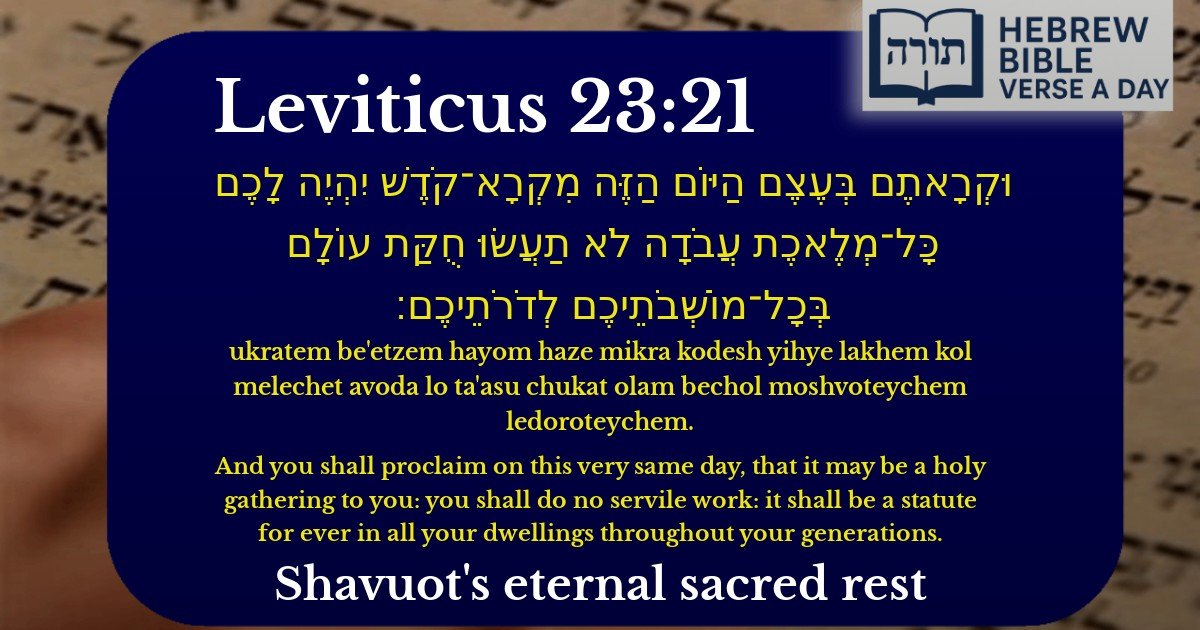
וּקְרָאתֶם בְּעֶצֶם הַיּוֹם הַזֶּה מִקְרָא־קֹדֶשׁ יִהְיֶה לָכֶם כָּל־מְלֶאכֶת עֲבֹדָה לֹא תַעֲשׂוּ חֻקַּת עוֹלָם בְּכָל־מוֹשְׁבֹתֵיכֶם לְדֹרֹתֵיכֶם׃
English Translation
And you shall proclaim on this very same day, that it may be a holy gathering to you: you shall do no servile work: it shall be a statute for ever in all your dwellings throughout your generations.
Transliteration
Ukratem be'etzem hayom haze mikra kodesh yihye lakhem kol melechet avoda lo ta'asu chukat olam bechol moshvoteychem ledoroteychem.
Hebrew Leining Text
וּקְרָאתֶ֞ם בְּעֶ֣צֶם ׀ הַיּ֣וֹם הַזֶּ֗ה מִֽקְרָא־קֹ֙דֶשׁ֙ יִהְיֶ֣ה לָכֶ֔ם כׇּל־מְלֶ֥אכֶת עֲבֹדָ֖ה לֹ֣א תַעֲשׂ֑וּ חֻקַּ֥ת עוֹלָ֛ם בְּכׇל־מוֹשְׁבֹ֥תֵיכֶ֖ם לְדֹרֹֽתֵיכֶֽם׃
🎵 Listen to leining
Parasha Commentary
📚 Talmud Citations
This verse is quoted in the Talmud.
📖 Megillah 20b
The verse is cited in the discussion about the timing of the reading of the Megillah on Purim, emphasizing the importance of proclaiming holy gatherings on their designated days.
📖 Moed Katan 19a
The verse is referenced in the context of discussing the prohibition of work on festivals, highlighting the eternal statute of abstaining from servile work on holy days.
Context and Source
The verse (Vayikra 23:21) appears in the Torah's discussion of the festival of Shavuot, following the commandments regarding the counting of the Omer. It emphasizes the sanctity of the day and the prohibition of melachah (servile work).
Proclamation of Sanctity
The phrase "וּקְרָאתֶם בְּעֶצֶם הַיּוֹם הַזֶּה" ("And you shall proclaim on this very same day") is interpreted by Rashi as a directive to the Beit Din (Jewish court) to sanctify the day publicly. The Sifra (a halachic Midrash) explains that this proclamation reinforces that Shavuot is always on the 50th day after the Omer offering, regardless of when the new moon was declared, ensuring its fixed timing.
Prohibition of Melachah
The Torah states "כָּל־מְלֶאכֶת עֲבֹדָה לֹא תַעֲשׂוּ" ("you shall do no servile work"). Rambam (Hilchot Yom Tov 1:1) clarifies that this refers to the same 39 categories of forbidden labor (melachot) as on Shabbat, with exceptions for food preparation (ochel nefesh). The Sefer HaChinuch (Mitzvah 297) explains that abstaining from work allows one to focus on spiritual growth and Torah study, which is central to Shavuot as the anniversary of Matan Torah.
Eternal Statute
The phrase "חֻקַּת עוֹלָם בְּכָל־מוֹשְׁבֹתֵיכֶם לְדֹרֹתֵיכֶם" ("a statute for ever in all your dwellings throughout your generations") underscores the timeless nature of this commandment. The Ibn Ezra notes that this applies even outside the Land of Israel, emphasizing the universal and perpetual obligation for all Jews, in all places and times.
Spiritual Significance