Frequently Asked Questions
Q: What does 'no servile work' mean in Leviticus 23:25?
A: In Leviticus 23:25, 'no servile work' (מְלֶאכֶת עֲבֹדָה) refers to laborious or mundane weekday tasks that are prohibited on Yom Tov (Jewish holidays). Rashi explains that this includes activities like plowing, harvesting, or construction—work typically done to earn a livelihood. However, basic food preparation (like cooking) for the holiday is permitted.
Q: Why does the verse mention bringing a fire offering (אִשֶּׁה) to Hashem?
A: The fire offering (Korban Ishsheh) mentioned here refers to the special sacrifices brought in the Beit HaMikdash (Holy Temple) on Rosh Hashanah (as this verse is part of the Rosh Hashanah laws). The Rambam teaches that these offerings express our devotion to Hashem and mark the sanctity of the day. Today, while we cannot bring sacrifices, we emulate this through prayer (Tefillah) and Torah study.
Q: Is Leviticus 23:25 talking about Shabbat or a holiday?
A: This verse refers to Yom Tov (a Jewish holiday), specifically Rosh Hashanah (as context shows in Leviticus 23:24). While both Shabbat and Yom Tov prohibit 'servile work,' holidays allow certain food-related activities (like cooking) that Shabbat forbids. The Talmud (Beitzah 5b) details these differences.
Q: How do we observe this verse today without the Beit HaMikdash?
A: Since we cannot bring physical offerings today, Chazal (our Sages) teach that prayer (Tefillah), Torah study, and acts of kindness replace the Korbanot (sacrifices). The verse also reminds us to treat Yom Tov with holiness—avoiding work, attending synagogue, and enjoying festive meals (as per Halacha, Jewish law).
Q: What lesson can we learn from 'no servile work' on holidays?
A: This teaches that Yom Tov is not just a day off but a sacred time to connect with Hashem and family. The Meshech Chochmah explains that refraining from work allows us to focus on spiritual growth, joy, and gratitude. It’s a reminder that our physical labor is secondary to our higher purpose—serving Hashem.

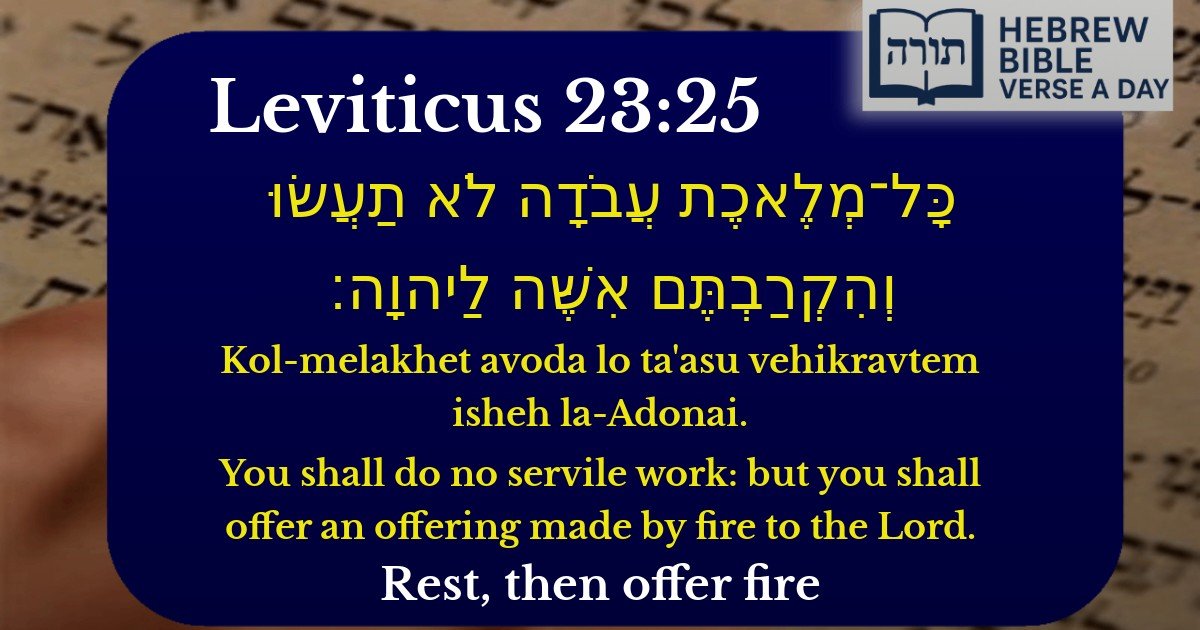

Prohibition of Melachah on Yom Tov
The verse (Vayikra 23:7) prohibits melachat avodah (servile work) on Yom Tov while commanding the bringing of ishsheh l'Hashem (fire offerings to Hashem). Rashi explains that melachat avodah refers specifically to laborious work that serves no Yom Tov purpose, differentiating it from ochel nefesh (food preparation) which is permitted.
The Nature of Permitted and Forbidden Labor
Rambam (Hilchot Yom Tov 1:5) clarifies that while most forms of creative labor (melacha) forbidden on Shabbat are also forbidden on Yom Tov, the Torah makes an exception for ochel nefesh - work needed to prepare food for the holiday. This reflects the dual nature of Yom Tov as both a day of rest and celebration.
The Korbanot as Central to Yom Tov
The second half of the verse emphasizes the obligation to bring offerings. The Sforno notes that while mundane labor is prohibited, the day should be dedicated to spiritual elevation through:
Halachic Distinctions from Shabbat
The Talmud (Beitzah 5:2) derives from this verse key differences between Shabbat and Yom Tov:
Spiritual Purpose of the Prohibition
The Kli Yakar explains that the prohibition against servile work serves to elevate the day beyond physical concerns, while the command to bring offerings directs our physical actions toward divine service. This creates a balance between physical enjoyment (through permitted food preparation) and spiritual devotion.