

Join Our Newsletter To Be Informed When New Videos Are Posted
Hebrew Text
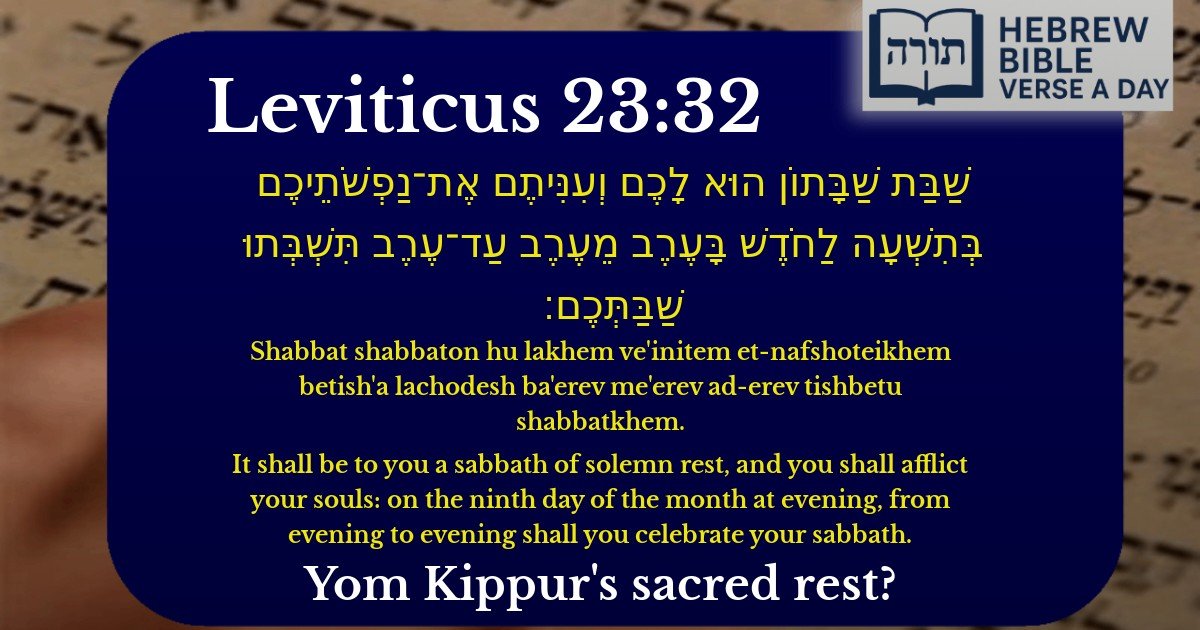
שַׁבַּת שַׁבָּתוֹן הוּא לָכֶם וְעִנִּיתֶם אֶת־נַפְשֹׁתֵיכֶם בְּתִשְׁעָה לַחֹדֶשׁ בָּעֶרֶב מֵעֶרֶב עַד־עֶרֶב תִּשְׁבְּתוּ שַׁבַּתְּכֶם׃
English Translation
It shall be to you a sabbath of solemn rest, and you shall afflict your souls: on the ninth day of the month at evening, from evening to evening shall you celebrate your sabbath.
Transliteration
Shabbat shabbaton hu lakhem ve'initem et-nafshoteikhem betish'a lachodesh ba'erev me'erev ad-erev tishbetu shabbatkhem.
Hebrew Leining Text
שַׁבַּ֨ת שַׁבָּת֥וֹן הוּא֙ לָכֶ֔ם וְעִנִּיתֶ֖ם אֶת־נַפְשֹׁתֵיכֶ֑ם בְּתִשְׁעָ֤ה לַחֹ֙דֶשׁ֙ בָּעֶ֔רֶב מֵעֶ֣רֶב עַד־עֶ֔רֶב תִּשְׁבְּת֖וּ שַׁבַּתְּכֶֽם׃ {פ}
🎵 Listen to leining
Parasha Commentary
📚 Talmud Citations
This verse is quoted in the Talmud.
📖 Yoma 81b
The verse is discussed in the context of the laws of Yom Kippur, particularly regarding the timing of the fast and the concept of 'afflicting your souls.'
📖 Megillah 20b
The verse is referenced in a discussion about the proper observance of Yom Kippur and the interpretation of 'from evening to evening.'
Shabbat Shabbaton and Yom Kippur
The verse (Vayikra 23:32) describes Yom Kippur as a "Shabbat Shabbaton" (שַׁבַּת שַׁבָּתוֹן), a term denoting an elevated level of rest beyond that of a regular Shabbat. Rashi explains that this phrase emphasizes the complete cessation from labor, similar to Shabbat but with additional stringencies unique to Yom Kippur. The Rambam (Hilchot Shevitat Asor 1:5) further clarifies that the prohibitions of Yom Kippur include all 39 categories of forbidden labor (melachot) as on Shabbat, in addition to the five afflictions (inuyim) specific to the day.
The Timing of Yom Kippur
The verse specifies that the observance begins "on the ninth day of the month at evening." The Talmud (Yoma 81b) discusses why the Torah mentions the ninth day when the fast begins on the tenth, explaining that one must "add from the mundane to the holy" by beginning the fast slightly before sunset on the ninth. This concept of tosefet Yom Kippur (adding to Yom Kippur) teaches the importance of preparing spiritually for the holy day.
The Five Afflictions
The command to "afflict your souls" (וְעִנִּיתֶם אֶת־נַפְשֹׁתֵיכֶם) is interpreted by the Mishnah (Yoma 8:1) as referring to five specific prohibitions:
The Rambam (Hilchot Shevitat Asor 1:4) notes that these afflictions are meant to humble the soul and facilitate repentance, as the verse in Yeshayahu (58:5) connects fasting with genuine spiritual transformation.
From Evening to Evening
The phrase "from evening to evening" (מֵעֶרֶב עַד־עֶרֶב) establishes the 25-hour duration of Yom Kippur, beginning at sunset on the ninth of Tishrei and concluding after nightfall on the tenth. The Sifra (Emor 12:10) derives from this that the sanctity of Yom Kippur extends slightly beyond the actual calendar day, emphasizing its unique status among holidays.