

Join Our Newsletter To Be Informed When New Videos Are Posted
Hebrew Text
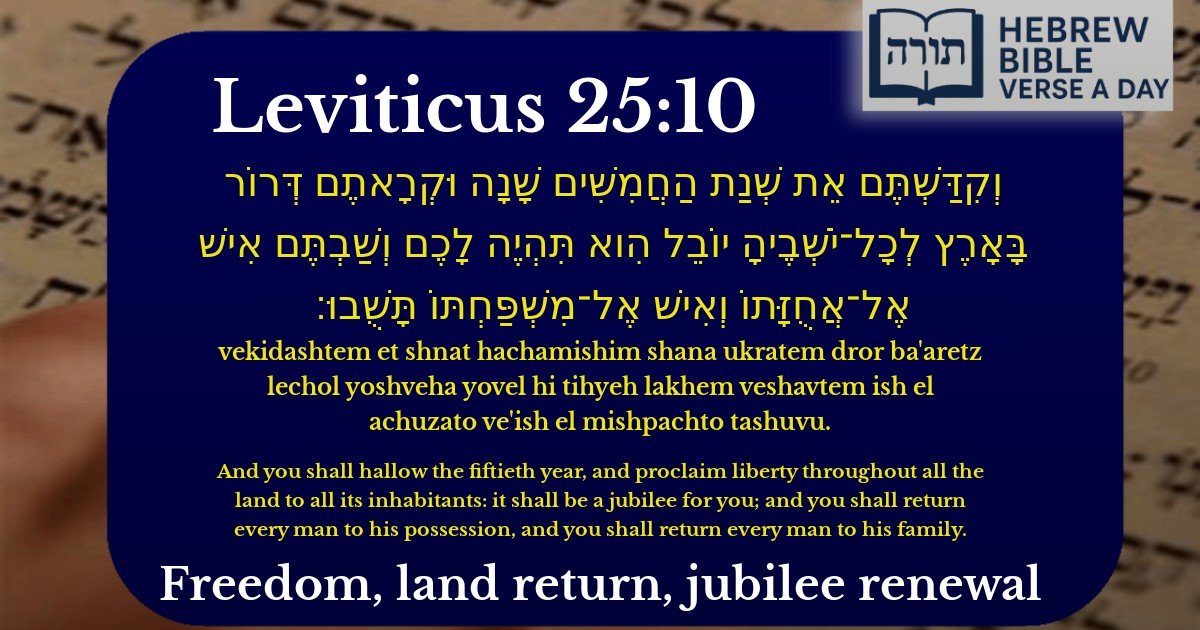
וְקִדַּשְׁתֶּם אֵת שְׁנַת הַחֲמִשִּׁים שָׁנָה וּקְרָאתֶם דְּרוֹר בָּאָרֶץ לְכָל־יֹשְׁבֶיהָ יוֹבֵל הִוא תִּהְיֶה לָכֶם וְשַׁבְתֶּם אִישׁ אֶל־אֲחֻזָּתוֹ וְאִישׁ אֶל־מִשְׁפַּחְתּוֹ תָּשֻׁבוּ׃
English Translation
And you shall hallow the fiftieth year, and proclaim liberty throughout all the land to all its inhabitants: it shall be a jubilee for you; and you shall return every man to his possession, and you shall return every man to his family.
Transliteration
Vekidashtem et shnat hachamishim shana ukratem dror ba'aretz lechol yoshveha yovel hi tihyeh lakhem veshavtem ish el achuzato ve'ish el mishpachto tashuvu.
Hebrew Leining Text
וְקִדַּשְׁתֶּ֗ם אֵ֣ת שְׁנַ֤ת הַחֲמִשִּׁים֙ שָׁנָ֔ה וּקְרָאתֶ֥ם דְּר֛וֹר בָּאָ֖רֶץ לְכׇל־יֹשְׁבֶ֑יהָ יוֹבֵ֥ל הִוא֙ תִּהְיֶ֣ה לָכֶ֔ם וְשַׁבְתֶּ֗ם אִ֚ישׁ אֶל־אֲחֻזָּת֔וֹ וְאִ֥ישׁ אֶל־מִשְׁפַּחְתּ֖וֹ תָּשֻֽׁבוּ׃
🎵 Listen to leining
Parasha Commentary
📚 Talmud Citations
This verse is quoted in the Talmud.
📖 Rosh Hashanah 8b
The verse is discussed in the context of determining the sanctity of the Jubilee year and its implications for the counting of years.
📖 Arakhin 29a
The verse is referenced in a discussion about the laws of the Jubilee year, particularly regarding the proclamation of liberty and the return of property.
📖 Megillah 14b
The verse is mentioned in a discussion about the significance of the Jubilee year and its connection to the concept of freedom.
The Sanctity of the Jubilee Year
The verse (Vayikra 25:10) commands the sanctification of the fiftieth year, known as Yovel (Jubilee). According to Rashi, this sanctification involves declaring the year holy through the Beit Din (Jewish court) and sounding the shofar on Yom Kippur to mark its commencement. The Rambam (Hilchot Shemitah v'Yovel 10:1-2) elaborates that the sanctity of Yovel parallels that of Shabbat, imposing restrictions on agricultural work and emphasizing reliance on Hashem.
Proclaiming Liberty Throughout the Land
The phrase "וּקְרָאתֶם דְּרוֹר בָּאָרֶץ" ("proclaim liberty throughout the land") signifies the emancipation of Hebrew slaves and the return of ancestral lands. The Talmud (Rosh Hashanah 9b) explains that deror (liberty) implies freedom from servitude, as well as the cancellation of debts. The Sforno adds that this liberty reflects the ideal state of Bnei Yisrael as servants only to Hashem, not to other humans.
Return to Ancestral Possessions and Families
The verse mandates that every individual returns to their ancestral land (אֲחֻזָּתוֹ) and family (מִשְׁפַּחְתּוֹ). Rashi notes that this ensures the preservation of tribal inheritances as allotted by Yehoshua. The Ramban emphasizes the deeper spiritual message: just as physical property is restored, so too must individuals "return" to their spiritual roots and familial obligations. The Midrash (Torat Kohanim 25:10) connects this return to the broader theme of teshuvah (repentance), as Yovel symbolizes a fresh start.
Yovel as a Reflection of Divine Sovereignty
The Jubilee year underscores Hashem's ownership of the land, as stated in Vayikra 25:23 ("For the land is Mine"). The Chizkuni explains that by relinquishing control over land and servants, Bnei Yisrael acknowledge that all possessions are ultimately granted by Hashem. The Sefer HaChinuch (Mitzvah 332) highlights Yovel as a reminder of the Exodus, reinforcing the idea that true freedom comes from divine providence.