

Join Our Newsletter To Be Informed When New Videos Are Posted
Hebrew Text
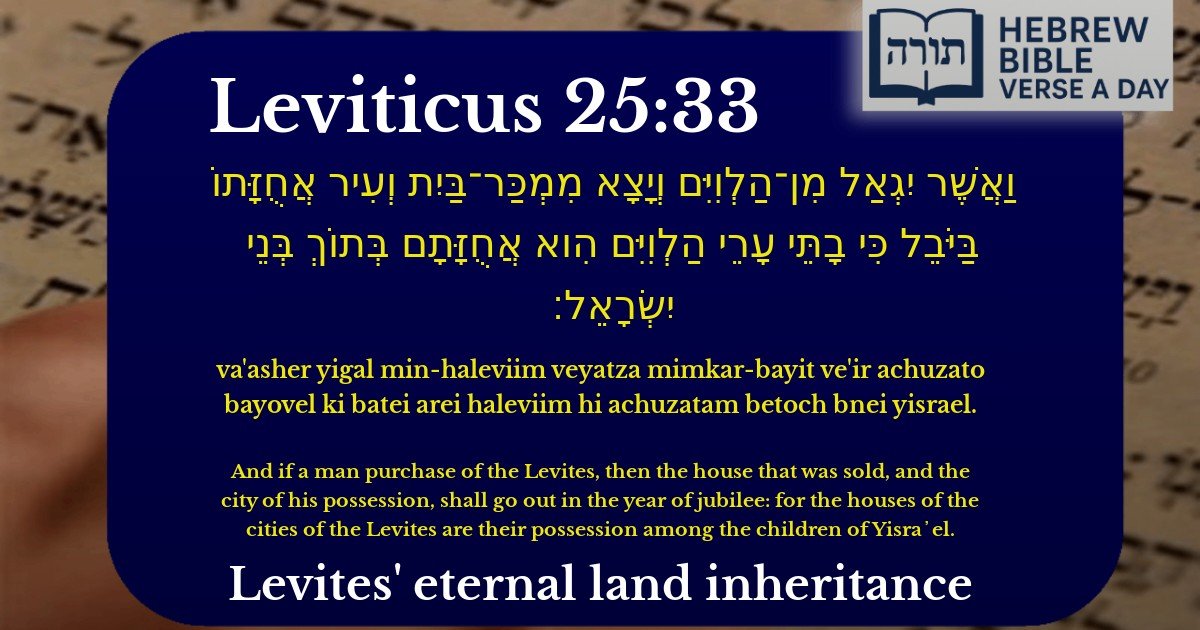
וַאֲשֶׁר יִגְאַל מִן־הַלְוִיִּם וְיָצָא מִמְכַּר־בַּיִת וְעִיר אֲחֻזָּתוֹ בַּיֹּבֵל כִּי בָתֵּי עָרֵי הַלְוִיִּם הִוא אֲחֻזָּתָם בְּתוֹךְ בְּנֵי יִשְׂרָאֵל׃
English Translation
And if a man purchase of the Levites, then the house that was sold, and the city of his possession, shall go out in the year of jubilee: for the houses of the cities of the Levites are their possession among the children of Yisra᾽el.
Transliteration
Va'asher yigal min-haleviim veyatza mimkar-bayit ve'ir achuzato bayovel ki batei arei haleviim hi achuzatam betoch bnei yisrael.
Hebrew Leining Text
וַאֲשֶׁ֤ר יִגְאַל֙ מִן־הַלְוִיִּ֔ם וְיָצָ֧א מִמְכַּר־בַּ֛יִת וְעִ֥יר אֲחֻזָּת֖וֹ בַּיֹּבֵ֑ל כִּ֣י בָתֵּ֞י עָרֵ֣י הַלְוִיִּ֗ם הִ֚וא אֲחֻזָּתָ֔ם בְּת֖וֹךְ בְּנֵ֥י יִשְׂרָאֵֽל׃
🎵 Listen to leining
Parasha Commentary
📚 Talmud Citations
This verse is quoted in the Talmud.
📖 Arakhin 33b
The verse is discussed in the context of the laws regarding the redemption of houses in Levitical cities and their return in the Jubilee year.
Verse Context in Vayikra (Leviticus 25:32-33)
This verse appears in the section discussing the laws of the Jubilee (Yovel) year, specifically addressing the unique status of Levitical cities. Unlike other Israelites, the Levites did not receive a tribal land inheritance (Nachalat Avot) but were given 48 cities scattered among the tribes (Bamidbar 35:1-8). This verse clarifies the laws of property redemption for Levites.
Rashi's Explanation
Rashi (Vayikra 25:32) emphasizes that Levitical houses in their designated cities have a special status: even if sold, they automatically return to the original Levite owner during the Yovel year. This differs from regular Israelite property, which could be redeemed earlier by relatives (see Vayikra 25:25-28). Rashi notes the phrase "כי בתי ערי הלוים הוא אחזתם" ("for the houses of the Levites' cities are their possession")—highlighting that these cities are their sole inheritance, reinforcing their permanent right to these dwellings.
Rambam's Legal Perspective
In Hilchot Shemitta V'Yovel (13:14-15), the Rambam codifies this law, stating that Levitical city homes cannot be permanently sold. Even if a Levite sells his house, it reverts to him at Yovel without requiring redemption money. The Rambam derives this from the phrase "ויצא ממכר בית... ביובל" ("the sale shall go out... in the Jubilee"), indicating an automatic return.
Talmudic and Midrashic Insights
Nachmanides (Ramban) on Tribal Distinctions
Ramban (Vayikra 25:32) contrasts this with regular Israelite property laws. While other tribes' land returns at Yovel due to its connection to ancestral inheritance (אחוזת אבות), Levi's cities return because they have no other land—their "possession" is limited to these urban dwellings. This reflects their unique role as teachers and spiritual guides rather than landowners.
Practical Implications
This law ensured the Levites' economic stability, as they could not accumulate permanent wealth through land sales. It also reinforced their dependence on the community for tithes (Terumah and Ma'aser), fostering a reciprocal relationship where Levi'im focused on Torah and the people supported them.