

Join Our Newsletter To Be Informed When New Videos Are Posted
Hebrew Text
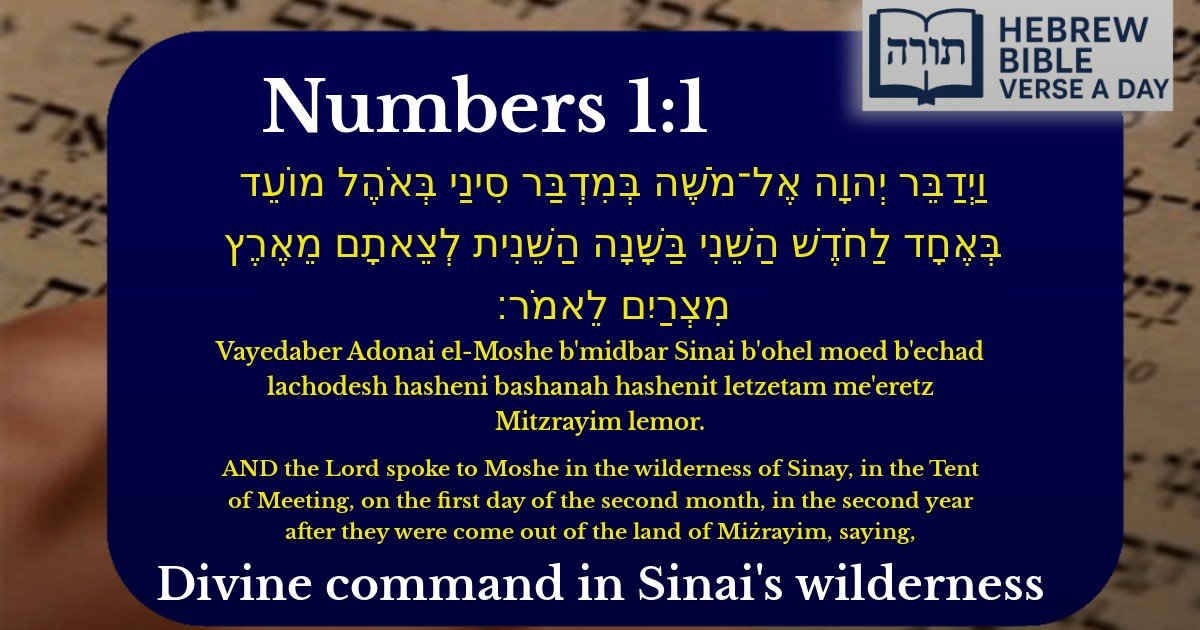
וַיְדַבֵּר יְהוָה אֶל־מֹשֶׁה בְּמִדְבַּר סִינַי בְּאֹהֶל מוֹעֵד בְּאֶחָד לַחֹדֶשׁ הַשֵּׁנִי בַּשָּׁנָה הַשֵּׁנִית לְצֵאתָם מֵאֶרֶץ מִצְרַיִם לֵאמֹר׃
English Translation
AND the Lord spoke to Moshe in the wilderness of Sinay, in the Tent of Meeting, on the first day of the second month, in the second year after they were come out of the land of Miżrayim, saying,
Transliteration
Vayedaber Adonai el-Moshe b'midbar Sinai b'ohel moed b'echad lachodesh hasheni bashanah hashenit letzetam me'eretz Mitzrayim lemor.
Hebrew Leining Text
וַיְדַבֵּ֨ר יְהֹוָ֧ה אֶל־מֹשֶׁ֛ה בְּמִדְבַּ֥ר סִינַ֖י בְּאֹ֣הֶל מוֹעֵ֑ד בְּאֶחָד֩ לַחֹ֨דֶשׁ הַשֵּׁנִ֜י בַּשָּׁנָ֣ה הַשֵּׁנִ֗ית לְצֵאתָ֛ם מֵאֶ֥רֶץ מִצְרַ֖יִם לֵאמֹֽר׃
🎵 Listen to leining
Parasha Commentary
📚 Talmud Citations
This verse is not quoted in the Talmud.
Location and Timing of Divine Communication
The verse emphasizes that Hashem spoke to Moshe in the wilderness of Sinai, in the Tent of Meeting, on the first day of the second month of the second year after the Exodus. Rashi (Bamidbar 1:1) notes that this marks the beginning of the census of Bnei Yisrael, which occurred after the Mishkan was erected (as described in Shemot 40:17). The timing is significant because it shows that the divine command followed the completion of the Mishkan, symbolizing that Hashem's presence now dwelled among the people.
The Wilderness of Sinai
The Midrash (Bamidbar Rabbah 1:7) highlights that the Torah was given in the wilderness to teach humility—just as the desert is open to all, so too is Torah accessible to those who approach it with humility. The Sforno adds that the wilderness setting underscores that Bnei Yisrael were entirely dependent on Hashem for sustenance, reinforcing their spiritual readiness for divine instruction.
The Tent of Meeting (Ohel Moed)
Ramban (Bamidbar 1:1) explains that the phrase "in the Tent of Meeting" indicates that this communication took place in the newly constructed Mishkan, where Hashem's presence resided. The Talmud (Yoma 54b) teaches that the Mishkan was a microcosm of creation, emphasizing the centrality of divine service in the world.
The Second Year After the Exodus
The Kli Yakar (Bamidbar 1:1) notes that the census occurred in the second year to allow time for Bnei Yisrael to transition from the physical liberation of Egypt to spiritual elevation through the giving of the Torah and the construction of the Mishkan. This period marked their maturation as a nation ready to be counted for their roles in the divine plan.
Significance of the Date (First of Iyar)
The Sifrei (Bamidbar 1:1) connects this date to the earlier events: the Mishkan was erected on the first of Nisan (Shemot 40:2), and one month later, the census began. The Malbim explains that this timing ensured the people were organized for their journey toward Eretz Yisrael, demonstrating Hashem's meticulous guidance in their national development.