

Join Our Newsletter To Be Informed When New Videos Are Posted
Hebrew Text
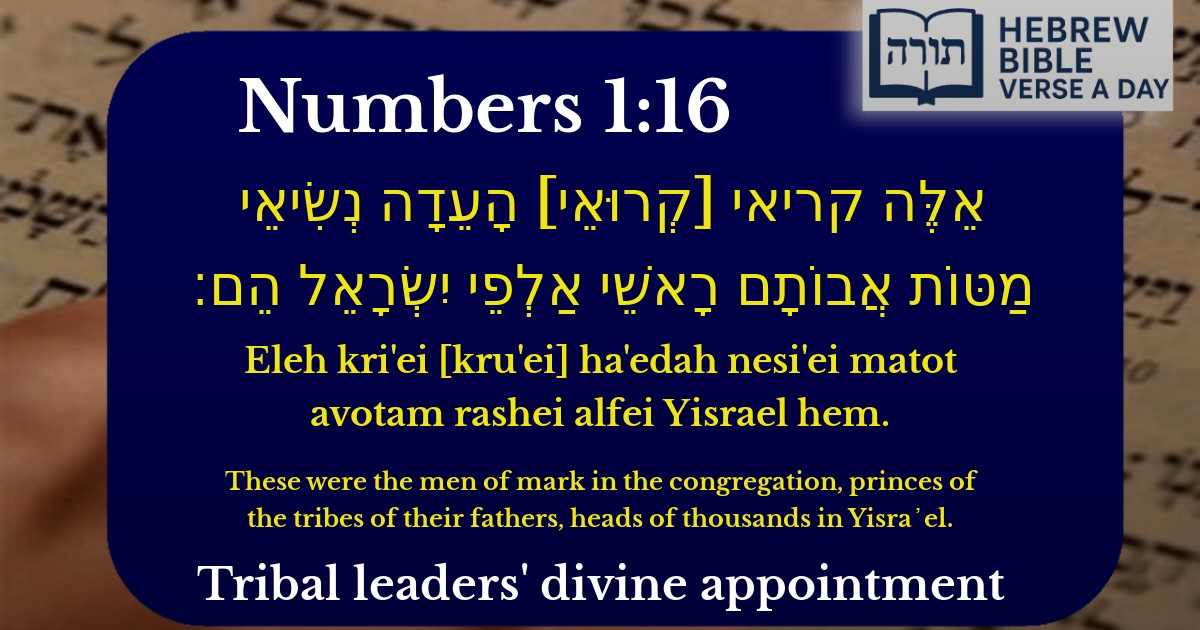
אֵלֶּה קריאי [קְרוּאֵי] הָעֵדָה נְשִׂיאֵי מַטּוֹת אֲבוֹתָם רָאשֵׁי אַלְפֵי יִשְׂרָאֵל הֵם׃
English Translation
These were the men of mark in the congregation, princes of the tribes of their fathers, heads of thousands in Yisra᾽el.
Transliteration
Eleh kri'ei [kru'ei] ha'edah nesi'ei matot avotam rashei alfei Yisrael hem.
Hebrew Leining Text
אֵ֚לֶּה (קריאי) [קְרוּאֵ֣י] הָעֵדָ֔ה נְשִׂיאֵ֖י מַטּ֣וֹת אֲבוֹתָ֑ם רָאשֵׁ֛י אַלְפֵ֥י יִשְׂרָאֵ֖ל הֵֽם׃
🎵 Listen to leining
Parasha Commentary
📚 Talmud Citations
This verse is not quoted in the Talmud.
Context of the Verse
This verse (Numbers 1:16) appears in the context of the census taken of Bnei Yisrael in the wilderness. It identifies the leaders appointed to assist Moshe and Aharon in counting the tribes. The phrase "קְרוּאֵי הָעֵדָה" (called of the congregation) emphasizes their distinguished status as representatives of the people.
Rashi's Commentary
Rashi explains that these leaders were "קְרוּאֵי הָעֵדָה" (called of the congregation) because they were summoned by name for this sacred task. He notes that they were not self-appointed but were divinely selected to oversee the census. Their titles—"נְשִׂיאֵי מַטּוֹת" (princes of the tribes) and "רָאשֵׁי אַלְפֵי יִשְׂרָאֵל" (heads of thousands in Israel)—reflect their dual roles as both tribal leaders and military commanders.
Rambam's Perspective
Rambam (Hilchot Sanhedrin 1:3) discusses the qualities of Jewish leadership, which align with the description here. These men were chosen for their wisdom, humility, and ability to guide their tribes. Their designation as "heads of thousands" indicates their responsibility for both spiritual and administrative leadership.
Midrashic Insights
Significance of Leadership Titles
The titles "נְשִׂיאֵי מַטּוֹת" and "רָאשֵׁי אַלְפֵי יִשְׂרָאֵל" signify their roles in both civil and military matters. The Ibn Ezra notes that "אַלְפֵי יִשְׂרָאֵל" refers to the organizational structure of the nation, where each leader oversaw a unit of a thousand, ensuring order and accountability.
Practical Lessons
This verse teaches the importance of qualified, divinely appointed leadership in Klal Yisrael. The leaders' connection to their ancestral tribes ("אֲבוֹתָם") underscores the value of mesorah (tradition) in Jewish governance. The Kli Yakar adds that their humility in serving the community, rather than seeking personal honor, is a model for future leaders.