

Join Our Newsletter To Be Informed When New Videos Are Posted
Hebrew Text
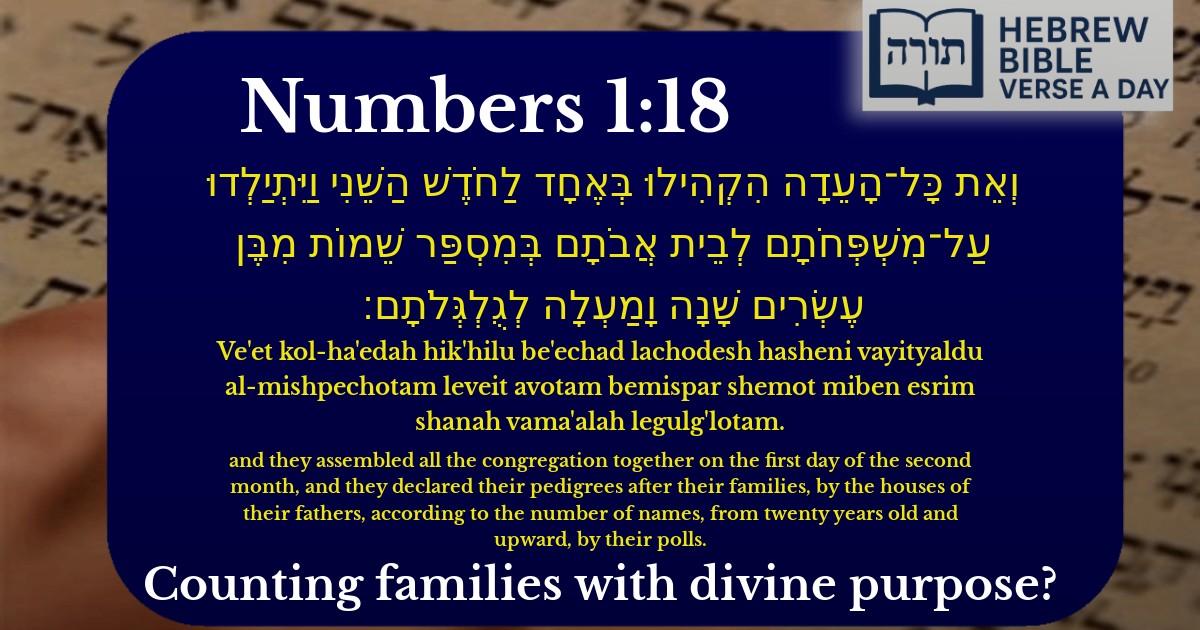
וְאֵת כָּל־הָעֵדָה הִקְהִילוּ בְּאֶחָד לַחֹדֶשׁ הַשֵּׁנִי וַיִּתְיַלְדוּ עַל־מִשְׁפְּחֹתָם לְבֵית אֲבֹתָם בְּמִסְפַּר שֵׁמוֹת מִבֶּן עֶשְׂרִים שָׁנָה וָמַעְלָה לְגֻלְגְּלֹתָם׃
English Translation
and they assembled all the congregation together on the first day of the second month, and they declared their pedigrees after their families, by the houses of their fathers, according to the number of names, from twenty years old and upward, by their polls.
Transliteration
Ve'et kol-ha'edah hik'hilu be'echad lachodesh hasheni vayityaldu al-mishpechotam leveit avotam bemispar shemot miben esrim shanah vama'alah legulg'lotam.
Hebrew Leining Text
וְאֵ֨ת כׇּל־הָעֵדָ֜ה הִקְהִ֗ילוּ בְּאֶחָד֙ לַחֹ֣דֶשׁ הַשֵּׁנִ֔י וַיִּתְיַֽלְד֥וּ עַל־מִשְׁפְּחֹתָ֖ם לְבֵ֣ית אֲבֹתָ֑ם בְּמִסְפַּ֣ר שֵׁמ֗וֹת מִבֶּ֨ן עֶשְׂרִ֥ים שָׁנָ֛ה וָמַ֖עְלָה לְגֻלְגְּלֹתָֽם׃
🎵 Listen to leining
Parasha Commentary
📚 Talmud Citations
This verse is not quoted in the Talmud.
Context of the Verse
This verse (Bamidbar 1:18) describes the assembly of Bnei Yisrael in the wilderness on the first day of the second month (Iyar) in the second year after the Exodus. Moshe and Aharon were commanded to conduct a census of the men eligible for military service, counting them by their families and ancestral houses.
Rashi's Explanation
Rashi explains that the phrase "וַיִּתְיַלְדוּ עַל־מִשְׁפְּחֹתָם" ("they declared their pedigrees after their families") means each individual presented documentary evidence (such as family records or witnesses) to establish their lineage. This was crucial because tribal affiliation determined inheritance rights and military assignments.
Purpose of the Census
According to Rambam (Hilchot Melachim), the census served multiple purposes:
Age Requirement: Twenty Years and Up
The Talmud (Chagigah 6a) notes that the age of twenty signifies maturity for divine service and responsibility. Ramban adds that this age was chosen because younger men lacked the physical strength for warfare and the spiritual fortitude to withstand the challenges of the wilderness.
Midrashic Insights
The Midrash (Bamidbar Rabbah 1:4) highlights that the census was conducted with dignity—each person was counted individually ("לְגֻלְגְּלֹתָם," "by their polls") to emphasize their unique value before Hashem. This echoes the counting of the stars (Bereishit 15:5), where each is named and cherished.
Significance of the Second Month
The Sforno explains that the census occurred in Iyar (the second month) because it followed the completion of the Mishkan in Nisan. The organizational structure of the camp—arranged by tribes around the Mishkan—reflected the centrality of divine worship in national life.