Frequently Asked Questions
Q: What does the number of people in the tribe of Zevulun represent?
A: The number 57,400 represents the count of men aged 20 and older from the tribe of Zevulun who were eligible for military service. This census, commanded by Hashem, was taken to organize the Israelites for their journey in the wilderness (Rashi on Numbers 1:2-3).
Q: Why is the tribe of Zevulun mentioned specifically in this verse?
A: Zevulun is mentioned as part of the detailed census of all twelve tribes. Each tribe had a unique role—Zevulun was known for its involvement in trade and commerce, often partnering with the tribe of Yissachar, which focused on Torah study (Midrash Tanchuma, Vayechi 11).
Q: How does this verse connect to the broader theme of the Book of Numbers?
A: This verse is part of the census at the beginning of Sefer Bamidbar (Numbers), which emphasizes the organization and preparation of Bnei Yisrael (the Children of Israel) for their journey toward Eretz Yisrael (the Land of Israel). Each tribe's count highlights their individual and collective importance (Rambam, Mishneh Torah, Hilchot Melachim 12:3).
Q: What lesson can we learn from the counting of the tribes?
A: The counting teaches that every individual in Klal Yisrael (the Jewish people) matters. Hashem counts us to show our value and to prepare us for our national mission (Rashi on Numbers 1:1). This idea applies today as well—every Jew has a unique role in serving Hashem.
Q: Why were only men over 20 counted in the census?
A: Men over 20 were counted because they were of military age, representing those who could defend and contribute to the nation's journey. This also reflects the responsibility of adults in fulfilling communal obligations (Talmud, Bava Batra 121b).

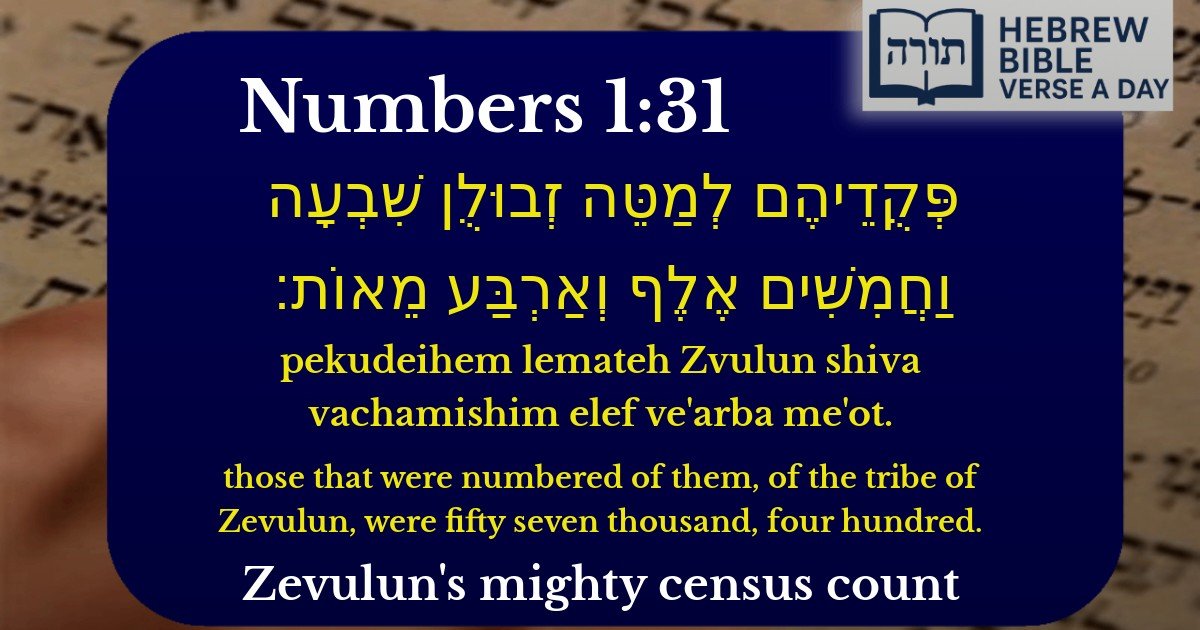

Commentary on the Tribe of Zevulun's Census
The verse (Bamidbar 1:31) states: "פְּקֻדֵיהֶם לְמַטֵּה זְבוּלֻן שִׁבְעָה וַחֲמִשִּׁים אֶלֶף וְאַרְבַּע מֵאוֹת" ("those that were numbered of them, of the tribe of Zevulun, were fifty seven thousand, four hundred"). This census reflects the population of the tribe of Zevulun during the counting in the wilderness.
Rashi's Explanation
Rashi (Bamidbar 1:31) notes that the tribe of Zevulun was counted alongside the other tribes to demonstrate the fulfillment of Hashem's promise to Avraham that his descendants would be as numerous as the stars (Bereishit 15:5). The precise numbering emphasizes that each individual was significant and valued in the eyes of Hashem.
Symbolism of the Number
The number 57,400 holds deeper meaning in Jewish thought:
Zevulun's Unique Role
Midrash Tanchuma (Bamidbar 12) explains that Zevulun's population growth was a reward for their dedication to supporting Torah study through their business endeavors. Their partnership with Yissachar (who focused on Torah) ensured the spiritual sustenance of Klal Yisrael.
Comparison to Other Tribes
The Sifrei (Bamidbar 1:31) notes that Zevulun's count was smaller than some tribes but larger than others, teaching that each tribe had a unique role in the nation. Zevulun's intermediate size reflects their balanced role between material and spiritual contributions.