
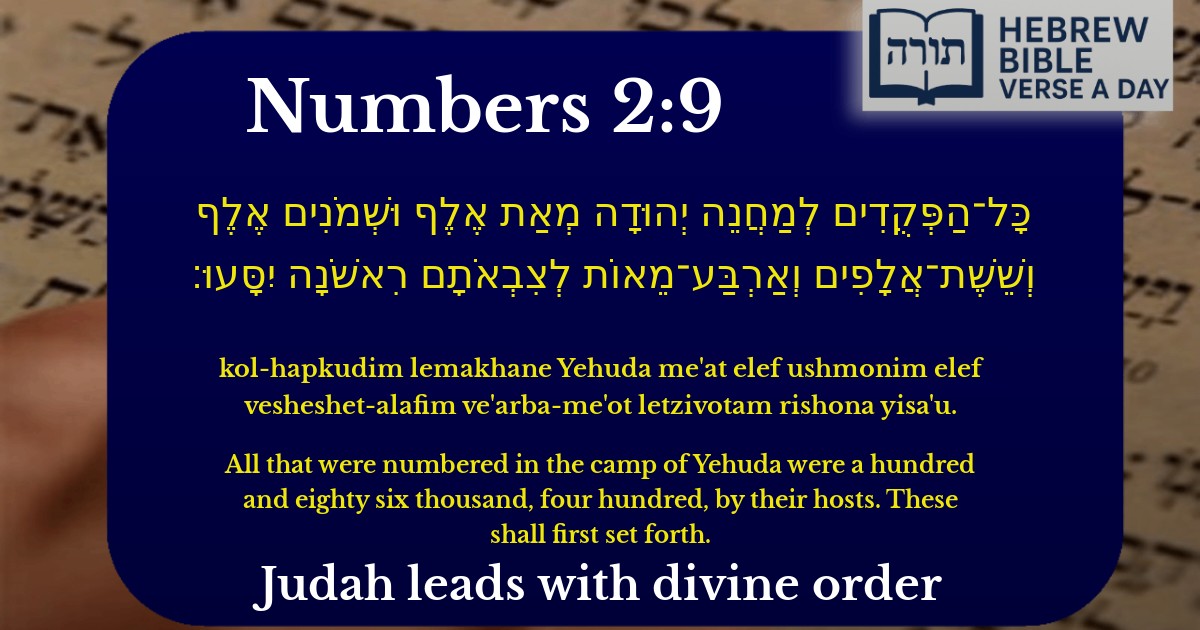

Numbers 2:9 - Judah leads with divine order

Numbers 2:9 - במדבר 2:9

Hebrew Text

כָּל־הַפְּקֻדִים לְמַחֲנֵה יְהוּדָה מְאַת אֶלֶף וּשְׁמֹנִים אֶלֶף וְשֵׁשֶׁת־אֲלָפִים וְאַרְבַּע־מֵאוֹת לְצִבְאֹתָם רִאשֹׁנָה יִסָּעוּ׃

English Translation

All that were numbered in the camp of Yehuda were a hundred and eighty six thousand, four hundred, by their hosts. These shall first set forth.

Transliteration

Kol-hapkudim lemakhane Yehuda me'at elef ushmonim elef vesheshet-alafim ve'arba-me'ot letzivotam rishona yisa'u.

Hebrew Leining Text

כׇּֽל־הַפְּקֻדִ֞ים לְמַחֲנֵ֣ה יְהוּדָ֗ה מְאַ֨ת אֶ֜לֶף וּשְׁמֹנִ֥ים אֶ֛לֶף וְשֵֽׁשֶׁת־אֲלָפִ֥ים וְאַרְבַּע־מֵא֖וֹת לְצִבְאֹתָ֑ם רִאשֹׁנָ֖ה יִסָּֽעוּ׃ {ס}        

🎵 Listen to leining

Parasha Commentary

Context in the Torah

The verse (Bamidbar 2:9) describes the census count of the tribe of Yehuda (Judah) and their position as the first to journey when the Israelites traveled in the wilderness. This is part of the larger organization of the Israelite camp into four divisions, each led by a specific tribe.

Significance of Yehuda Leading

Rashi (Bamidbar 2:9) explains that Yehuda was given the honor of traveling first because of its royal status, as the tribe of kingship (stemming from Yaakov's blessing in Bereishit 49:8-10). The Midrash (Bamidbar Rabbah 2:9) further elaborates that Yehuda's leadership reflects its role as the "first" in many aspects, including being the first tribe to cross the Yam Suf (Red Sea) during the Exodus.

The Numerical Count

The precise count of 186,400 men over 20 years old (eligible for military service) is significant. The Baal HaTurim notes that the number corresponds to the gematria (numerical value) of certain holy phrases, hinting at Yehuda's spiritual strength. Additionally, Ramban (Nachmanides) comments that the large number reflects the fulfillment of Hashem's promise to Avraham of multiplying his descendants.

Order of Travel

  • Yehuda's Position: As Rashi explains, the eastern camp (led by Yehuda) traveled first, followed by Reuven (south), Ephraim (west), and Dan (north). This mirrors the Divine Chariot (Merkavah) described in Yechezkel (Ezekiel).
  • Symbolism: The Midrash Tanchuma (Bamidbar 12) connects Yehuda's leading role to the rising sun in the east, symbolizing renewal and leadership.

Military and Spiritual Role

Ibn Ezra highlights that the phrase "לְצִבְאֹתָם" (by their hosts) emphasizes Yehuda's dual role: both as a military force and as a spiritual vanguard. The Kli Yakar adds that their position at the front was a protective measure, as Yehuda's strength would deter enemies.

📚 Talmud Citations

This verse is not quoted in the Talmud.

Frequently Asked Questions

Q: What does Numbers 2:9 mean when it says the tribe of Yehuda would 'first set forth'?
A: According to Rashi and the Talmud (Bamidbar Rabbah 2:9), the tribe of Yehuda was given the honor of leading the Israelites when they traveled in the wilderness because they were the strongest and most distinguished tribe. This reflects the leadership role of Yehuda, from whom Jewish kings would later descend.
Q: Why is the exact number of people in Yehuda's camp (186,400) mentioned in Numbers 2:9?
A: The Torah gives precise numbers to show the importance of each tribe and its role in the nation. Rambam explains that counting the tribes individually highlights their unique contributions. The large number also demonstrates how Hashem blessed the Israelites with growth, fulfilling His promise to Avraham of numerous descendants.
Q: What can we learn from the organization of the tribes in Numbers 2:9?
A: The Midrash teaches that the orderly arrangement of the tribes around the Mishkan (Tabernacle) shows the importance of structure and unity in serving Hashem. Yehuda's position at the front teaches that leadership requires strength and responsibility, setting an example for others to follow.
Q: How does the concept of tribal flags (mentioned earlier in Numbers 2) relate to Yehuda leading first?
A: The Talmud (Bamidbar Rabbah 2:7) explains that each tribe had its own flag with unique colors and symbols. Yehuda's flag, which was sky-blue with a lion, symbolized its royal destiny (as Yaakov blessed Yehuda in Bereishit 49:9). Their leading position reflected this future role in Jewish history.
Q: Does Yehuda's leading role in the wilderness apply to Jews today?
A: While we no longer travel in tribal formations, the principle remains relevant. The Mishnah (Avot 5:20) teaches that Yehuda's descendants (the Jewish people) must show leadership in upholding Torah values. Just as Yehuda led physically, we must lead spiritually through Torah observance and setting a proper example.