
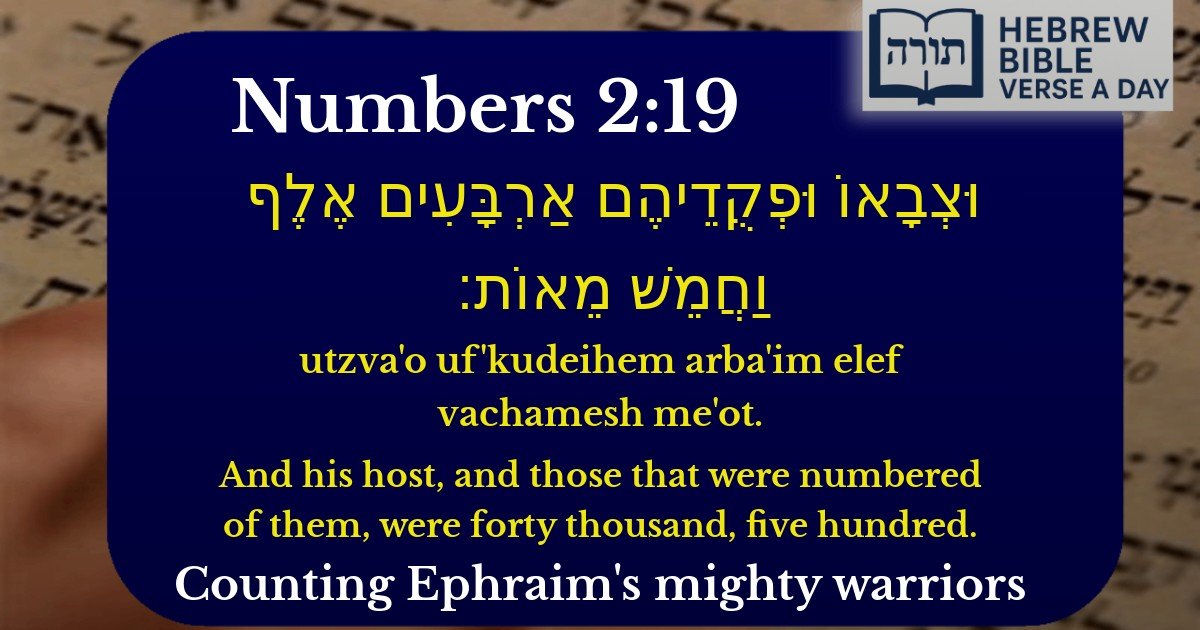

Numbers 2:19 - Counting Ephraim's mighty warriors

Numbers 2:19 - במדבר 2:19

Hebrew Text

וּצְבָאוֹ וּפְקֻדֵיהֶם אַרְבָּעִים אֶלֶף וַחֲמֵשׁ מֵאוֹת׃

English Translation

And his host, and those that were numbered of them, were forty thousand, five hundred.

Transliteration

Utzva'o uf'kudeihem arba'im elef vachamesh me'ot.

Hebrew Leining Text

וּצְבָא֖וֹ וּפְקֻדֵיהֶ֑ם אַרְבָּעִ֥ים אֶ֖לֶף וַחֲמֵ֥שׁ מֵאֽוֹת׃

🎵 Listen to leining

Parasha Commentary

Context in the Torah

The verse (Bamidbar 2:16) describes the census count of the tribe of Reuven during the wilderness encampment. The total number of men aged 20 and older, fit for military service, was 40,500. This count is part of the larger census of the twelve tribes in Parashat Bamidbar.

Rashi's Commentary

Rashi (Bamidbar 2:16) notes that the tribe of Reuven was positioned to the south of the Mishkan alongside Shimon and Gad. He explains that the phrase "וּצְבָאוֹ" ("and his host") refers to the military divisions of the tribe, while "וּפְקֻדֵיהֶם" ("those that were numbered") specifies the exact count of 40,500.

Symbolism of the Number

The Midrash (Bamidbar Rabbah 2:10) discusses the significance of the number 40,500:

  • The number 40 may allude to the 40 days Moshe spent on Har Sinai receiving the Torah, suggesting Reuven's connection to Torah learning despite his past struggles.
  • The additional 500 may hint at the 500 shekel weight of silver used for the sockets of the Mishkan (Shemot 38:27), symbolizing Reuven's role in supporting the Divine service.

Military Significance

Rambam (Hilchot Melachim 6:1) derives from such census verses that Jewish armies must be organized and counted properly before engaging in battle. The precise numbering of 40,500 reflects the Torah's emphasis on order and structure in military matters.

Comparison with Other Tribes

The Talmud (Yoma 22b) notes that Reuven's count was smaller than Yehuda's but larger than some other tribes, teaching that each tribe had its unique role in Klal Yisrael. The Maharal (Gur Aryeh, Bamidbar 2:16) explains that numbers in the Torah reflect spiritual qualities, not just physical strength.

📚 Talmud Citations

This verse is not quoted in the Talmud.

Frequently Asked Questions

Q: What does Numbers 2:19 mean when it mentions 'his host'?
A: In Numbers 2:19, 'his host' refers to the army or the organized group of the tribe of Shimon (Simeon) as they camped and traveled in the wilderness. According to Rashi, this was part of the census taken of the Israelites, showing the strength and organization of each tribe under their leaders.
Q: Why does the Torah list the exact number of 40,500 men for the tribe of Shimon?
A: The Torah lists precise numbers to emphasize the importance of each tribe in the collective structure of the Israelites. Rambam explains that counting the people showed their value and readiness for their roles, whether in travel, war, or service to Hashem. The number 40,500 highlights the significant size of Shimon's contribution to the nation.
Q: How does the counting of the tribes in Numbers 2 apply to us today?
A: While we no longer count tribes for military purposes, the lesson of organization and unity remains relevant. The Midrash teaches that each tribe had a unique role, just as every Jew today has a purpose in the community. Recognizing individual and collective strengths helps build a stronger people.
Q: What can we learn from the detailed census in Numbers 2:19?
A: The detailed census teaches the importance of accountability and order in Jewish life. The Talmud (Yoma 22b) explains that counting the Israelites demonstrated Hashem's love for them, like a shepherd who counts his flock. It also reminds us that every individual matters in fulfilling the mission of the Jewish people.