Frequently Asked Questions
Q: What does it mean when the verse says 'And the Lord spoke to Moshe saying'?
A: This phrase is a common introduction in the Torah indicating that Hashem is giving a direct commandment or instruction to Moshe (Moses). According to Rashi, this wording emphasizes that Moshe transmitted Hashem's words exactly as he received them, without adding or omitting anything.
Q: Why does the Torah repeat this phrase so often?
A: The repetition of 'And the Lord spoke to Moshe saying' throughout the Torah serves to remind us that every commandment comes directly from Hashem. The Rambam (Maimonides) explains in his principles of faith that Moshe was the greatest prophet, and his prophecy was unique in that he communicated directly with Hashem 'face to face.'
Q: What can we learn from how Hashem spoke to Moshe?
A: We learn the importance of clear communication in transmitting Torah. The Talmud (Sanhedrin 99a) teaches that Moshe was the faithful messenger who conveyed Hashem's words precisely. This sets an example for how we should teach and preserve Torah traditions accurately.
Q: Does Hashem still speak to people like He spoke to Moshe?
A: According to Jewish tradition, prophecy ended with the later prophets of the Tanach. The Rambam explains that Moshe's level of prophecy was unique and will never be matched. Today, we connect to Hashem through Torah study, prayer, and mitzvot rather than direct prophecy.
Q: How does this verse apply to us today?
A: This verse reminds us that the Torah we have today is the exact same Torah given to Moshe at Sinai. As the Midrash (Sifrei) explains, Moshe faithfully transmitted everything Hashem commanded. This gives us confidence in the authenticity of our tradition and motivates us to study Torah carefully.

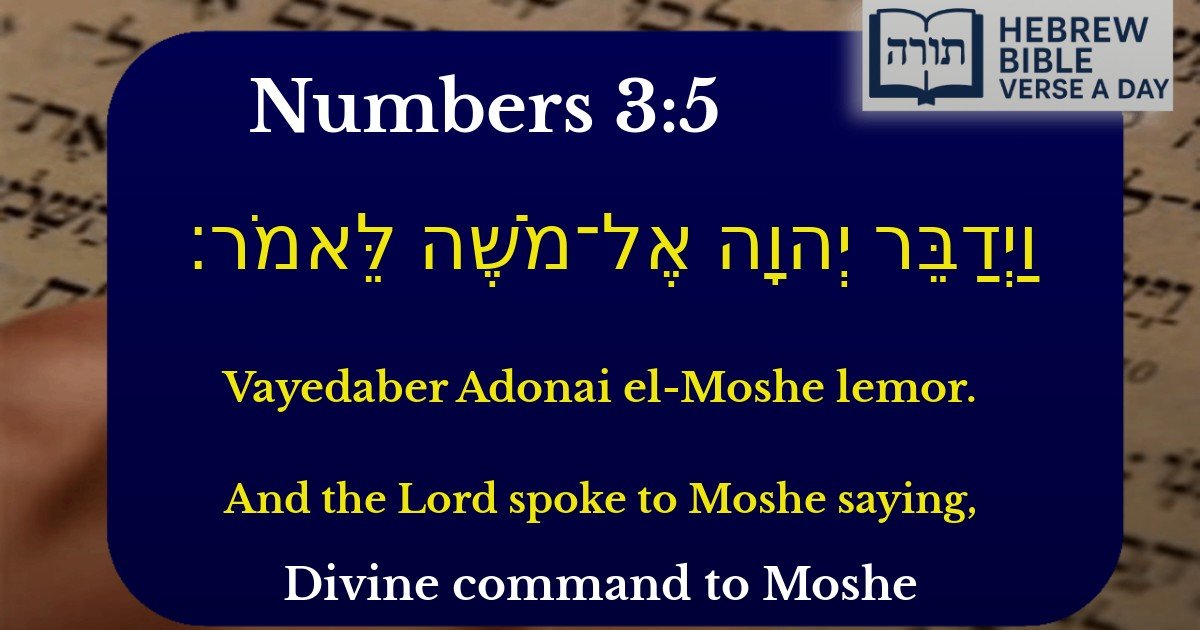

Introduction to Divine Communication
The verse "וַיְדַבֵּר יְהוָה אֶל־מֹשֶׁה לֵּאמֹר" ("And the Lord spoke to Moshe saying") appears frequently in the Torah, marking the beginning of divine commandments or revelations. Rashi (on Shemot 6:2) explains that this phrasing emphasizes the direct and clear communication between Hashem and Moshe, distinguishing it from other forms of prophecy, which might be through visions or dreams (see Bamidbar 12:6-8).
The Significance of "לֵּאמֹר" ("Saying")
The word "לֵּאמֹר" is often interpreted by commentators as an instruction for Moshe to relay the message to Bnei Yisrael. Ramban (on Bereishit 8:15) notes that this term underscores Moshe's role as the intermediary, tasked with transmitting Hashem's words accurately to the people. The Talmud (Megillah 32a) further highlights the precision required in conveying divine commandments, as even minor deviations can alter their meaning.
Moshe's Unique Prophetic Stature
Rambam (Hilchos Yesodei HaTorah 7:6) elaborates on Moshe's unparalleled level of prophecy, describing how he alone experienced direct, unmediated communication with Hashem ("פֶּה אֶל פֶּה"). This verse serves as a recurring testament to Moshe's unique role, as later prophets would receive messages through angels or metaphors, but never with such clarity.
Contextual Implications