

Join Our Newsletter To Be Informed When New Videos Are Posted
Hebrew Text
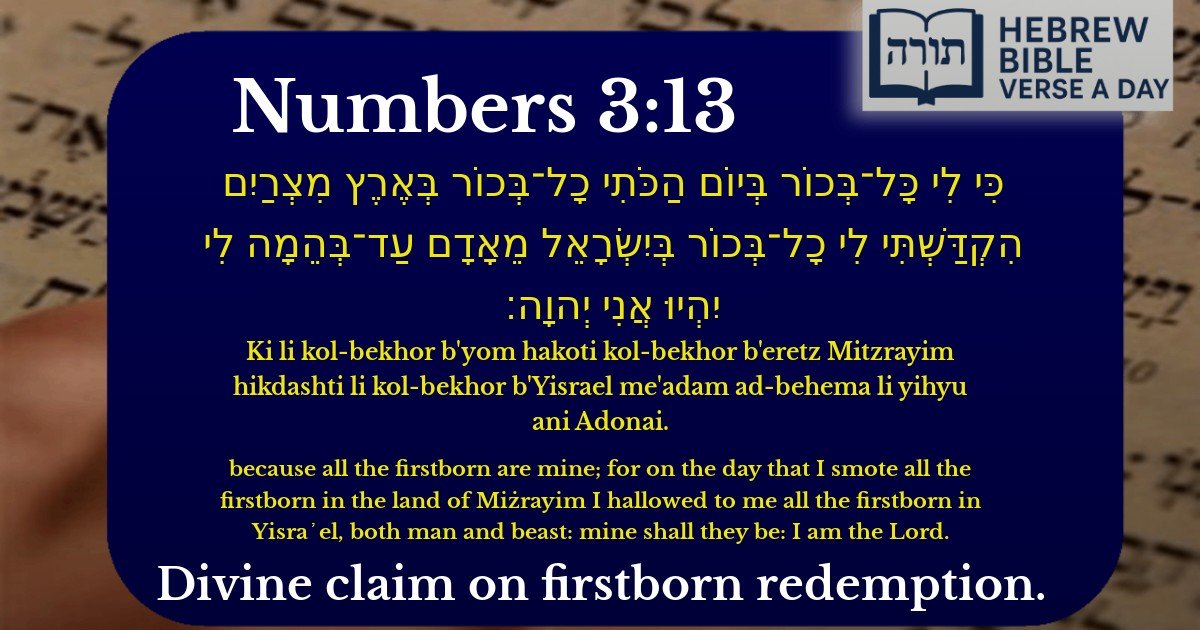
כִּי לִי כָּל־בְּכוֹר בְּיוֹם הַכֹּתִי כָל־בְּכוֹר בְּאֶרֶץ מִצְרַיִם הִקְדַּשְׁתִּי לִי כָל־בְּכוֹר בְּיִשְׂרָאֵל מֵאָדָם עַד־בְּהֵמָה לִי יִהְיוּ אֲנִי יְהוָה׃
English Translation
because all the firstborn are mine; for on the day that I smote all the firstborn in the land of Miżrayim I hallowed to me all the firstborn in Yisra᾽el, both man and beast: mine shall they be: I am the Lord.
Transliteration
Ki li kol-bekhor b'yom hakoti kol-bekhor b'eretz Mitzrayim hikdashti li kol-bekhor b'Yisrael me'adam ad-behema li yihyu ani Adonai.
Hebrew Leining Text
כִּ֣י לִי֮ כׇּל־בְּכוֹר֒ בְּיוֹם֩ הַכֹּתִ֨י כׇל־בְּכ֜וֹר בְּאֶ֣רֶץ מִצְרַ֗יִם הִקְדַּ֨שְׁתִּי לִ֤י כׇל־בְּכוֹר֙ בְּיִשְׂרָאֵ֔ל מֵאָדָ֖ם עַד־בְּהֵמָ֑ה לִ֥י יִהְי֖וּ אֲנִ֥י יְהֹוָֽה׃ {פ}
🎵 Listen to leining
Parasha Commentary
📚 Talmud Citations
This verse is quoted in the Talmud.
📖 Bekhorot 4b
The verse is discussed in the context of the sanctity of firstborns and the laws pertaining to them.
📖 Pesachim 96b
The verse is referenced in a discussion about the Exodus from Egypt and the sanctification of the firstborn.
The Sanctity of the Firstborn in Israel
The verse (Bamidbar 3:13) establishes the unique status of the firstborn in Israel as belonging to Hashem. This sanctification stems from the Exodus from Egypt, where Hashem spared the Israelite firstborn while striking down the Egyptian firstborn. Rashi explains that this verse serves as the foundation for the mitzvah of pidyon haben (redemption of the firstborn son), as the firstborn were originally designated for priestly service until the incident of the Golden Calf, after which the Levites took their place.
Twofold Sanctification
The Ramban notes that the verse mentions two aspects of sanctification:
Human and Animal Firstborn
The Mechilta emphasizes that the verse explicitly includes both human and animal firstborn, teaching that:
Theological Significance
The Sforno explains that this mitzvah serves as an eternal reminder of:
Practical Halachic Implications
The Shulchan Aruch (Yoreh De'ah 305) details the laws derived from this verse: