

Join Our Newsletter To Be Informed When New Videos Are Posted
Hebrew Text
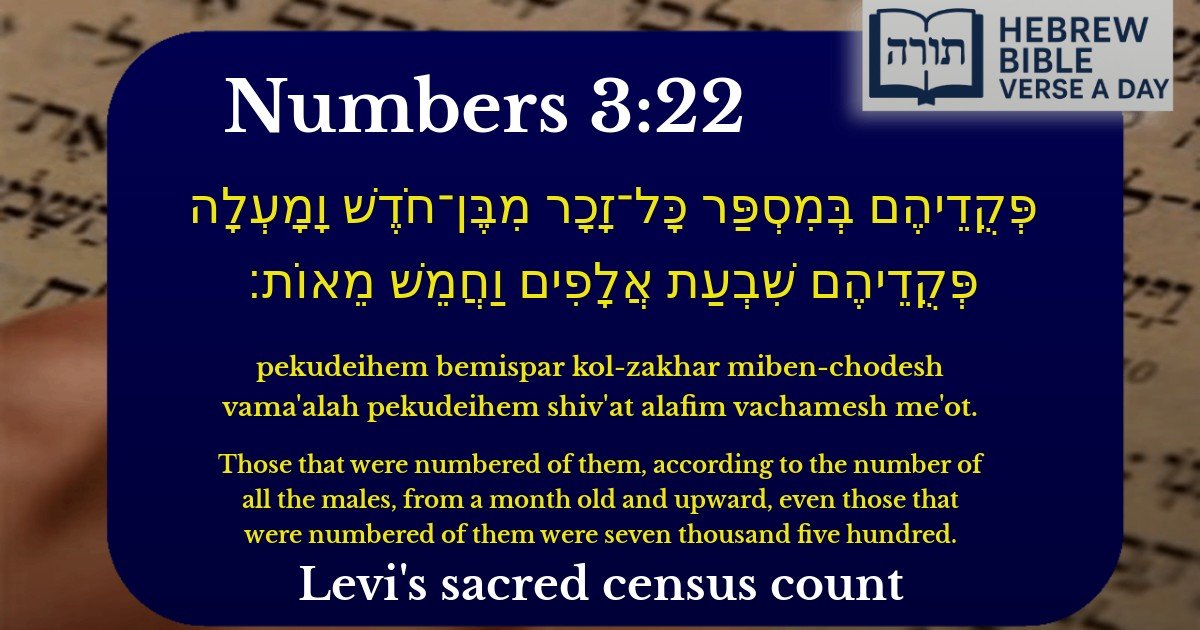
פְּקֻדֵיהֶם בְּמִסְפַּר כָּל־זָכָר מִבֶּן־חֹדֶשׁ וָמָעְלָה פְּקֻדֵיהֶם שִׁבְעַת אֲלָפִים וַחֲמֵשׁ מֵאוֹת׃
English Translation
Those that were numbered of them, according to the number of all the males, from a month old and upward, even those that were numbered of them were seven thousand five hundred.
Transliteration
Pekudeihem bemispar kol-zakhar miben-chodesh vama'alah pekudeihem shiv'at alafim vachamesh me'ot.
Hebrew Leining Text
פְּקֻדֵיהֶם֙ בְּמִסְפַּ֣ר כׇּל־זָכָ֔ר מִבֶּן־חֹ֖דֶשׁ וָמָ֑עְלָה פְּקֻ֣דֵיהֶ֔ם שִׁבְעַ֥ת אֲלָפִ֖ים וַחֲמֵ֥שׁ מֵאֽוֹת׃
🎵 Listen to leining
Parasha Commentary
📚 Talmud Citations
This verse is not quoted in the Talmud.
Context of the Verse
The verse (Bamidbar 3:39) appears in the context of the census of the tribe of Levi, specifically the family of Kehat, one of the three Levitical families. Unlike the other tribes, who were counted from the age of twenty and upward for military service (Bamidbar 1:3), the Levites were counted from one month old and upward, as their role was sacred service in the Mishkan (Tabernacle).
Rashi's Explanation
Rashi (Bamidbar 3:39) explains that the Levites were counted from one month old because their sanctity began at birth, and they were designated for divine service. Unlike other tribes, whose counting was tied to military readiness, the Levites' census reflected their spiritual role. The number 7,500 refers specifically to the male descendants of Kehat.
Rambam's Perspective
Rambam (Hilchot Klei HaMikdash 3:1-2) elaborates that the Levites' early counting signifies their unique status as replacements for the firstborns, who were originally intended for service but lost that privilege after the sin of the golden calf. The Levites' dedication from infancy underscores their lifelong commitment to serving Hashem.
Midrashic Insights
Significance of the Number
The figure of 7,500 males from Kehat is notably smaller than other tribes, reflecting the selective and specialized nature of their service. The Talmud (Chullin 24a) notes that the Levites' smaller numbers were a merit, as their quality of devotion outweighed quantity.