

Join Our Newsletter To Be Informed When New Videos Are Posted
Hebrew Text
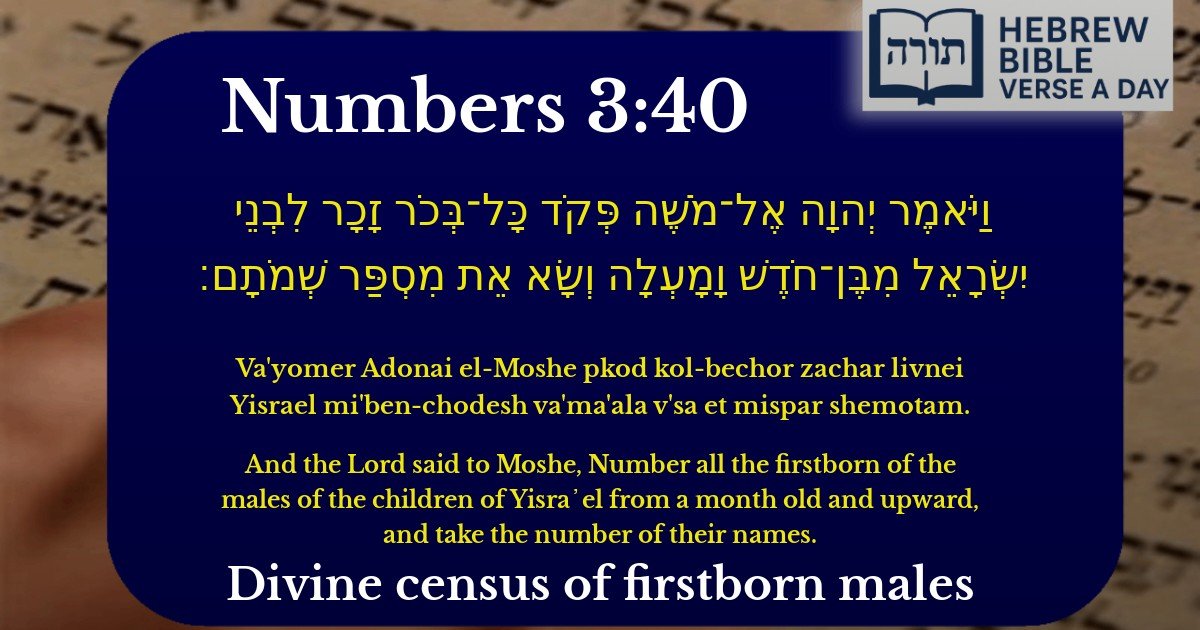
וַיֹּאמֶר יְהוָה אֶל־מֹשֶׁה פְּקֹד כָּל־בְּכֹר זָכָר לִבְנֵי יִשְׂרָאֵל מִבֶּן־חֹדֶשׁ וָמָעְלָה וְשָׂא אֵת מִסְפַּר שְׁמֹתָם׃
English Translation
And the Lord said to Moshe, Number all the firstborn of the males of the children of Yisra᾽el from a month old and upward, and take the number of their names.
Transliteration
Va'yomer Adonai el-Moshe pkod kol-bechor zachar livnei Yisrael mi'ben-chodesh va'ma'ala v'sa et mispar shemotam.
Hebrew Leining Text
וַיֹּ֨אמֶר יְהֹוָ֜ה אֶל־מֹשֶׁ֗ה פְּקֹ֨ד כׇּל־בְּכֹ֤ר זָכָר֙ לִבְנֵ֣י יִשְׂרָאֵ֔ל מִבֶּן־חֹ֖דֶשׁ וָמָ֑עְלָה וְשָׂ֕א אֵ֖ת מִסְפַּ֥ר שְׁמֹתָֽם׃
🎵 Listen to leining
Parasha Commentary
📚 Talmud Citations
This verse is quoted in the Talmud.
📖 Bava Batra 121b
The verse is referenced in a discussion about the counting of the firstborn and the Levites, relating to the census taken in the wilderness.
📖 Sanhedrin 16b
Mentioned in the context of the obligations and laws pertaining to the firstborn, particularly in relation to their redemption.
The Command to Count the Firstborn
The verse (Bamidbar 3:40) records Hashem's instruction to Moshe to count the firstborn males of Bnei Yisrael from one month old and upward. Rashi explains that this counting served a specific purpose: to determine how many firstborns needed to be redeemed by the Levi'im, who were designated to serve in the Mishkan in place of the firstborns after the sin of the Golden Calf (Rashi on Bamidbar 3:40).
Age Requirement: From One Month Old
The specification of counting from "a month old and upward" is significant. The Ramban notes that this age threshold aligns with the concept of pidyon haben (redemption of the firstborn son), which also applies from 30 days old (Ramban on Bamidbar 3:40). This teaches that the sanctity of the firstborn begins at this stage, marking their eligibility for being counted in this divine census.
The Significance of Counting by Name
The phrase "וְשָׂא אֵת מִסְפַּר שְׁמֹתָם" ("and take the number of their names") implies more than a numerical tally. The Sforno emphasizes that each firstborn was to be recorded by name, indicating their individual importance before Hashem (Sforno on Bamidbar 3:40). This mirrors the care with which all of Klal Yisrael are accounted for in divine service.
Connection to the Levi'im
The Midrash Tanchuma (Bamidbar 6) elaborates that this counting was directly linked to the exchange of the firstborns for the Levi'im. Originally, the firstborns were sanctified for service after the Exodus (when Hashem spared them during Makkas Bechoros). However, after the sin of the Golden Calf, the Levi'im proved their loyalty and were chosen instead. This census was necessary to formalize that substitution.