

Join Our Newsletter To Be Informed When New Videos Are Posted
Hebrew Text
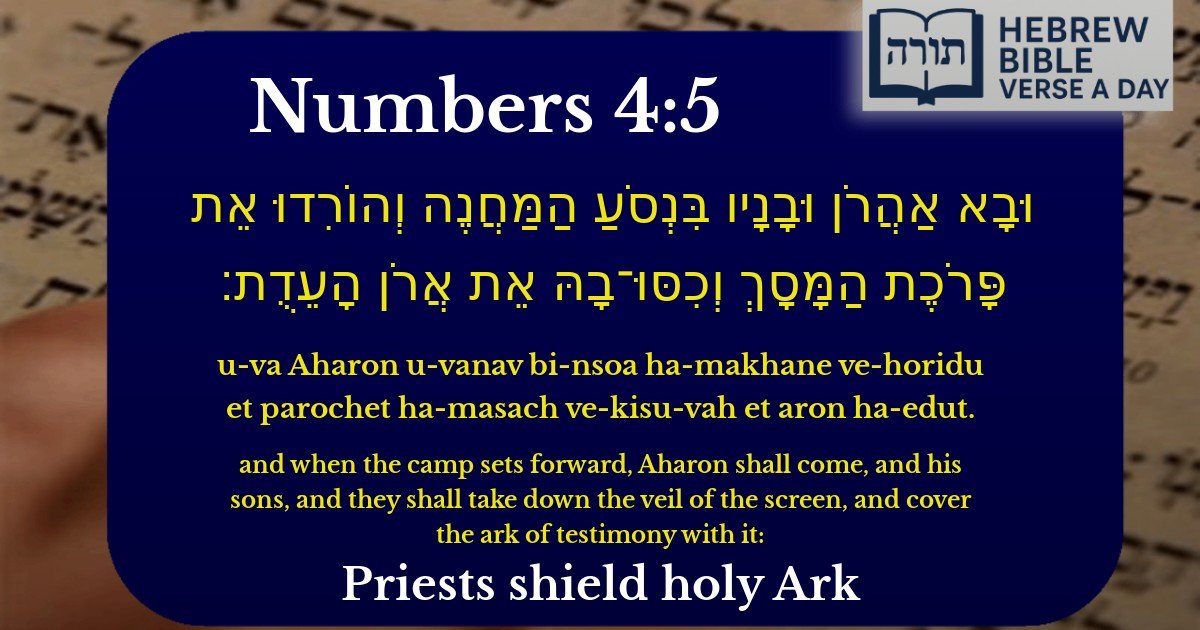
וּבָא אַהֲרֹן וּבָנָיו בִּנְסֹעַ הַמַּחֲנֶה וְהוֹרִדוּ אֵת פָּרֹכֶת הַמָּסָךְ וְכִסּוּ־בָהּ אֵת אֲרֹן הָעֵדֻת׃
English Translation
and when the camp sets forward, Aharon shall come, and his sons, and they shall take down the veil of the screen, and cover the ark of testimony with it:
Transliteration
U-va Aharon u-vanav bi-nsoa ha-makhane ve-horidu et parochet ha-masach ve-kisu-vah et aron ha-edut.
Hebrew Leining Text
וּבָ֨א אַהֲרֹ֤ן וּבָנָיו֙ בִּנְסֹ֣עַ הַֽמַּחֲנֶ֔ה וְהוֹרִ֕דוּ אֵ֖ת פָּרֹ֣כֶת הַמָּסָ֑ךְ וְכִ֨סּוּ־בָ֔הּ אֵ֖ת אֲרֹ֥ן הָעֵדֻֽת׃
🎵 Listen to leining
Parasha Commentary
📚 Talmud Citations
This verse is not quoted in the Talmud.
Context in the Torah
This verse (Bamidbar 4:5) is part of the detailed instructions given to the Kohanim (priests) regarding the disassembly and transportation of the Mishkan (Tabernacle) during the Israelites' travels in the wilderness. The verse specifically addresses the covering of the Aron HaEdut (Ark of the Testimony) with the Parochet (veil) before transport.
Rashi's Commentary
Rashi explains that the Kohanim had to first take down the Parochet that separated the Kodesh (Holy) from the Kodesh HaKodashim (Holy of Holies). They would then use this same Parochet to cover the Aron. This teaches that the same sacred cloth that served as a divider during the Mishkan's stationary state was repurposed to protect the Aron during travel.
Rambam's Perspective
In Hilchot Klei HaMikdash (Laws of Temple Vessels), Rambam elaborates on the great care required when handling the Aron. The covering with the Parochet served both a practical purpose (protecting the Aron) and a spiritual one (maintaining the reverence due to this holiest object).
Symbolism of the Covering
Practical Halachic Implications
The Talmud (Yoma 54a) derives from this verse that only Kohanim were permitted to handle the Aron and its coverings. This establishes the principle that handling sacred objects requires proper status and preparation. The Sifrei adds that this mitzvah was specifically given to Aharon and his sons, emphasizing the priestly role in protecting the sanctity of the Mishkan's vessels.
Spiritual Lessons
The Kli Yakar explains that the covering of the Aron during travel teaches us that even when the Jewish people are in a state of transition or exile, the Torah (represented by the Aron) remains our constant protection and guide, though its presence may be concealed from plain view.