

Join Our Newsletter To Be Informed When New Videos Are Posted
Hebrew Text
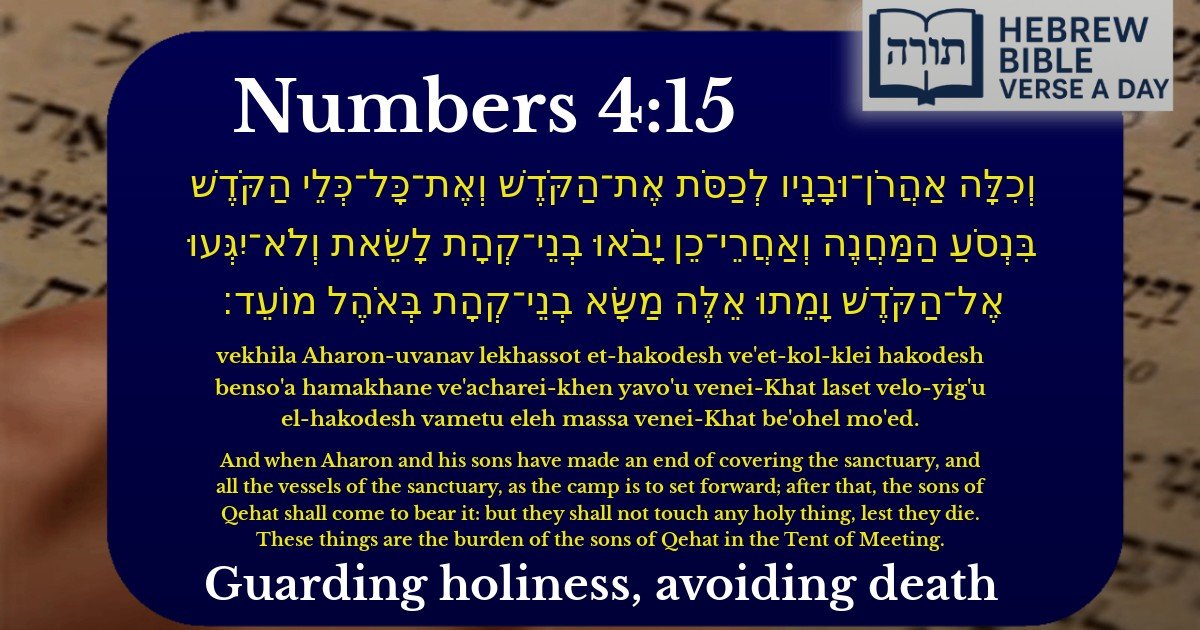
וְכִלָּה אַהֲרֹן־וּבָנָיו לְכַסֹּת אֶת־הַקֹּדֶשׁ וְאֶת־כָּל־כְּלֵי הַקֹּדֶשׁ בִּנְסֹעַ הַמַּחֲנֶה וְאַחֲרֵי־כֵן יָבֹאוּ בְנֵי־קְהָת לָשֵׂאת וְלֹא־יִגְּעוּ אֶל־הַקֹּדֶשׁ וָמֵתוּ אֵלֶּה מַשָּׂא בְנֵי־קְהָת בְּאֹהֶל מוֹעֵד׃
English Translation
And when Aharon and his sons have made an end of covering the sanctuary, and all the vessels of the sanctuary, as the camp is to set forward; after that, the sons of Qehat shall come to bear it: but they shall not touch any holy thing, lest they die. These things are the burden of the sons of Qehat in the Tent of Meeting.
Transliteration
Vekhila Aharon-uvanav lekhassot et-hakodesh ve'et-kol-klei hakodesh benso'a hamakhane ve'acharei-khen yavo'u venei-Khat laset velo-yig'u el-hakodesh vametu eleh massa venei-Khat be'ohel mo'ed.
Hebrew Leining Text
וְכִלָּ֣ה אַֽהֲרֹן־וּ֠בָנָ֠יו לְכַסֹּ֨ת אֶת־הַקֹּ֜דֶשׁ וְאֶת־כׇּל־כְּלֵ֣י הַקֹּ֘דֶשׁ֮ בִּנְסֹ֣עַ הַֽמַּחֲנֶה֒ וְאַחֲרֵי־כֵ֗ן יָבֹ֤אוּ בְנֵי־קְהָת֙ לָשֵׂ֔את וְלֹֽא־יִגְּע֥וּ אֶל־הַקֹּ֖דֶשׁ וָמֵ֑תוּ אֵ֛לֶּה מַשָּׂ֥א בְנֵֽי־קְהָ֖ת בְּאֹ֥הֶל מוֹעֵֽד׃
🎵 Listen to leining
Parasha Commentary
📚 Talmud Citations
This verse is quoted in the Talmud.
📖 Shabbat 92b
The verse is referenced in a discussion about the proper handling and transportation of sacred objects, emphasizing the precautions the sons of Qehat had to take to avoid death.
📖 Yoma 54a
The verse is cited in the context of discussing the duties of the priests and Levites during the dismantling and transportation of the Tabernacle, highlighting the specific roles assigned to the sons of Qehat.
The Role of Aharon and His Sons in Covering the Sanctuary
According to Rashi (Bamidbar 4:15), the verse emphasizes that only Aharon and his sons—the Kohanim—were permitted to handle the direct covering of the holy vessels before the Levites from the family of Kehat could transport them. This underscores the hierarchical sanctity of the Mishkan, where the Kohanim had a higher level of kedushah (holiness) and were thus entrusted with the initial preparation of the most sacred items.
The Prohibition Against Touching the Holy Vessels
The Torah warns that the sons of Kehat must not touch the holy vessels directly, lest they die. Rambam (Hilchot Klei HaMikdash 10:12) explains that this prohibition stems from the severe sanctity of these items, which required utmost reverence. The Kohanim had to cover them first, ensuring that the Levites would only handle the outer coverings, not the sacred objects themselves.
The Sequence of Transporting the Mishkan
The Midrash Tanchuma (Bamidbar 5) elaborates on the order of operations: the Kohanim were responsible for dismantling and covering the Aron (Ark), Shulchan (Table), Menorah, and Mizbeach (Altar), while the Levites from Kehat were assigned the physical carrying. This division of labor reinforced the principle that each tribe and family had a designated role in the service of Hashem, as emphasized in Bamidbar Rabbah (4:20).
The Consequences of Negligence
The severe warning—"lest they die"—highlights the gravity of improperly handling kedushah. The Talmud (Yoma 54a) derives from this that even those with good intentions (such as the sons of Kehat, who were Levites) could incur punishment if they overstepped their boundaries in divine service. This teaches the importance of adhering strictly to halachic guidelines in matters of sanctity.
The Significance of the Term "Masa" (Burden)
The verse concludes by calling this duty the "burden of the sons of Kehat." The Kli Yakar (Bamidbar 4:15) notes that the term "masa" implies both a physical and spiritual responsibility. While it was physically demanding to carry the Mishkan's components, it was also an immense privilege—a "burden" of holiness that required utmost care and devotion.