

Join Our Newsletter To Be Informed When New Videos Are Posted
Hebrew Text
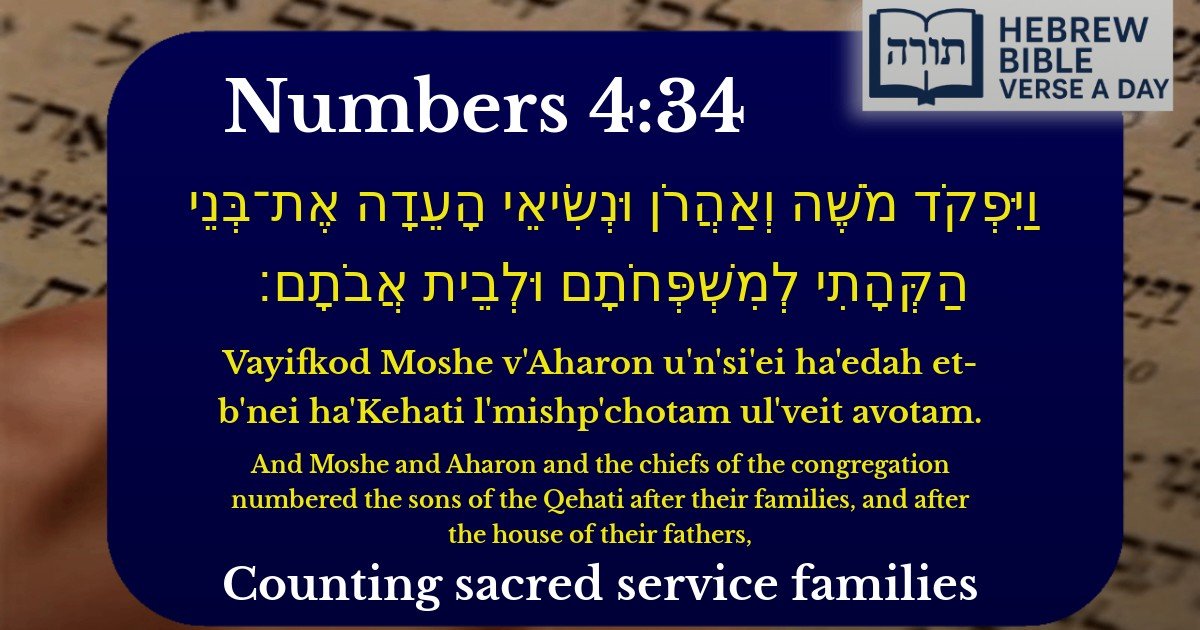
וַיִּפְקֹד מֹשֶׁה וְאַהֲרֹן וּנְשִׂיאֵי הָעֵדָה אֶת־בְּנֵי הַקְּהָתִי לְמִשְׁפְּחֹתָם וּלְבֵית אֲבֹתָם׃
English Translation
And Moshe and Aharon and the chiefs of the congregation numbered the sons of the Qehati after their families, and after the house of their fathers,
Transliteration
Vayifkod Moshe v'Aharon u'n'si'ei ha'edah et-b'nei ha'Kehati l'mishp'chotam ul'veit avotam.
Hebrew Leining Text
וַיִּפְקֹ֨ד מֹשֶׁ֧ה וְאַהֲרֹ֛ן וּנְשִׂיאֵ֥י הָעֵדָ֖ה אֶת־בְּנֵ֣י הַקְּהָתִ֑י לְמִשְׁפְּחֹתָ֖ם וּלְבֵ֥ית אֲבֹתָֽם׃
🎵 Listen to leining
Parasha Commentary
📚 Talmud Citations
This verse is not quoted in the Talmud.
Context of the Verse
The verse (Bamidbar 4:34) describes Moshe, Aharon, and the leaders of the congregation counting the sons of Kehat, one of the families of the tribe of Levi. This census was part of the broader assignment of duties for transporting the Mishkan (Tabernacle) during the Israelites' travels in the wilderness.
Rashi's Commentary
Rashi explains that the counting of the Kehatites was done with great care and precision because they were entrusted with carrying the most sacred vessels of the Mishkan, including the Aron (Ark), Shulchan (Table), Menorah, and Mizbeach (Altar). The leaders personally oversaw this count to ensure accuracy and reverence for this holy task.
Rambam's Perspective
In Hilchot Klei HaMikdash (Laws of the Temple Vessels), Rambam emphasizes the importance of proper delegation and organization in sacred service. The meticulous counting of the Kehatites reflects the Torah's principle that holy matters must be handled with structure and dignity, ensuring that only those designated for specific roles perform them.
Midrashic Insights
Significance of "למשפחתם ולבית אבותם" (By Families and Fathers' Houses)
The Torah emphasizes that the count was organized by families and paternal lineage. This reflects the importance of preserving tribal and familial identities within the broader framework of the Levi'im's service. The Malbim explains that this structure ensured accountability and continuity in the sacred duties passed down through generations.
Practical Lessons