Frequently Asked Questions
Q: What does Numbers 5:10 mean?
A: Numbers 5:10 teaches that any holy gifts (such as tithes or sacrifices) that a person designates for the Kohen (priest) belong to that Kohen. Once given, these items cannot be taken back or reclaimed by the donor. This emphasizes the sanctity of gifts to the Temple service and the respect due to the Kohanim, who serve Hashem.
Q: Why is this verse important in Judaism?
A: This verse is important because it establishes the rights of the Kohanim (priests) to receive certain holy offerings from the Jewish people. The Torah assigns the Kohanim a portion of certain sacrifices and agricultural gifts (like terumah) as their inheritance for serving in the Mishkan (Tabernacle) and later the Beit Hamikdash (Temple). This ensures their material needs are met so they can focus on their sacred duties.
Q: What can we learn from Numbers 5:10 today?
A: Even though we currently lack the Beit Hamikdash, we learn from this verse the importance of supporting those who dedicate their lives to Torah and spiritual service. Today, this applies to supporting Torah scholars and communal rabbis, ensuring they have what they need to teach and guide the Jewish people, just as the Kohanim were supported in their sacred role.
Q: What does 'every man’s hallowed things shall be his' refer to?
A: Rashi explains that this phrase refers to voluntary offerings or consecrated items that a person sets aside for sacred purposes. Once a person designates something as holy—whether an animal for sacrifice, produce as terumah (priestly tithe), or other sanctified items—it becomes the permanent possession of the Kohen and cannot be reclaimed by the original owner.
Q: Does this law apply to all gifts given to a Kohen?
A: No, this verse specifically refers to gifts that are designated as holy (kodesh), such as certain sacrifices, tithes, or consecrated property. Ordinary gifts or donations to a Kohen do not fall under this category. The Rambam (Hilchos Terumos) elaborates on which gifts are obligatory and which are voluntary, but all holy gifts become the Kohen's permanent possession once given.


Context and Source
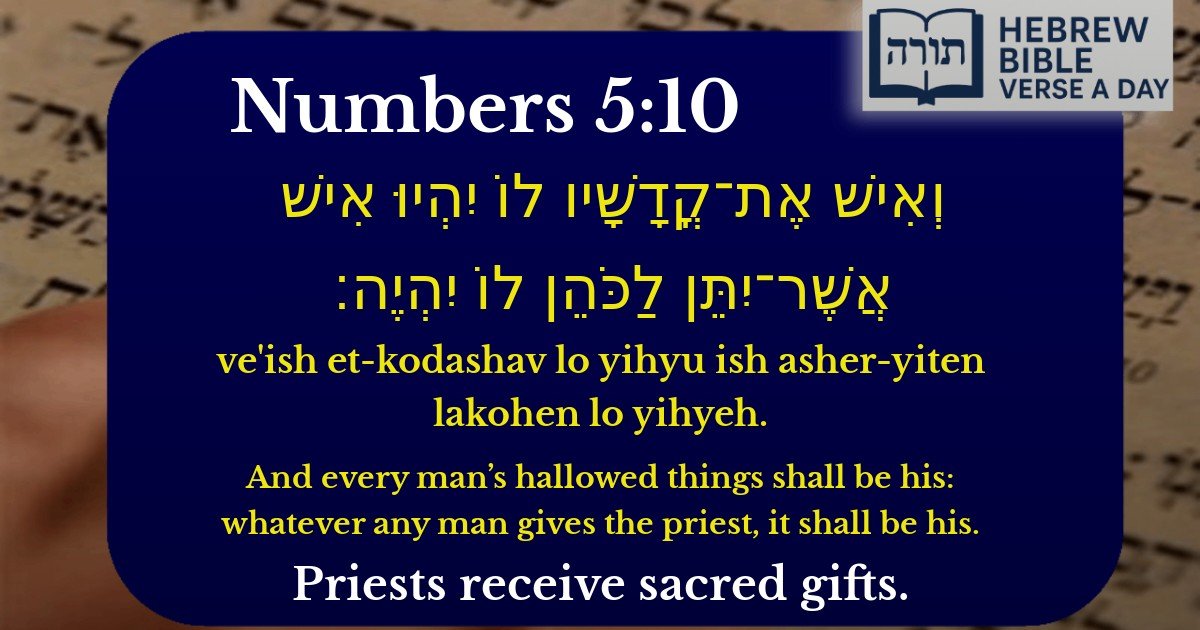
The verse (Numbers 5:10) appears in the context of the laws concerning terumah (sacred donations) and other consecrated items given to the Kohanim (priests). It emphasizes the sanctity and ownership of these gifts once they are designated for the priestly service.
Rashi's Explanation
Rashi (Rabbi Shlomo Yitzchaki) comments that the phrase "וְאִישׁ אֶת־קֳדָשָׁיו לוֹ יִהְיוּ" ("And every man’s hallowed things shall be his") teaches that once a person designates a sacred gift for the Kohen, it becomes the exclusive property of the priest. Even if the donor later regrets his decision, the gift remains with the Kohen and cannot be reclaimed. This underscores the irrevocable nature of consecrated donations.
Rambam's Perspective
In Hilchos Terumos (Laws of Heave Offerings 12:1), the Rambam (Maimonides) elaborates that this verse establishes a fundamental principle: once terumah or other sacred gifts are separated and given to the Kohen, they are no longer subject to the donor's control. The Kohen acquires full rights over them, and any attempt to retract the gift is invalid.
Talmudic and Midrashic Insights
Halachic Implications
This verse serves as the basis for several halachic rulings regarding the irrevocable transfer of sanctified property to the Kohanim. For example: