

Join Our Newsletter To Be Informed When New Videos Are Posted
Hebrew Text
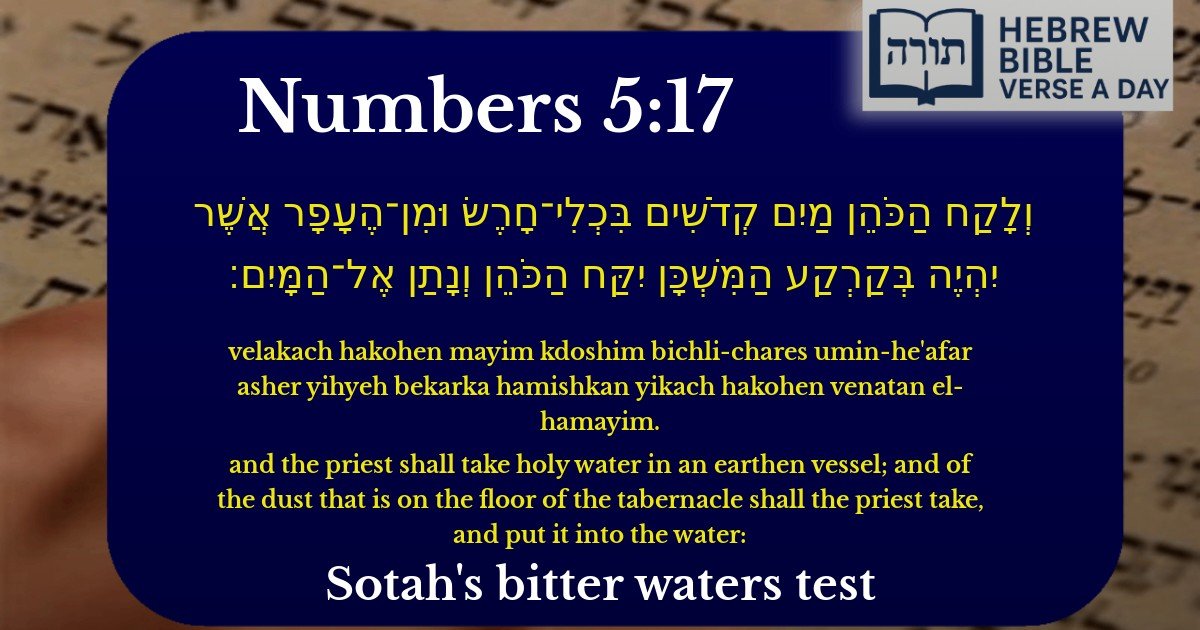
וְלָקַח הַכֹּהֵן מַיִם קְדֹשִׁים בִּכְלִי־חָרֶשׂ וּמִן־הֶעָפָר אֲשֶׁר יִהְיֶה בְּקַרְקַע הַמִּשְׁכָּן יִקַּח הַכֹּהֵן וְנָתַן אֶל־הַמָּיִם׃
English Translation
and the priest shall take holy water in an earthen vessel; and of the dust that is on the floor of the tabernacle shall the priest take, and put it into the water:
Transliteration
Velakach hakohen mayim kdoshim bichli-chares umin-he'afar asher yihyeh bekarka hamishkan yikach hakohen venatan el-hamayim.
Hebrew Leining Text
וְלָקַ֧ח הַכֹּהֵ֛ן מַ֥יִם קְדֹשִׁ֖ים בִּכְלִי־חָ֑רֶשׂ וּמִן־הֶֽעָפָ֗ר אֲשֶׁ֤ר יִהְיֶה֙ בְּקַרְקַ֣ע הַמִּשְׁכָּ֔ן יִקַּ֥ח הַכֹּהֵ֖ן וְנָתַ֥ן אֶל־הַמָּֽיִם׃
🎵 Listen to leining
Parasha Commentary
📚 Talmud Citations
This verse is quoted in the Talmud.
📖 Sotah 15a
The verse is referenced in the discussion of the ritual of the Sotah (suspected adulteress), where the priest prepares the bitter waters using dust from the floor of the Tabernacle.
📖 Sotah 17a
Further discussion on the significance of the dust from the Tabernacle floor in the Sotah ritual, emphasizing its sanctity and role in the procedure.
Context in the Torah
This verse (Numbers 5:17) is part of the procedure for the sotah (a woman suspected of adultery), as described in Parashas Naso. The ritual involves the Kohen preparing a mixture of holy water, dust from the Mishkan floor, and a dissolved parchment containing Hashem's name to determine the woman's innocence or guilt.
Symbolism of the Earthen Vessel
Rashi (Numbers 5:17) explains that the use of a kli cheres (earthen vessel) symbolizes the fragility of human relationships—just as earthenware cannot be repaired once broken, so too is trust difficult to restore after betrayal. The Ramban adds that an earthen vessel, unlike metal or glass, does not enhance the water's appearance, reflecting the unadorned truth sought in this procedure.
Significance of the Dust from the Mishkan
The Holy Water
The mei kodesh (holy water) is drawn from the Kiyor (laver), as per Rashi, symbolizing purity. The Mishnah (Sotah 2:2) states that the water must be "living water" (mayim chayim), emphasizing that truth brings life, while falsehood leads to spiritual death.
Halachic Insights
The Rambam (Hilchos Sotah 3:1) details the exact procedure, stressing that every element—the vessel, dust, and water—must meet specific halachic standards to ensure the ritual's validity. The Shulchan Aruch (Even HaEzer 178) discusses how these laws inform broader principles of evidence and testimony in Jewish courts.