

Join Our Newsletter To Be Informed When New Videos Are Posted
Hebrew Text
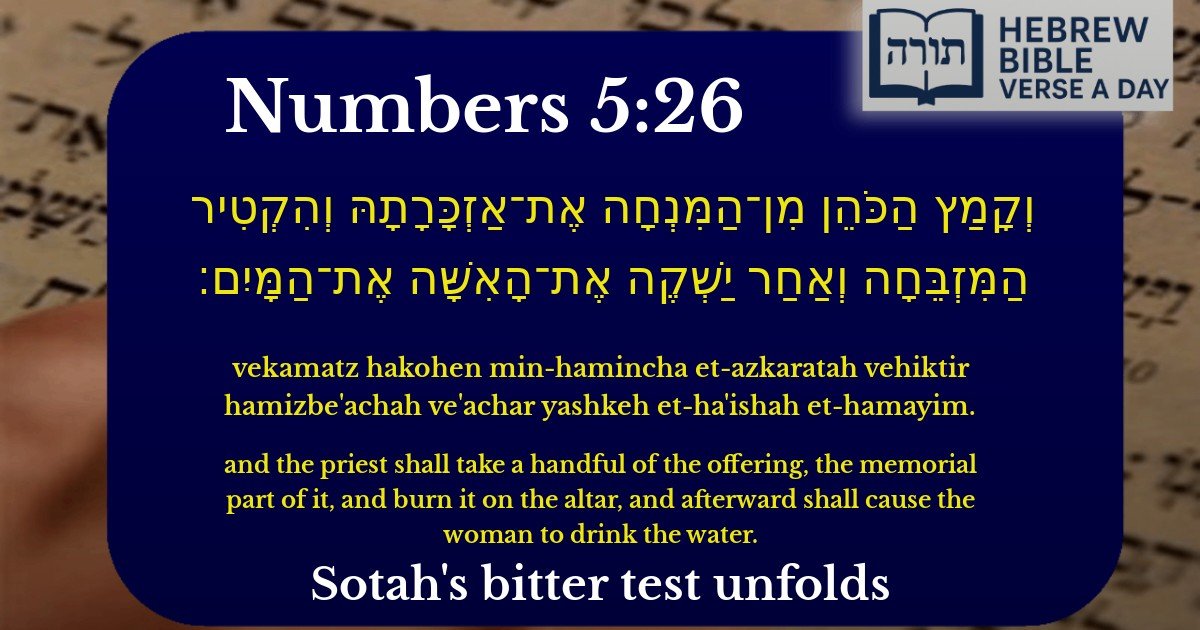
וְקָמַץ הַכֹּהֵן מִן־הַמִּנְחָה אֶת־אַזְכָּרָתָהּ וְהִקְטִיר הַמִּזְבֵּחָה וְאַחַר יַשְׁקֶה אֶת־הָאִשָּׁה אֶת־הַמָּיִם׃
English Translation
and the priest shall take a handful of the offering, the memorial part of it, and burn it on the altar, and afterward shall cause the woman to drink the water.
Transliteration
Vekamatz hakohen min-hamincha et-azkaratah vehiktir hamizbe'achah ve'achar yashkeh et-ha'ishah et-hamayim.
Hebrew Leining Text
וְקָמַ֨ץ הַכֹּהֵ֤ן מִן־הַמִּנְחָה֙ אֶת־אַזְכָּ֣רָתָ֔הּ וְהִקְטִ֖יר הַמִּזְבֵּ֑חָה וְאַחַ֛ר יַשְׁקֶ֥ה אֶת־הָאִשָּׁ֖ה אֶת־הַמָּֽיִם׃
🎵 Listen to leining
Parasha Commentary
📚 Talmud Citations
This verse is quoted in the Talmud.
📖 Sotah 18a
The verse is discussed in the context of the Sotah ritual, where the priest takes a handful of the meal offering as part of the procedure for the suspected adulteress.
📖 Sotah 19b
Further discussion on the priest's actions with the meal offering and the subsequent giving of the bitter waters to the woman.
Explanation of the Verse from Sotah 19a
This verse describes part of the procedure for the sotah (a woman suspected of adultery) as outlined in Bamidbar (Numbers) 5:25-26. The Kohen takes a handful of the minchah (meal offering) as an azkarah (memorial portion) and burns it on the Mizbe'ach (altar). Only afterward does he administer the "bitter waters" to the woman.
Rashi's Commentary
Rashi (Bamidbar 5:26) explains that the azkarah refers to the portion of the meal offering that is burned on the altar, symbolizing that the offering is being "remembered" before Hashem. He notes that this follows the general procedure for meal offerings as described in Vayikra (Leviticus) 2:2.
Rambam's Explanation in Mishneh Torah
In Hilchot Sotah 3:15, the Rambam codifies this procedure, emphasizing that the Kohen must first offer the minchah before giving the woman the water to drink. This sequence teaches that the judgment is ultimately in Hashem's hands, as the offering precedes the test.
Symbolism of the Procedure
Halachic Significance
The Talmud (Sotah 19a) discusses how this procedure demonstrates that the sotah ritual follows the same basic structure as other meal offerings, with the unique addition of the bitter waters. The sequence is crucial - the offering must precede the drinking of the waters.
Spiritual Message
Rabbi Samson Raphael Hirsch notes that by first offering the meal to Hashem, we're reminded that all judgments must be approached with reverence for divine justice. The physical act of offering precedes the test, teaching that we must first elevate our actions before confronting difficult situations.