Frequently Asked Questions
Q: What does Numbers 5:29 mean?
A: Numbers 5:29 discusses the 'Tora of jealousies,' which refers to the procedure in the Torah when a husband suspects his wife of being unfaithful (Sotah). The verse explains that this law applies when a woman strays from her husband and becomes defiled. The process is detailed in the Talmud (Sotah 2a) and involves a special ceremony conducted by a Kohen (priest) to determine her innocence or guilt.
Q: Why is the law of Sotah (jealousy offering) important in Judaism?
A: The law of Sotah is important because it addresses the sanctity of marriage and the severe consequences of violating trust between spouses. According to Rashi (on Numbers 5:29), this law serves as a deterrent against infidelity and reinforces the holiness of the marital bond. The Rambam (Hilchot Sotah 1:1) explains that the Sotah procedure was a unique Divine method to restore peace in a household where suspicion arose.
Q: What can we learn from the Sotah ritual today?
A: Even though the Sotah ritual is not practiced today (as the Talmud states it was discontinued when adultery became common—Sotah 47a), we learn the importance of trust, communication, and fidelity in marriage. The Midrash (Bamidbar Rabbah 9:9) teaches that the Sotah law highlights the seriousness of causing strife in a marriage and the need for transparency and repentance.
Q: Does the Sotah law still apply in modern times?
A: No, the Sotah ceremony is no longer practiced today. The Talmud (Sotah 47a) explains that the ritual ceased when adultery became widespread, and the Sanhedrin (Jewish high court) no longer functioned in its full capacity. However, the ethical lessons about marital fidelity and trust remain relevant, as discussed in halachic works like the Mishneh Torah (Rambam, Hilchot Sotah).
Q: What happens if a woman is found guilty in the Sotah process?
A: If a woman was found guilty through the Sotah process (after drinking the 'bitter waters'), the Torah (Numbers 5:27) states that she would suffer severe consequences. Rashi explains that this was a Divine punishment, showing that infidelity undermines the foundation of a Jewish home. The Talmud (Sotah 20a) elaborates on the supernatural effects of the ritual, emphasizing that it was a miraculous test from Hashem.


The Law of Sotah (Suspected Adultery)
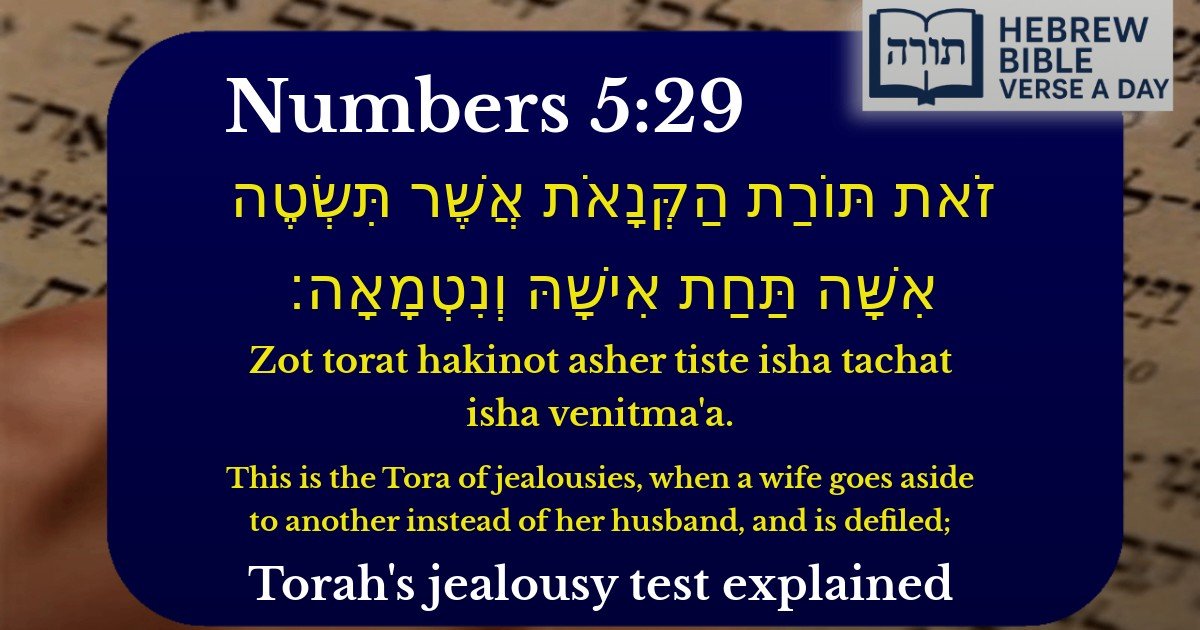
The verse (Numbers 5:29) introduces the Torat HaKena'ot (Law of Jealousies), which details the procedure for a Sotah—a woman suspected of adultery due to her husband's suspicions and warning. This law applies when a wife "goes aside" (tisteh) and potentially becomes defiled (venitma'ah).
Key Interpretations from Traditional Sources
The Spiritual and Social Context
The Sotah ritual (involving the bitter waters) serves as both a deterrent and a means of resolving doubt. The Midrash (Bamidbar Rabbah 9:9) notes that this law underscores the sanctity of marriage and the gravity of violating its boundaries. The husband's jealousy (kinah) must be grounded in legitimate suspicion, not baseless accusations.
Modern Orthodox Perspective
While the Sotah ritual is no longer practiced after the Temple's destruction, its lessons remain relevant: the importance of trust in marriage, the dangers of unfounded suspicion, and the divine oversight of human relationships. Contemporary halachic authorities emphasize conflict resolution and ethical conduct in marital disputes.