
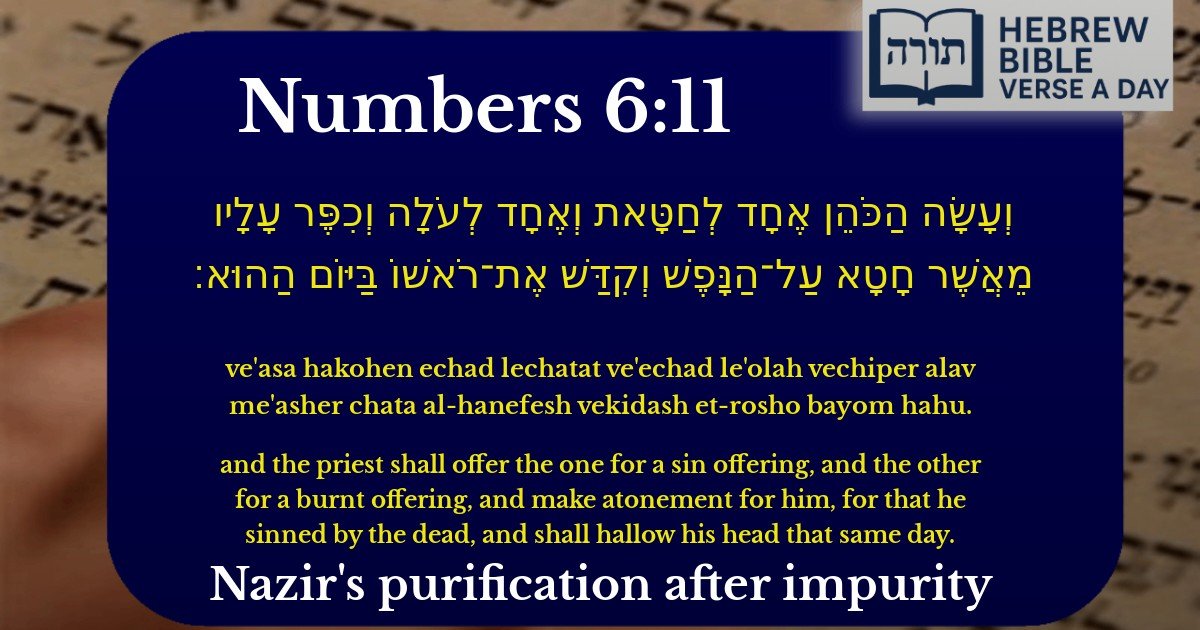

Numbers 6:11 - Nazir's purification after impurity

Numbers 6:11 - במדבר 6:11

Hebrew Text

וְעָשָׂה הַכֹּהֵן אֶחָד לְחַטָּאת וְאֶחָד לְעֹלָה וְכִפֶּר עָלָיו מֵאֲשֶׁר חָטָא עַל־הַנָּפֶשׁ וְקִדַּשׁ אֶת־רֹאשׁוֹ בַּיּוֹם הַהוּא׃

English Translation

and the priest shall offer the one for a sin offering, and the other for a burnt offering, and make atonement for him, for that he sinned by the dead, and shall hallow his head that same day.

Transliteration

Ve'asa hakohen echad lechatat ve'echad le'olah vechiper alav me'asher chata al-hanefesh vekidash et-rosho bayom hahu.

Hebrew Leining Text

וְעָשָׂ֣ה הַכֹּהֵ֗ן אֶחָ֤ד לְחַטָּאת֙ וְאֶחָ֣ד לְעֹלָ֔ה וְכִפֶּ֣ר עָלָ֔יו מֵאֲשֶׁ֥ר חָטָ֖א עַל־הַנָּ֑פֶשׁ וְקִדַּ֥שׁ אֶת־רֹאשׁ֖וֹ בַּיּ֥וֹם הַהֽוּא׃

🎵 Listen to leining

Parasha Commentary

Context of the Verse

This verse (Numbers 6:11) is part of the laws concerning the Nazirite (Nazir), who takes a vow of abstinence for a set period. If the Nazirite becomes ritually impure through contact with a corpse (tum'at met), they must bring sacrifices to atone and restart their Nazirite period. The verse details the required offerings: a sin offering (chatat) and a burnt offering (olah).

Explanation of the Sacrifices

  • Sin Offering (חַטָּאת): Rashi explains that the sin offering atones for the Nazirite's transgression of becoming impure, even if unintentional. The Rambam (Hilchot Nezirut 7:7) emphasizes that this impurity interrupts the sanctity of the Nazirite vow, necessitating atonement.
  • Burnt Offering (עֹלָה): The olah represents complete devotion to Hashem. The Sforno notes that after impurity, the Nazirite reaffirms their commitment by bringing this offering, symbolizing renewed dedication to their vow.

Atonement for Sinning "by the Dead" (עַל־הַנָּפֶשׁ)

The phrase "for that he sinned by the dead" requires clarification. The Talmud (Nazir 19a) discusses whether the Nazirite actually sins by contracting impurity. Some opinions hold that the "sin" is neglecting the holiness of the vow, while others argue that impurity itself is not sinful but requires atonement due to the interruption of the Nazirite's sanctified state.

Sanctifying the Head (וְקִדַּשׁ אֶת־רֹאשׁוֹ)

After bringing the offerings, the Nazirite must "hallow his head"—restarting the Nazirite period by shaving and rededicating themselves. The Kli Yakar explains that this act symbolizes purification and renewal, allowing the Nazirite to resume their holy status. The Midrash Tanchuma (Naso 11) connects this to spiritual rebirth, emphasizing that repentance and atonement restore one's connection to holiness.

Practical Halachic Implications

The Rambam (Hilchot Nezirut 7:1-9) outlines the detailed process: after impurity, the Nazirite must wait seven days for purification, bring the sacrifices, shave their hair, and restart their vow from day one. This underscores the seriousness of maintaining ritual purity while under a Nazirite oath.

📚 Talmud Citations

This verse is quoted in the Talmud.

📖 Nazir 44b
The verse is discussed in the context of the laws of the Nazirite, particularly regarding the atonement process after defilement by a corpse.
📖 Keritot 9a
The verse is referenced in a discussion about the types of sacrifices required for atonement in various circumstances.

Frequently Asked Questions

Q: What does Numbers 6:11 mean in the context of a Nazirite?
A: Numbers 6:11 describes the atonement process for a Nazirite (someone who took a special vow of dedication to Hashem) who became ritually impure through contact with a dead body. The verse explains that the Kohen (priest) brings two offerings—a sin offering (chatat) and a burnt offering (olah)—to atone for this impurity. Rashi explains that the sin offering atones for the accidental transgression, while the burnt offering reaffirms the Nazirite's commitment to Hashem. After this process, the Nazirite restarts their vow period.
Q: Why does a Nazirite need atonement for being near a dead body?
A: A Nazirite vows to avoid any contact with the dead (Numbers 6:6-7), as part of their heightened spiritual sanctity. If they accidentally come into contact with a corpse, they become ritually impure (tamei) and must undergo purification. The offerings in Numbers 6:11 serve as atonement because, despite being unintentional, the impurity still interrupts their sacred vow. The Talmud (Nazir 19a) discusses that this teaches the importance of maintaining spiritual purity, especially when taking on extra holiness.
Q: What is the significance of 'hallowing his head' in Numbers 6:11?
A: The phrase 'and shall hallow his head that same day' refers to the Nazirite restarting their vow after impurity. Rashi explains that this means they must shave their head (a key part of the Nazirite purification process) and begin their vow period again from day one. The Rambam (Hilchot Nezirut 7:9) adds that this reaffirms their dedication to Hashem, showing that even after a setback, they recommit to their spiritual growth.
Q: How does the concept of atonement in Numbers 6:11 apply today?
A: While we no longer have the Temple service, the principle of atonement and repentance remains central in Judaism. The verse teaches that even unintentional spiritual lapses require correction. Today, teshuvah (repentance), tefillah (prayer), and tzedakah (charity) serve as substitutes for offerings (Talmud Berachot 32b). The Nazirite's process reminds us that setbacks don’t negate our spiritual goals—we can always renew our commitment to holiness.