
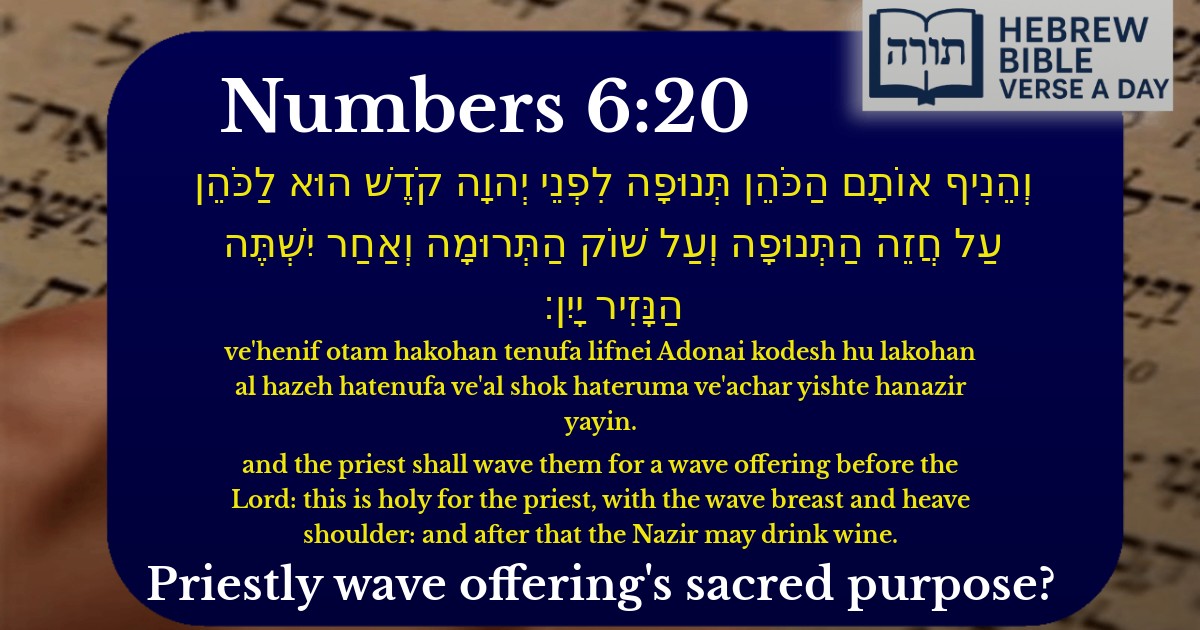

Numbers 6:20 - Priestly wave offering's sacred purpose?

Numbers 6:20 - במדבר 6:20

Hebrew Text

וְהֵנִיף אוֹתָם הַכֹּהֵן תְּנוּפָה לִפְנֵי יְהוָה קֹדֶשׁ הוּא לַכֹּהֵן עַל חֲזֵה הַתְּנוּפָה וְעַל שׁוֹק הַתְּרוּמָה וְאַחַר יִשְׁתֶּה הַנָּזִיר יָיִן׃

English Translation

and the priest shall wave them for a wave offering before the Lord: this is holy for the priest, with the wave breast and heave shoulder: and after that the Nazir may drink wine.

Transliteration

Ve'henif otam hakohan tenufa lifnei Adonai kodesh hu lakohan al hazeh hatenufa ve'al shok hateruma ve'achar yishte hanazir yayin.

Hebrew Leining Text

וְהֵנִיף֩ אוֹתָ֨ם הַכֹּהֵ֥ן ׀ תְּנוּפָה֮ לִפְנֵ֣י יְהֹוָה֒ קֹ֤דֶשׁ הוּא֙ לַכֹּהֵ֔ן עַ֚ל חֲזֵ֣ה הַתְּנוּפָ֔ה וְעַ֖ל שׁ֣וֹק הַתְּרוּמָ֑ה וְאַחַ֛ר יִשְׁתֶּ֥ה הַנָּזִ֖יר יָֽיִן׃

🎵 Listen to leining

Parasha Commentary

Overview of the Verse

This verse (Bamidbar 6:20) describes the conclusion of the Nazirite's vow, detailing the priestly service involving the wave offering (תְּנוּפָה) and the subsequent permission for the Nazir to drink wine again. The process emphasizes the sanctity of the offerings and the transition of the Nazir back to ordinary life.

The Wave Offering (תְּנוּפָה)

Rashi explains that the wave offering involves moving the portions (the breast and thigh) forward and backward, as well as upward and downward, symbolizing acknowledgment of Hashem's dominion over all directions. The Rambam (Hilchos Maaseh HaKorbanos 9:6) elaborates that this act demonstrates the kohen's role as an intermediary in dedicating the offering to Hashem.

  • Breast and Thigh: The chazeh (breast) and shok (thigh) are set aside for the kohen, as derived from Vayikra 7:34. These portions are considered holy (קֹדֶשׁ) and are exclusively for the priests.
  • Dual Sanctity: The verse emphasizes that these portions are "holy for the priest," reinforcing their sacred status and the prohibition against non-priests partaking of them (see Rambam, Hilchos Terumos 6:1).

Completion of the Nazirite Vow

The phrase "וְאַחַר יִשְׁתֶּה הַנָּזִיר יָיִן" ("after that the Nazir may drink wine") marks the formal end of the Nazir's abstinence. The Talmud (Nazir 19a) discusses that this permission is only granted after all the required sacrifices and rituals are completed, ensuring the vow is properly discharged.

  • Return to Normality: The Nazir, who had abstained from wine as part of their sanctity (Bamidbar 6:3-4), is now permitted to return to ordinary life, illustrating the temporary nature of nezirus.
  • Spiritual Transition: The Sforno notes that the wave offering serves as a final act of devotion before the Nazir resumes regular conduct, symbolizing gratitude for the successful completion of the vow.

Halachic Implications

The Rambam (Hilchos Nezirus 8:13) rules that the Nazir may not drink wine until the sacrifices are offered and the hair is shaved. This underscores the importance of following the Torah's prescribed order in fulfilling vows.

📚 Talmud Citations

This verse is quoted in the Talmud.

📖 Nazir 47a
The verse is discussed in the context of the laws regarding the Nazirite and the priestly offerings, particularly focusing on the wave offering and the permissibility for the Nazirite to drink wine after certain rituals.
📖 Menachot 61b
The verse is referenced in a discussion about the wave offerings and the portions designated for the priests, emphasizing the holiness of these offerings.

Frequently Asked Questions

Q: What is a 'wave offering' in Numbers 6:20?
A: A wave offering (תְּנוּפָה) is a ritual where the Kohen (priest) moves a portion of the sacrifice in a waving motion before Hashem. According to Rashi, this symbolizes dedicating the offering to G-d by moving it forward and backward, representing submission to His will. In this verse, it refers to parts of the Nazir's sacrifice.
Q: Why does the Nazirite bring an offering after completing their vow?
A: The Nazir brings an offering at the end of their vow (Numbers 6:13-20) to mark their return to ordinary life. Rambam explains that this serves as atonement for abstaining from permitted pleasures (like wine) during the vow. The Torah requires this to teach that even self-imposed restrictions need spiritual closure.
Q: What parts of the sacrifice are given to the Kohen in Numbers 6:20?
A: The verse specifies two portions for the Kohen: the 'wave breast' (חֲזֵה הַתְּנוּפָה) and the 'heave shoulder' (שׁוֹק הַתְּרוּמָה). The Talmud (Chullin 134b) explains that these were special gifts to the Kohanim from certain sacrifices, symbolizing their role in connecting the people to Hashem.
Q: Why does the verse say the Nazir may drink wine again after the offering?
A: The Nazirite vow includes abstaining from wine (Numbers 6:3-4). This verse concludes the process—once the offerings are complete, the Nazir returns to regular life. The Sforno notes that this teaches discipline: even holy restrictions (like the Nazir's abstinence) have a time limit, and one must balance spirituality with normal living.
Q: What is the significance of the wave offering being 'holy for the priest'?
A: The phrase 'קֹדֶשׁ הוּא לַכֹּהֵן' (holy for the priest) teaches that these portions are designated exclusively for the Kohen. Rashi emphasizes that this sanctity forbids non-priests from eating them. The Midrash (Sifrei Bamidbar) connects this to the Kohen's elevated role in serving Hashem and the people.