

Join Our Newsletter To Be Informed When New Videos Are Posted
Hebrew Text
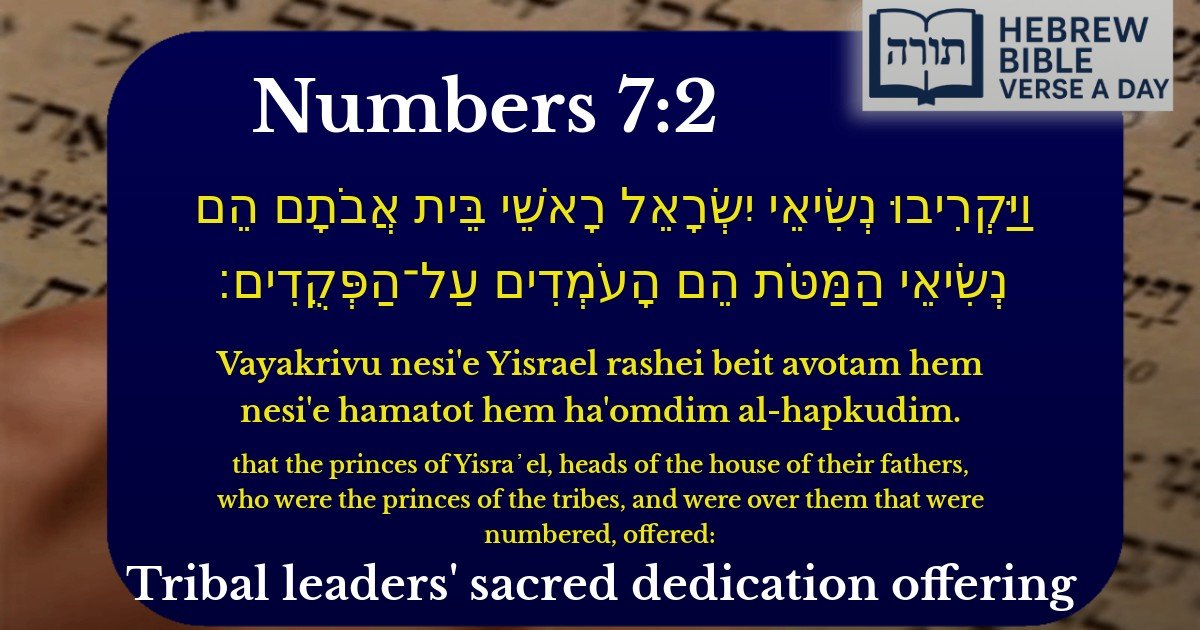
וַיַּקְרִיבוּ נְשִׂיאֵי יִשְׂרָאֵל רָאשֵׁי בֵּית אֲבֹתָם הֵם נְשִׂיאֵי הַמַּטֹּת הֵם הָעֹמְדִים עַל־הַפְּקֻדִים׃
English Translation
that the princes of Yisra᾽el, heads of the house of their fathers, who were the princes of the tribes, and were over them that were numbered, offered:
Transliteration
Vayakrivu nesi'e Yisrael rashei beit avotam hem nesi'e hamatot hem ha'omdim al-hapkudim.
Hebrew Leining Text
וַיַּקְרִ֙יבוּ֙ נְשִׂיאֵ֣י יִשְׂרָאֵ֔ל רָאשֵׁ֖י בֵּ֣ית אֲבֹתָ֑ם הֵ֚ם נְשִׂיאֵ֣י הַמַּטֹּ֔ת הֵ֥ם הָעֹמְדִ֖ים עַל־הַפְּקֻדִֽים׃
🎵 Listen to leining
Parasha Commentary
📚 Talmud Citations
This verse is not quoted in the Talmud.
Context in the Torah
The verse (Bamidbar 7:2) describes the voluntary offerings brought by the nesi'im (princes) of the twelve tribes during the inauguration of the Mishkan. Rashi explains that this act followed the completion of the Mishkan's construction, emphasizing the princes' eagerness to contribute to its sanctity.
Role of the Nesi'im
Ramban notes that the term "nesi'im" here refers to the appointed leaders of each tribe, as listed in Bamidbar 1:5-15. The Midrash Tanchuma (Naso 12) highlights their humility—though they were leaders, they did not presume to bring offerings until invited by Hashem, demonstrating their submission to divine will.
Significance of Their Offerings
Phrase Analysis: "Heads of the House of Their Fathers"
Ibn Ezra interprets this as emphasizing their lineage—they were not self-appointed but chosen based on ancestral merit. The Kli Yakar adds that their authority was rooted in their representation of the avot (forefathers), linking tribal identity to the covenant with Avraham, Yitzchak, and Yaakov.
Connection to the Mishkan
The Or HaChaim notes that the princes' role in the census ("over them that were numbered") tied their offerings to the broader purpose of the Mishkan: to unify Bnei Yisrael in divine service. Their gifts thus affirmed the Mishkan as the focal point of national spiritual life.