Frequently Asked Questions
Q: What is the meaning of the peace offering (zevach shelamim) mentioned in Numbers 7:17?
A: The peace offering (zevach shelamim) is a type of sacrifice described in the Torah that expresses gratitude, fulfillment of a vow, or a freewill offering to Hashem. Unlike other sacrifices, parts of it are eaten by the person bringing it, the Kohanim (priests), and sometimes others, symbolizing peace and fellowship. Rashi explains that it is called 'shelamim' (from 'shalom,' meaning peace) because it brings peace to the world by fostering harmony between people and Hashem.
Q: Why did Nachshon ben Amminadav bring this specific offering?
A: Nachshon ben Amminadav, the prince of the tribe of Judah, brought this offering as part of the dedication of the Mishkan (Tabernacle). Each tribal leader brought identical offerings to show unity among the tribes. The Midrash (Bamidbar Rabbah) highlights that Nachshon was the first to bring his offering, demonstrating his leadership and enthusiasm for serving Hashem, setting an example for others.
Q: Why does the verse list specific numbers of animals (2 oxen, 5 rams, etc.)?
A: The Torah specifies the exact number and types of animals to emphasize the precision and sincerity required in divine service. The Rambam (Hilchos Maaseh HaKorbanos) teaches that every detail in korbanos (sacrifices) has meaning, reflecting the donor's devotion. The numbers may also carry symbolic significance—for example, five often represents completeness in Torah thought (like the five books of the Torah).
Q: How does this verse apply to us today if we don’t bring sacrifices?
A: Although we no longer bring physical korbanos, the Talmud (Berachos 26b) teaches that prayer (tefillah) replaces sacrifices. The peace offering reminds us to cultivate gratitude (todah), fulfill our commitments (neder), and seek closeness to Hashem (freewill offerings). Additionally, acts of kindness and Torah study are considered spiritual substitutes for sacrifices (Proverbs 21:3, Menachos 110a).
Q: What lesson can we learn from Nachshon’s offering?
A: Nachshon’s willingness to be the first to bring an offering teaches the importance of taking initiative in serving Hashem and inspiring others. The Midrash (Shemos Rabbah) also connects Nachshon to his later act of faith at the Red Sea—showing that consistent leadership and trust in Hashem lead to greatness. We learn to act with courage and dedication in mitzvos, even when others hesitate.

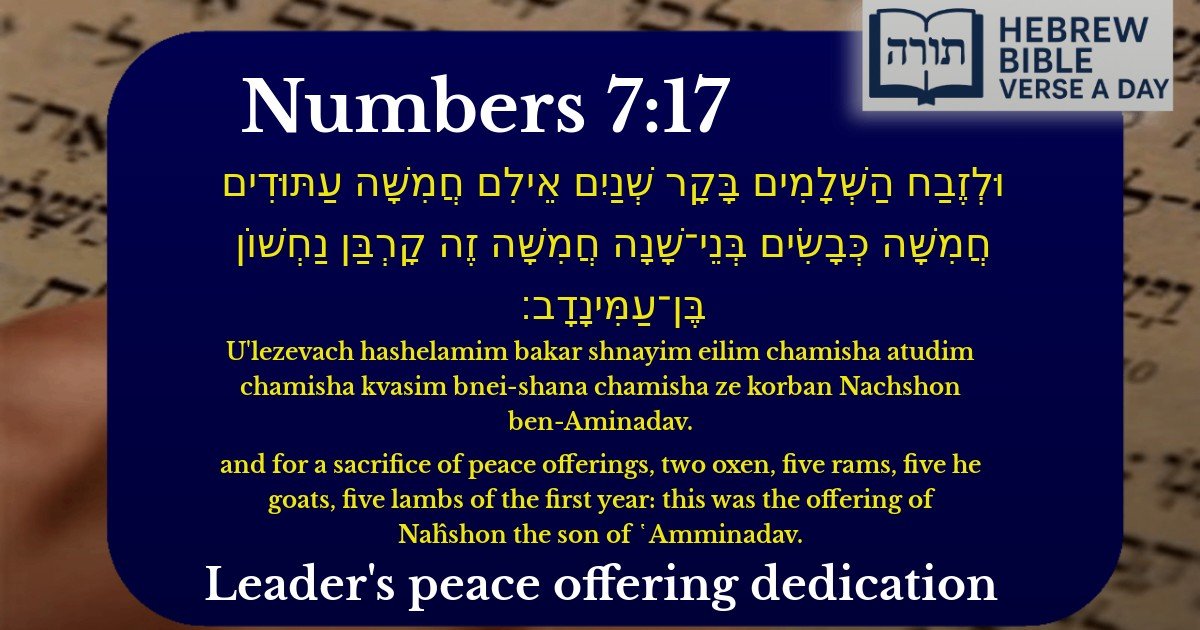

The Offering of Nachshon ben Amminadav
The verse describes the sacrificial offering brought by Nachshon ben Amminadav, the prince of the tribe of Judah, during the dedication of the Mishkan (Tabernacle). This offering consisted of:
Significance of the Numbers
Rashi (Bamidbar 7:17) notes that the numbers correspond to the five books of the Torah, emphasizing that Nachshon's offering was in honor of Torah. The two oxen represent the two tablets of the Ten Commandments, while the five of each other animal correspond to the five books.
The Midrash (Bamidbar Rabbah 13:15) explains that the five animals of each kind hint at the five senses, teaching that one should dedicate all aspects of their being to divine service.
The Peace Offering (Zevach Shelamim)
The Rambam (Moreh Nevuchim 3:46) explains that the shelamim offering represents completeness and peace between God and man. Unlike other sacrifices, parts were given to the kohanim, parts burned on the altar, and parts eaten by the owner - symbolizing shared holiness.
The Talmud (Chullin 84a) notes that the peace offering was the only sacrifice where the owner could partake, representing the special relationship between God and Israel.
Nachshon's Leadership
Rashi (Bamidbar 7:12) points out that Nachshon was first to bring offerings because his tribe of Judah was first in the encampment and first in traveling. The Midrash (Bamidbar Rabbah 13:7) adds that Nachshon demonstrated exceptional leadership at the splitting of the Red Sea by being first to enter the waters.
The Kli Yakar (Bamidbar 7:17) explains that Nachshon's generous offering set the standard for all subsequent tribal leaders, showing that true leadership requires personal sacrifice and commitment to communal holiness.