Frequently Asked Questions
Q: What does Numbers 7:21 mean?
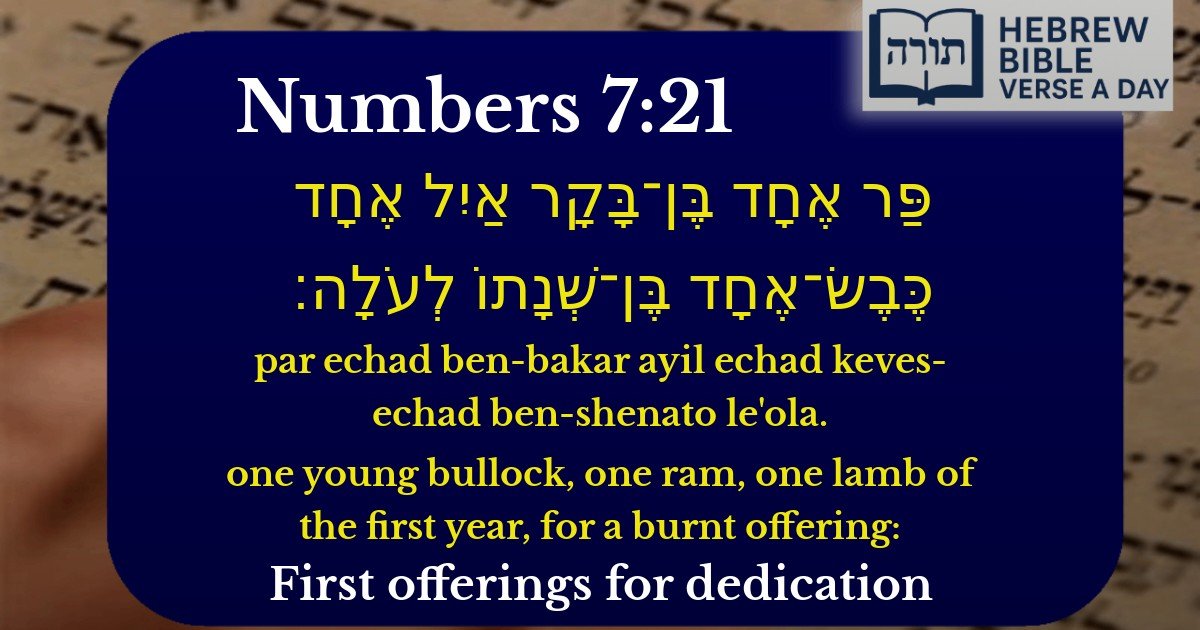
A: Numbers 7:21 describes the specific animals brought as offerings by one of the tribal leaders during the dedication of the Mishkan (Tabernacle). It lists one young bull, one ram, and one one-year-old lamb as a burnt offering (olah). This follows the pattern of sacrifices mentioned earlier in the Torah for communal dedications.
Q: Why were these specific animals chosen for the offering?
A: According to Jewish tradition, each type of animal represents different aspects of service to Hashem. The bull (par) symbolizes strength, the ram (ayil) represents leadership, and the lamb (keves) shows humility. Rashi explains that these offerings atoned for different types of sins and demonstrated complete dedication to G-d.
Q: Why does the verse specify 'one-year-old' for the lamb?
A: The Torah often specifies animals of particular ages for sacrifices. A one-year-old lamb (ben shanato) was considered at its physical peak without blemish, making it most fitting for an offering. The Talmud (Chullin 23b) discusses the significance of age requirements for different sacrifices.
Q: What can we learn from this verse today?
A: While we don't bring sacrifices today, the Rambam teaches that prayer replaced sacrifices. This verse reminds us to approach Hashem with complete dedication (like the olah offering that was entirely burnt), offering our best efforts in serving G-d just as they brought their best animals.
Q: Why does each leader bring the same offering in Numbers 7?
A: Though each tribal leader brought identical offerings, the Midrash explains that each had unique intentions and meanings behind their gifts. This teaches that while mitzvot may appear similar externally, the inner devotion and personal connection to Hashem makes each person's service special and distinct.


Explanation of the Verse
The verse describes the sacrificial offerings brought for a burnt offering (עֹלָה), specifically listing three distinct animals: a young bullock (פַּר אֶחָד בֶּן־בָּקָר), a ram (אַיִל אֶחָד), and a one-year-old lamb (כֶּבֶשׂ־אֶחָד בֶּן־שְׁנָתוֹ). Each of these offerings holds unique significance in Jewish tradition.
Rashi's Commentary
Rashi (Vayikra 1:3) explains that the burnt offering is entirely consumed by fire on the altar, symbolizing complete devotion to Hashem. The three animals represent different levels of offerings, with the bullock being the most valuable, followed by the ram, and then the lamb. This hierarchy allows individuals of varying means to participate in the mitzvah of bringing an offering.
Symbolism of the Animals
Halachic Insights from the Talmud
The Talmud (Menachot 110a) teaches that the burnt offering atones for improper thoughts and neglect of positive commandments. The requirement for the lamb to be "of the first year" (בֶּן־שְׁנָתוֹ) emphasizes purity and freshness, as young animals were considered unblemished and ideal for sacrifice (Rambam, Hilchot Issurei Mizbeach 7:2).
Midrashic Interpretation
The Midrash (Vayikra Rabbah 2:11) connects these offerings to the patriarchs: Avraham (symbolized by the bullock, as he hosted guests with cattle), Yitzchak (the ram of the Akeidah), and Yaakov (the lamb, as he tended flocks). This teaches that divine service encompasses the virtues of all three forefathers.