Frequently Asked Questions
Q: What is the meaning of the peace offering (zevach shelamim) mentioned in Numbers 7:29?
A: The peace offering (zevach shelamim) is a voluntary sacrifice expressing gratitude, fulfillment of a vow, or general thanksgiving to Hashem. Unlike other offerings, parts of it were eaten by the person bringing it, symbolizing peace and closeness between the individual and Hashem. Rashi explains that it is called 'shelamim' (from 'shalom,' meaning peace) because it brings peace to the world.
Q: Why does the verse specify the exact number of animals (2 oxen, 5 rams, etc.)?
A: The Torah specifies the exact number of animals to show the generosity and devotion of Eliab ben Helon, who brought this offering during the dedication of the Mishkan (Tabernacle). The Midrash teaches that each leader of the tribes brought identical offerings to demonstrate unity, despite their individual wealth and status.
Q: What lesson can we learn from Eliab ben Helon bringing this offering?
A: Eliab ben Helon’s offering teaches the importance of contributing to communal holiness with a generous and willing heart. The Rambam (Maimonides) emphasizes that voluntary offerings, like the peace offering, reflect a person’s sincere desire to draw closer to Hashem. This applies today in how we give tzedakah (charity) and support sacred causes.
Q: How does the concept of peace offerings apply to Jewish life today?
A: Although we no longer bring animal sacrifices, the idea of peace offerings lives on through acts of kindness, prayer, and gratitude. The Talmud (Berachot 17a) teaches that when we recite Birkat Hamazon (Grace After Meals) or offer words of thanksgiving, it is like bringing a 'sacrifice of peace.' Additionally, sharing meals with others (seudah) fosters unity and peace, embodying the spirit of shelamim.
Q: Why were lambs of the first year (bnei shanah) used in the offering?
A: Lambs in their first year (bnei shanah) were chosen because they represent purity and innocence. Rashi explains that young animals were preferred for sacrifices as they symbolize a fresh and wholehearted commitment to serving Hashem. This teaches us that our devotion should be sincere and unblemished, like the offering itself.

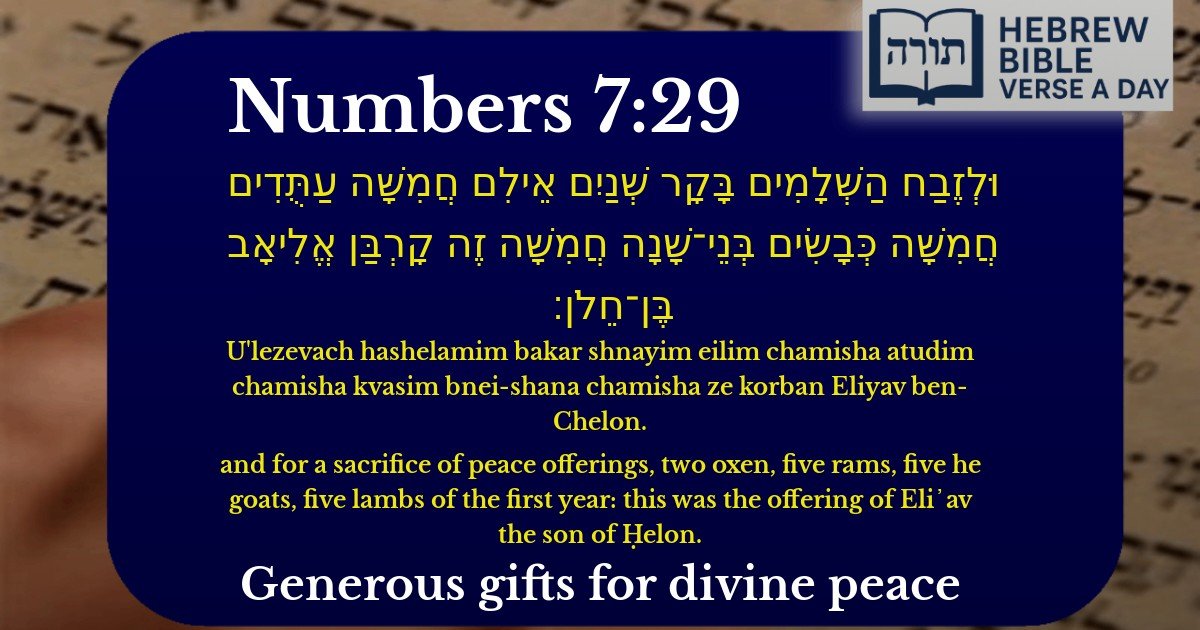

Understanding the Peace Offering (זֶבַח הַשְּׁלָמִים)
The verse describes the offering brought by Eliab ben Helon as a zevach shelamim (peace offering). According to Rashi (Bamidbar 7:47), the shelamim is so named because it brings peace (shalom) to the world, as it is shared among the altar (parts burned for Hashem), the kohanim (priests), and the owner. The Rambam (Hilchot Maaseh HaKorbanot 9:1) explains that this sacrifice expresses gratitude and joy, fostering harmony between man and Hashem.
Significance of the Animals
The offering consists of:
The Donor: Eliab ben Helon
The Sforno (Bamidbar 7:47) highlights that Eliab's name ("My God is Father") reflects his deep relationship with Hashem. The offering's lavishness—multiple animals of high quality—demonstrates his generosity and eagerness to contribute to the Mishkan. The Talmud (Chullin 11a) teaches that voluntary offerings like this are especially beloved by Hashem when given with a full heart.
Numerical Symbolism
The recurrence of the number five may signify: